While researching our Kolhapur trip recently, we kept meeting one story. Ambabai reclaimed Karveer from Kolhasur, Raktabhoja and Ratnasur. Jyotiba fought beside her. The city’s name is the dying asura’s last request. After her darshan, the yatra is not treated as complete until you climb his hill.
We did not go looking for demons. We were only mapping temples, distances, festival dates. Then every local telling, every old note on Karveer, pulled us into the same war. The land we now call Kolhapur was once a sacred stretch of Karveer. You can read about out trip by reading here.
History of Karveer : Battle with Demons
In the lore we read, it was terrorised by Kolhasur and by the asuras who held his flanks — Raktabhoja to the north, Ratnasur on the neighbouring hill. Sages and householders lived under that weight. The gods could not settle it from a distance. Mahalakshmi came down as warrior-mother.
She did not come alone. Brahma, Vishnu and Maheshwara are said to have taken one form as Jyotiba — Kedareshwar, the lord of light — and stood with her. On the hills north-west of the city he slew Ratnasur; the place still carries that name, Wadi Ratnagiri. Raktabhoja, who guarded the northern gate of Karveer, fell in the same campaign. Ambabai herself finished Kolhasur on Ashwin Shuddha Panchami. That is the battle the city still remembers when it cuts a pumpkin on Kohala Panchami.
Before he died, Kolhasur asked that the land keep his name, that the Goddess remain, and that the kshetra stay holy. She granted it. Kolha and pur became Kolhapur. Karveer stayed the older, sacred name. Some later readings also hear kola as plough or earth, as if the city were named for fertile ground. The story that shaped our trip was the first one: a city named at the edge of a battlefield, by the one who lost it.
 |
 |
Jyotiba Dongar (Jyotiba’s Hill)
After the war Jyotiba did not leave. He set his seat on that hill and became, in the folk mind, Ambabai’s brother and the region’s guardian. She is the sovereign in the city. He is Dakkhancha Raja on the ridge. His murti faces south, toward her temple. That orientation is the whole protocol in one gesture.
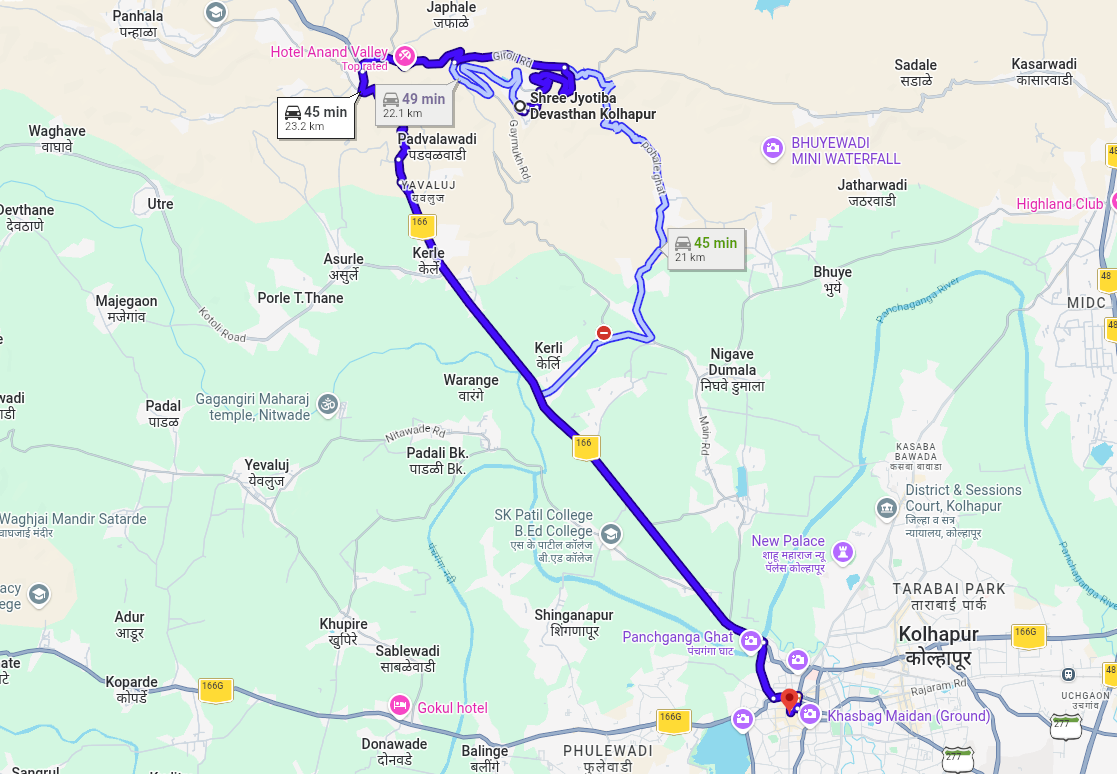
So the custom we kept hearing is simple, and strict in feeling if not in law. First, darshan of Mahalakshmi — Ambabai — in the heart of Kolhapur. She is the victor who stayed. Then the climb to Jyotiba Mandir on Wadi Ratnagiri. Without that second step, people say the circuit is unfinished: you have met the Goddess, but not the one who held her flank and cleared what remained.
That is why the two shrines feel like one landscape. Mahalakshmi is the Shaktipeetha. Jyotiba is the kuladaivata of many families here, a horse-riding warrior with a sword, asked for protection, justice, and the courage to meet what is hard. His name itself means lord of light — darkness pushed back, not only in myth. Chaitra Purnima brings the great Jyotiba Yatra; Ambabai’s Rathotsav follows the next day. Sister and brother, city and hill, still moving in the same week.
What we are carrying into the trip is not a list of sights. It is this sequence: her temple first, his hill after, because that is how the land was won and how it is still walked.
For current darshan hours we used the temple sites: Ambabai in the city, then Jyotiba on the hill. Maharashtra Tourism’s Jyotiba page is a plain map of that same circuit.
-
- Jyotiba is also worshipped as Kedarling / Kedarnath of the south, of the Nath stream.
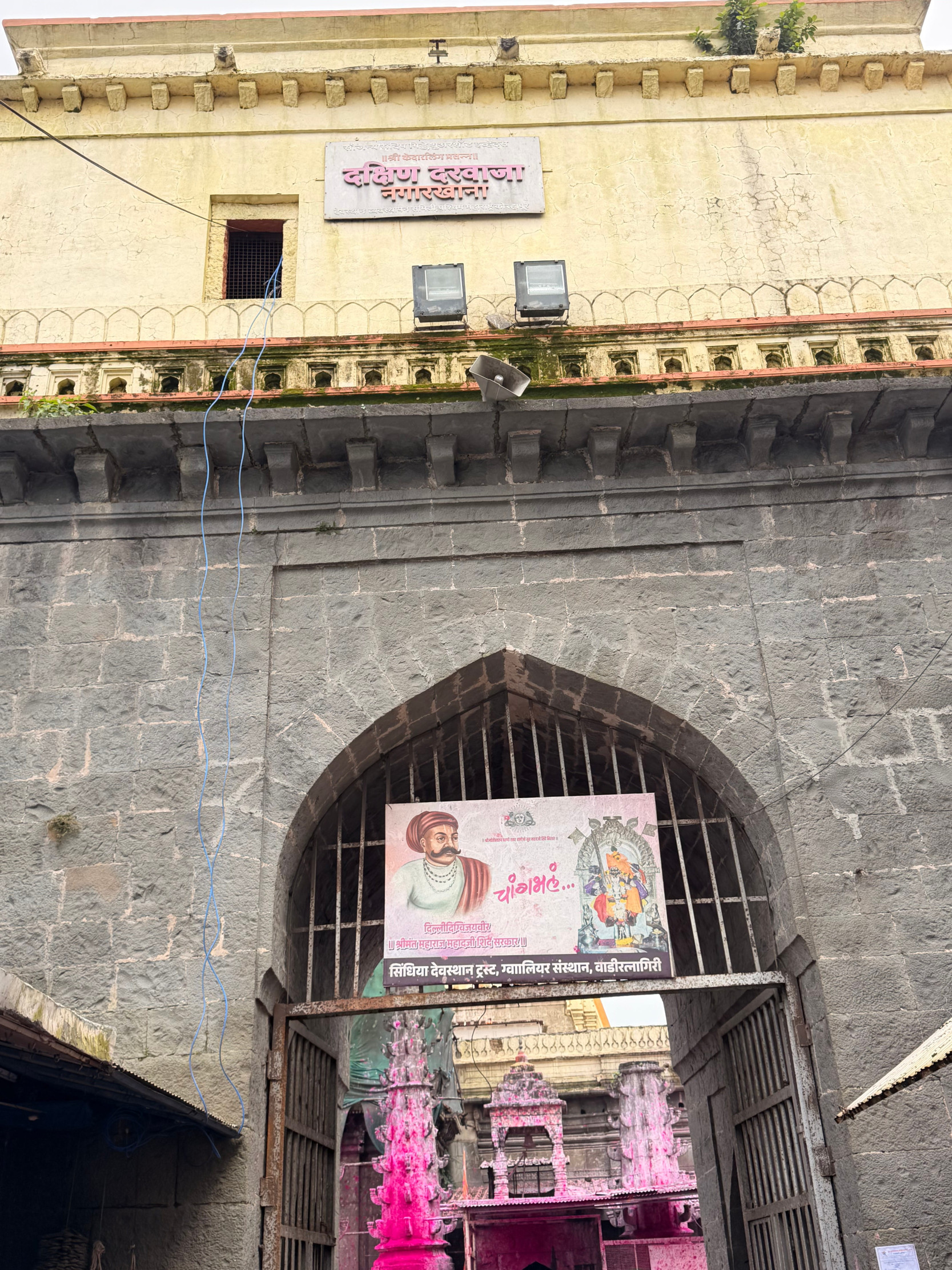
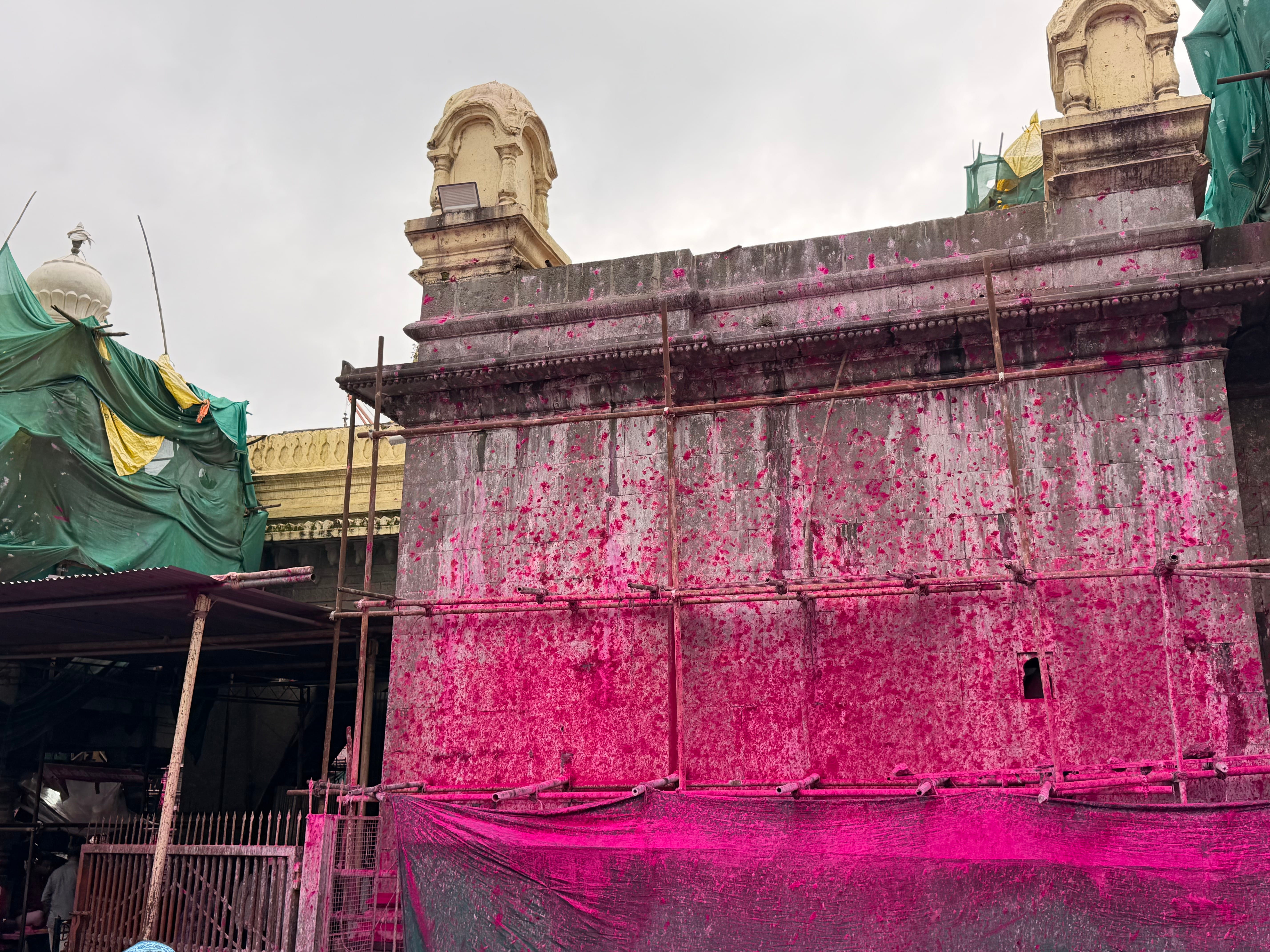
- Sundays are his ordinary rush; Chaitra Purnima is the day the hill turns pink with gulal and sasan sticks.
- The cry on that hill is Jyotibachya navane, changbhala.
- Together the two shrines hold both grace and guard — prosperity in the city, watch on the ridge.