There is something about Ganpati Visarjan that I find very difficult to express in words. Every year, when I watch images of Bappa being taken for Visarjan, especially the enormous processions in Mumbai, I find myself with tears in my eyes. It is a mixture of happiness at having spent ten days with Bappa, surrounded by family, friends and prayers, and sadness at saying goodbye. Yet there is always the reassurance contained in those familiar words: “पुढच्या वर्षी लवकर या” — come back early next year.
Visarjan also takes me back to our Ganpati darshan journey of 2024. For several years, my spouse and I had wanted to experience Ganeshotsav in Mumbai and Pune, having seen the famous Ganapatis on television, read about them and admired countless photographs. Somehow, however, the plan remained just that — a plan. Every year something or the other came in the way, and the stars simply did not seem to align. Then, in 2024, they finally did, or perhaps, as we like to say, Bappa decided it was time.
Lalbaugcha Raja and Our Mumbai Ganpati Darshan
A colleague of mine had grown up in the Lalbaug-Parel area of Mumbai. When she heard that we wanted to go to Mumbai for Ganpati darshan, she gave us some deceptively simple advice: “Come, I will take you to Lalbaugcha Raja, but you have to come very early in the morning for a peaceful darshan.” Like every year, we had our own Ganpati stapana at home, and after completing our one-and-a-half-day Visarjan, we set off for Mumbai that very night. The plan was to reach the Lalbaug area around 5 AM the following morning.
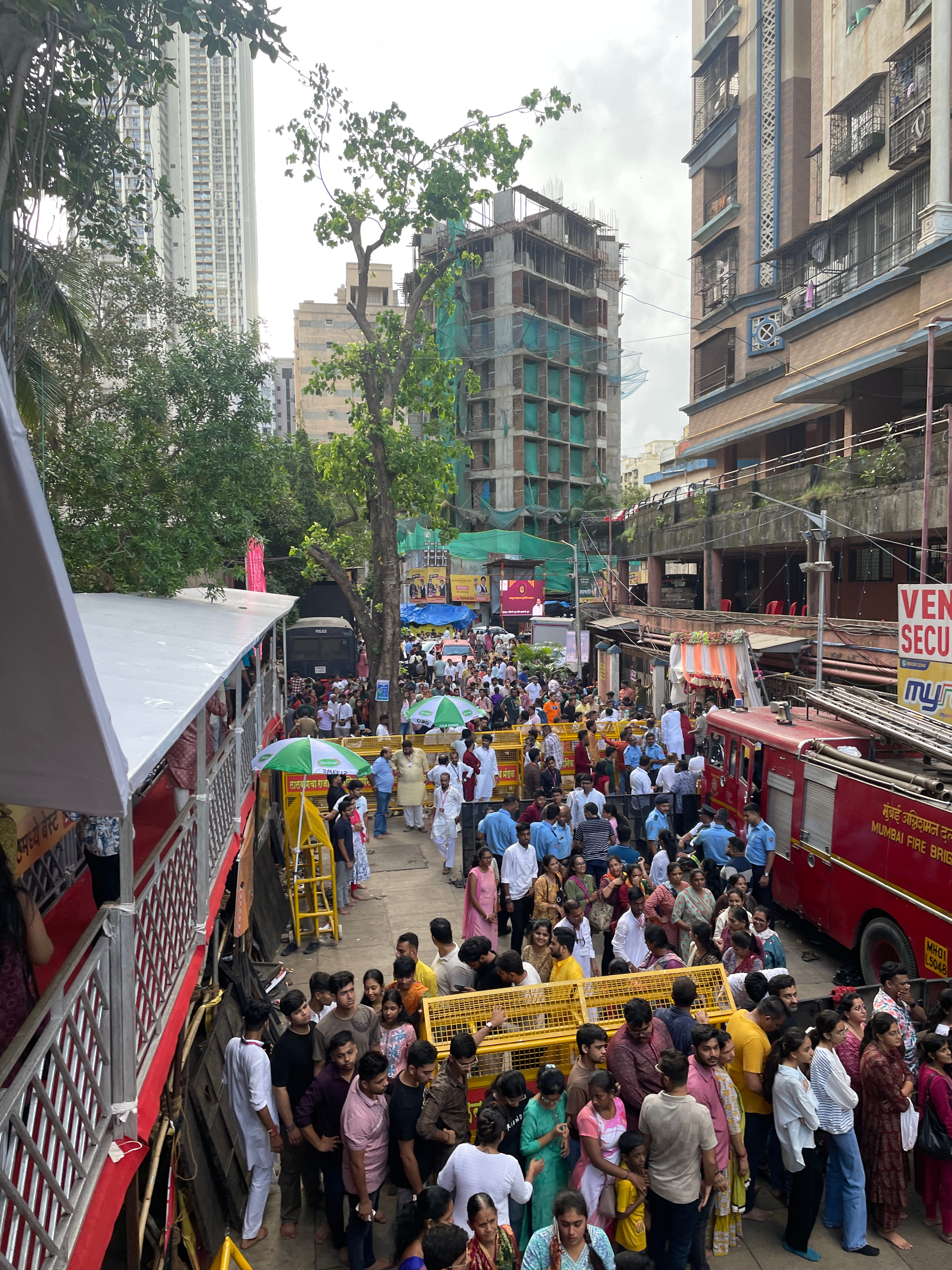
My colleague knew the neighbourhood in a way that we never could have. Instead of approaching the famous Ganpati like visitors following the obvious route, we followed her through local lanes and reached the darshan area from a side she knew well. By around 5:30 AM, we were there, and by 6 AM, we had completed our darshan. It sounds almost unbelievable when I say it now, particularly because my cousin, who lives in Dadar, had laughed when I told him that we hoped to see seven or eight Ganeshas in Mumbai in a couple of hours.
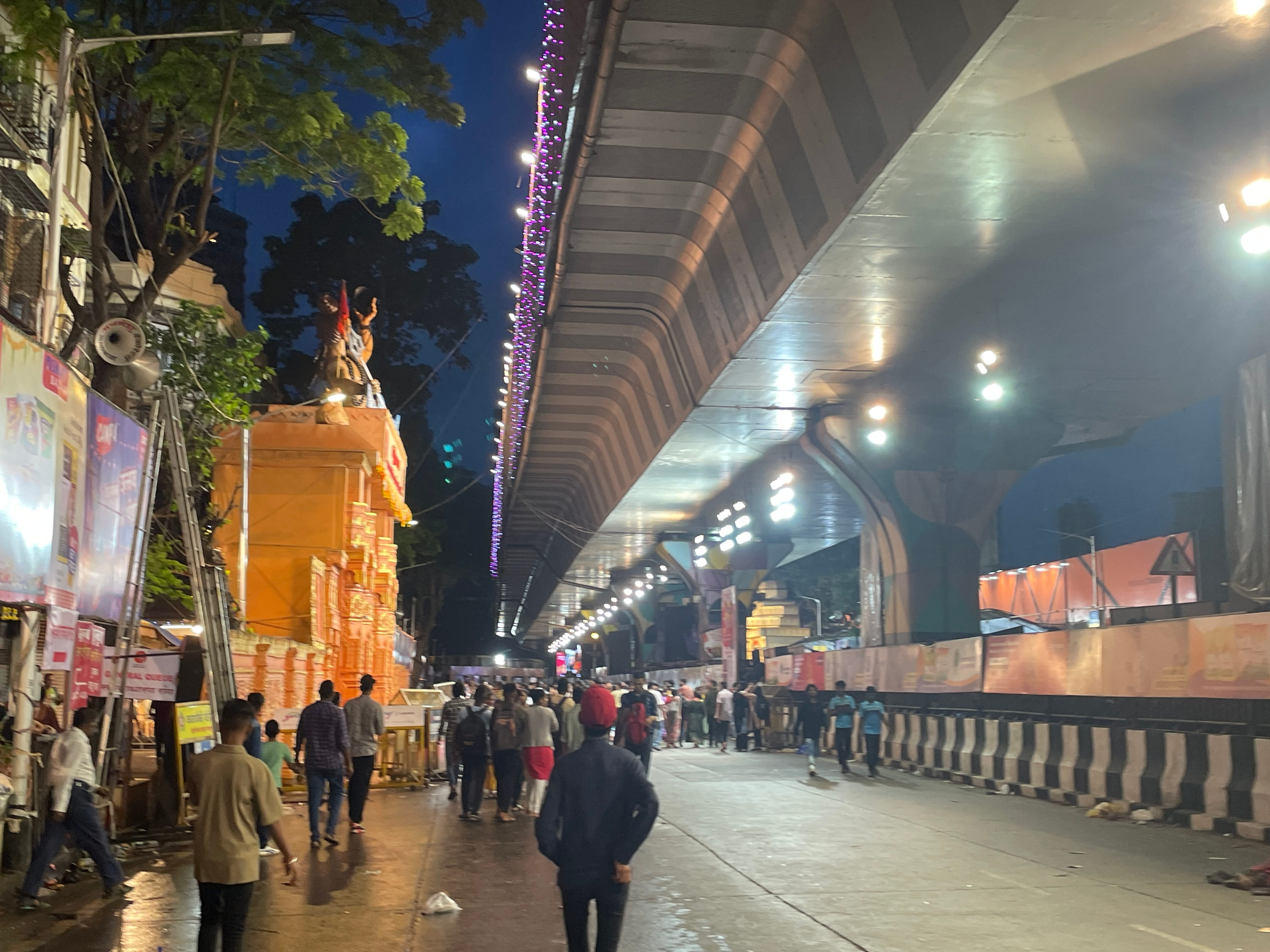
“In two hours?” he had mocked us. “You may not even get to see Lalbaugcha Raja for eight to ten hours.” But Bappa seemed to have other plans for us. The early morning timing made all the difference, because the city was awake but had not yet reached the intensity that would come later in the day. The lanes around Lalbaug and Parel were already filled with devotees, decorations and the unmistakable energy of Ganeshotsav, but movement was still possible.
Lalbaugcha Raja — Finally, in Front of Me
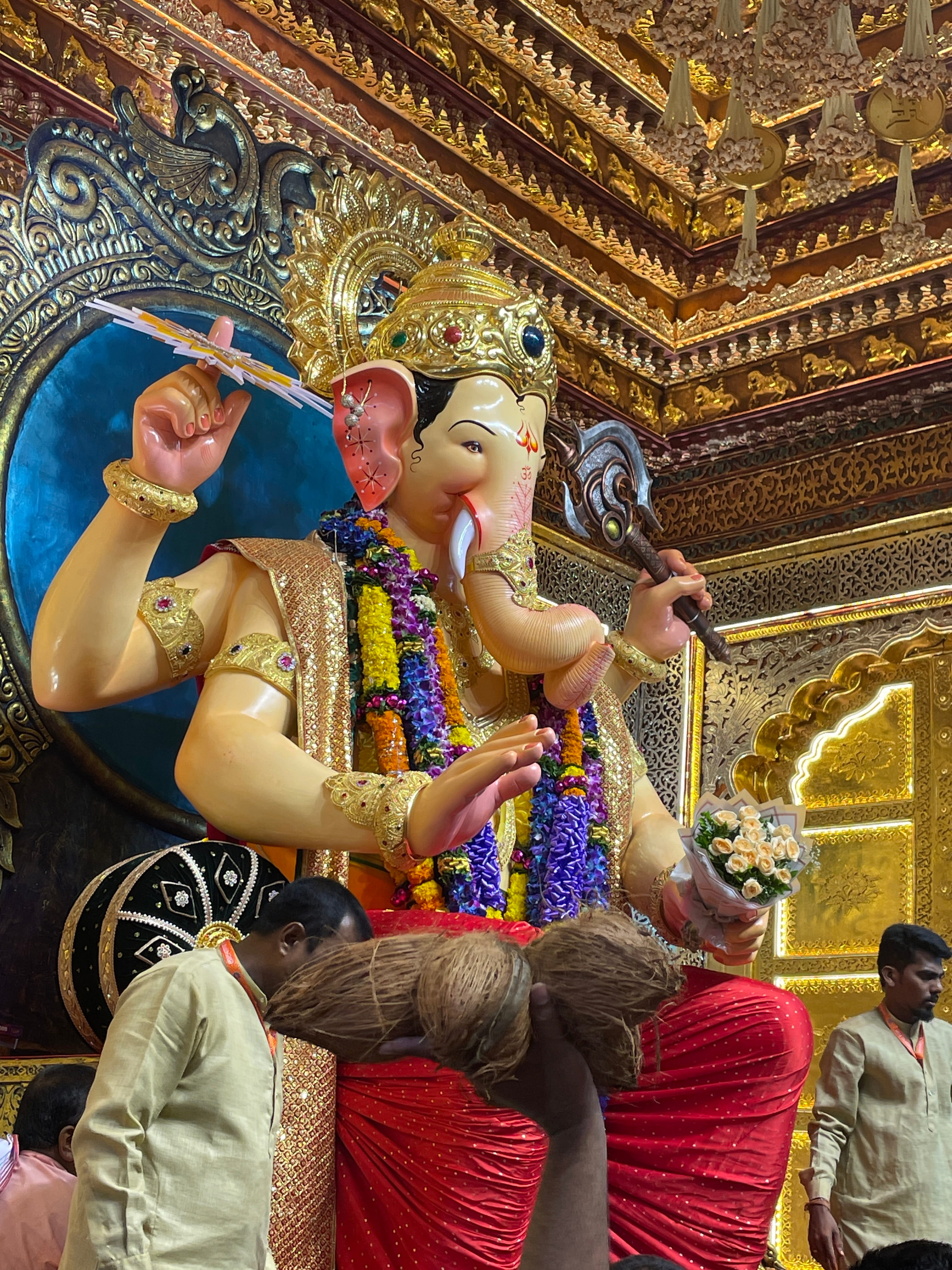
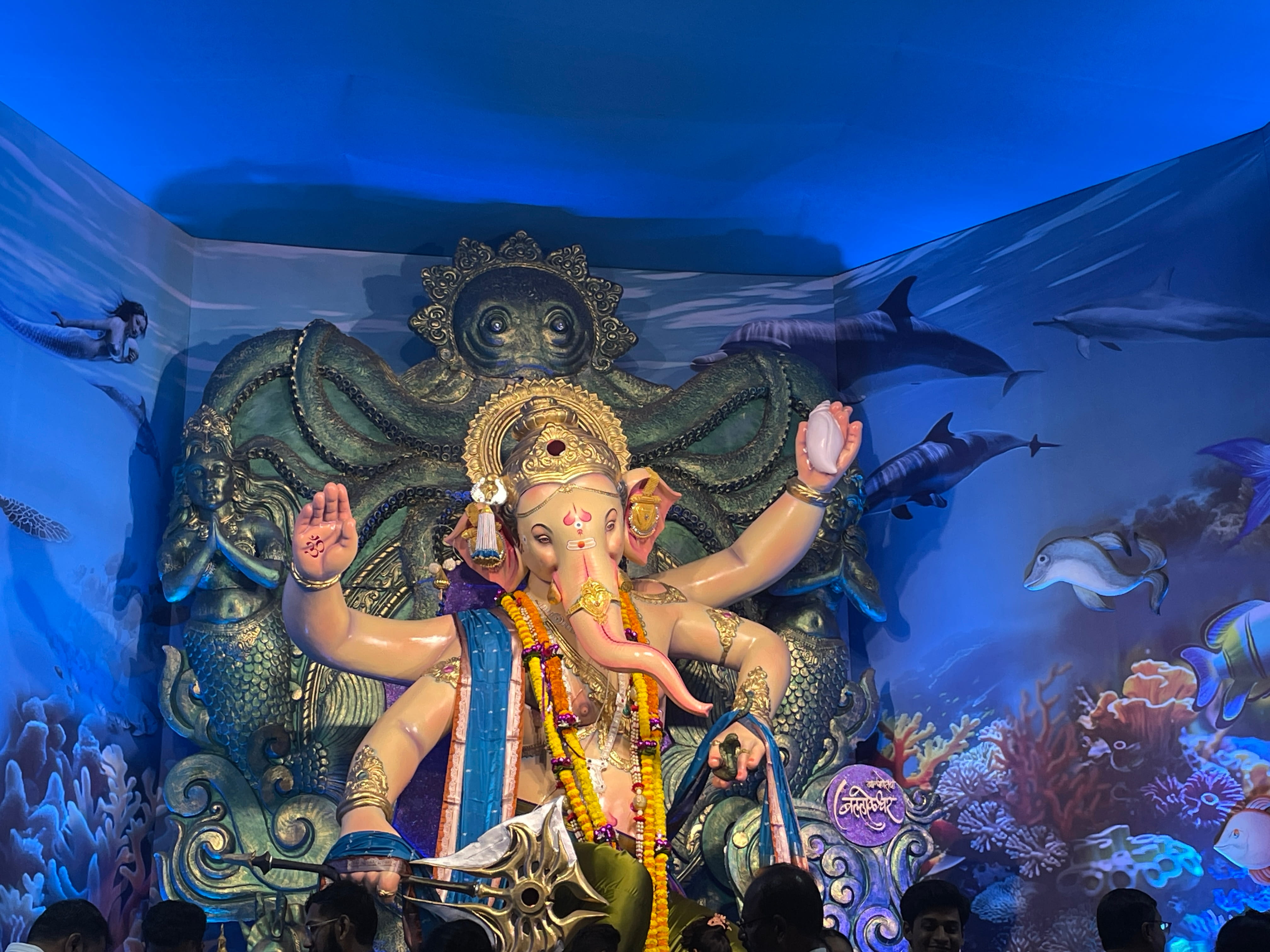
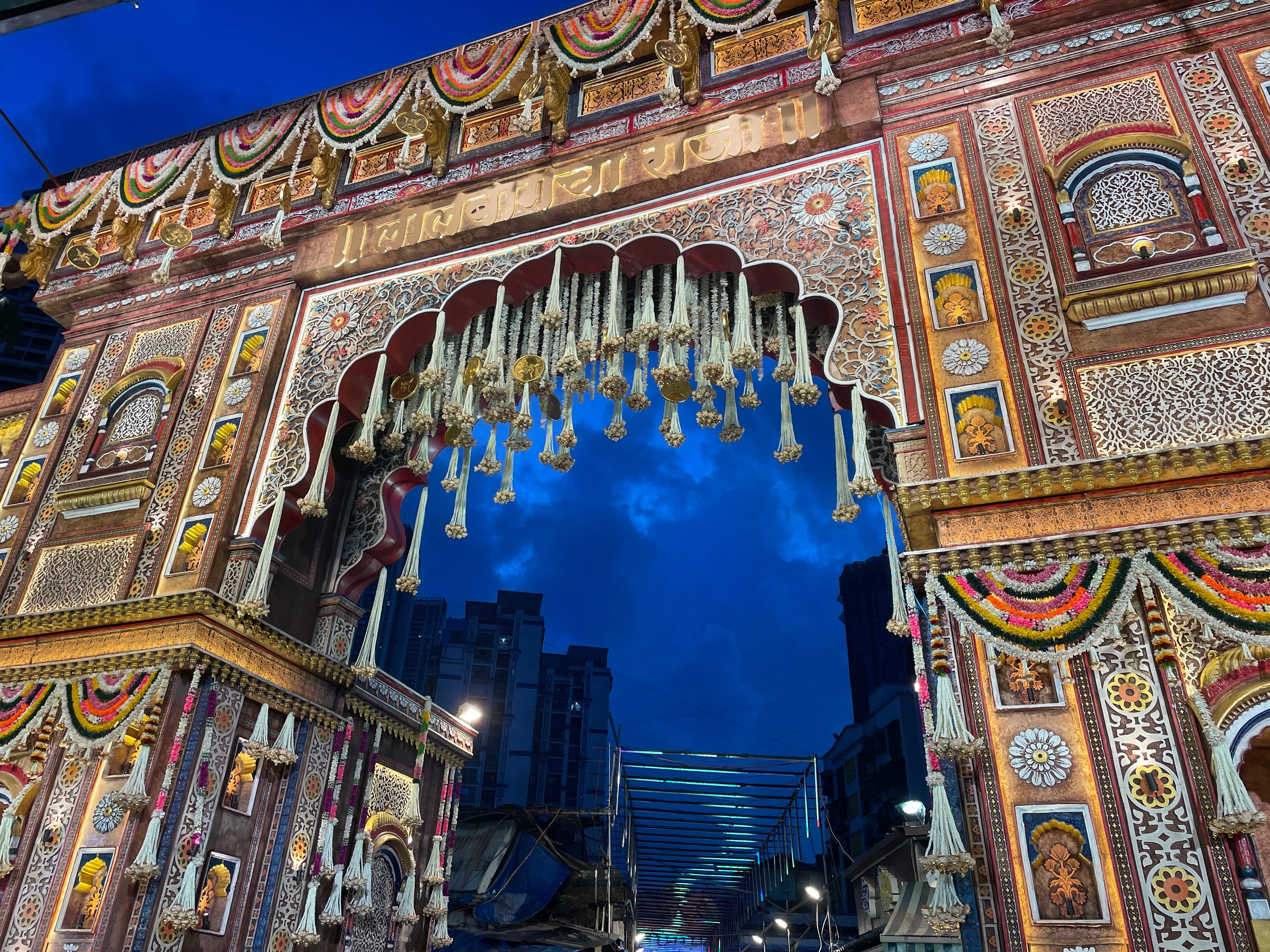
I had seen Lalbaugcha Raja so many times before on television, in newspapers and in photographs, but finally standing in front of him was a surreal experience that is difficult to put into words. He looked magnificent and yet compassionate, and as I stood there looking at him, I had the strange feeling that he was looking back at me. I touched his feet and received the red shendur on my forehead, and for those few moments everything else seemed to cease to exist. There was no itinerary, no plan and no crowd in my mind; there was simply Bappa and me.
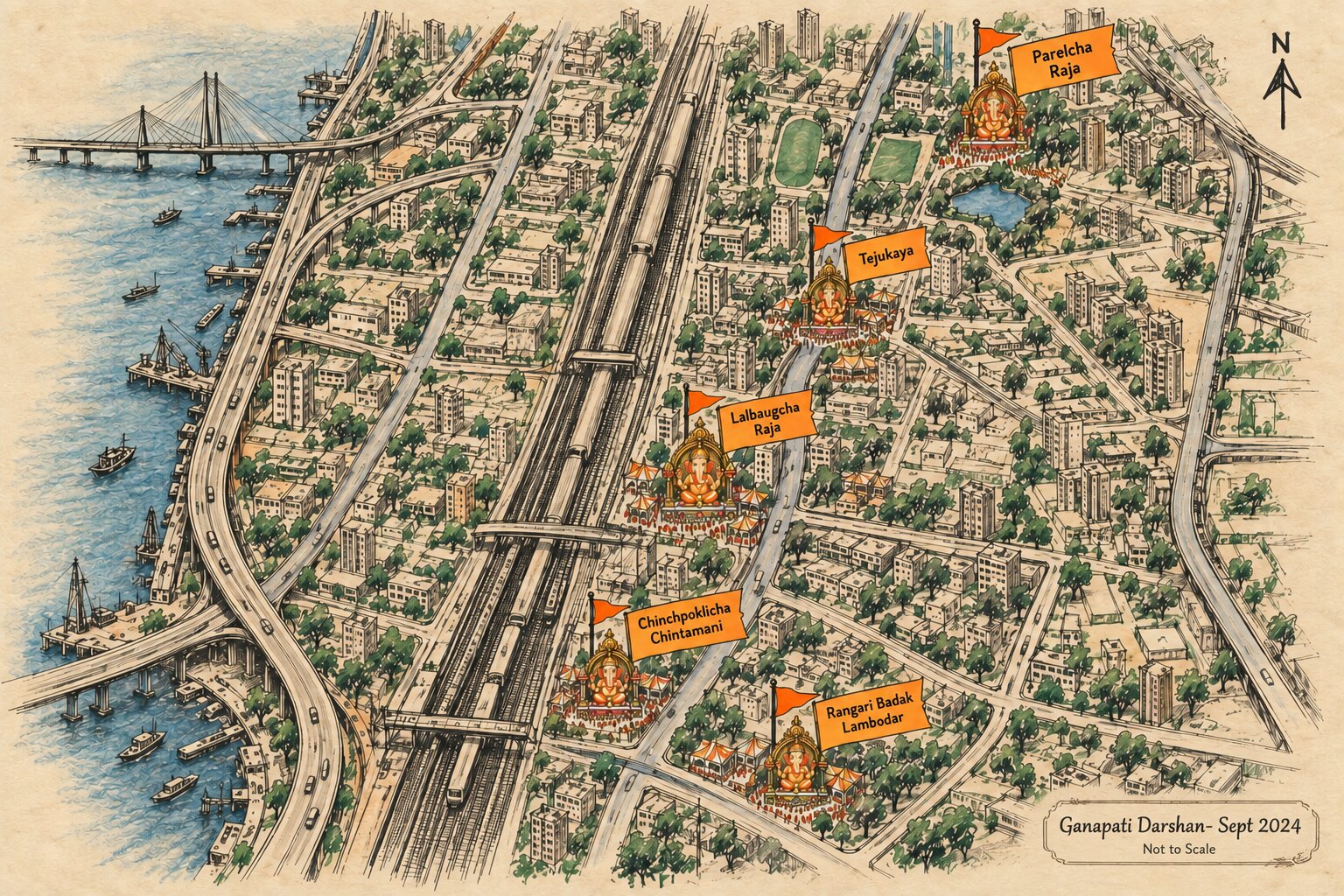
Looking at the grandeur, I finally understood why he is called Lalbaugcha Raja. That feeling is difficult to explain unless you have experienced it yourself. Once our darshan was complete, we realised that we still had time to visit several other Ganesh mandals in the vicinity. In the Lalbaug-Parel area alone, we eventually covered seven Ganeshas.
- Bal Ganesh
- Rangari Badak Lambodar
- Chinchpokli cha Chintamani
- Mumbaicha Raja
- Raja Tejukaya
- Parel cha Raja
- Lalbaugcha Raja
By around 8 AM, we were back home for breakfast. That morning was also the first indication that this was going to be very different from an ordinary sightseeing trip. We were not following a carefully prepared tourist itinerary where every stop had been fixed in advance; instead, one connection led to another and one darshan seemed to naturally lead to the next. Somehow, every time we thought we had finished, another door opened.
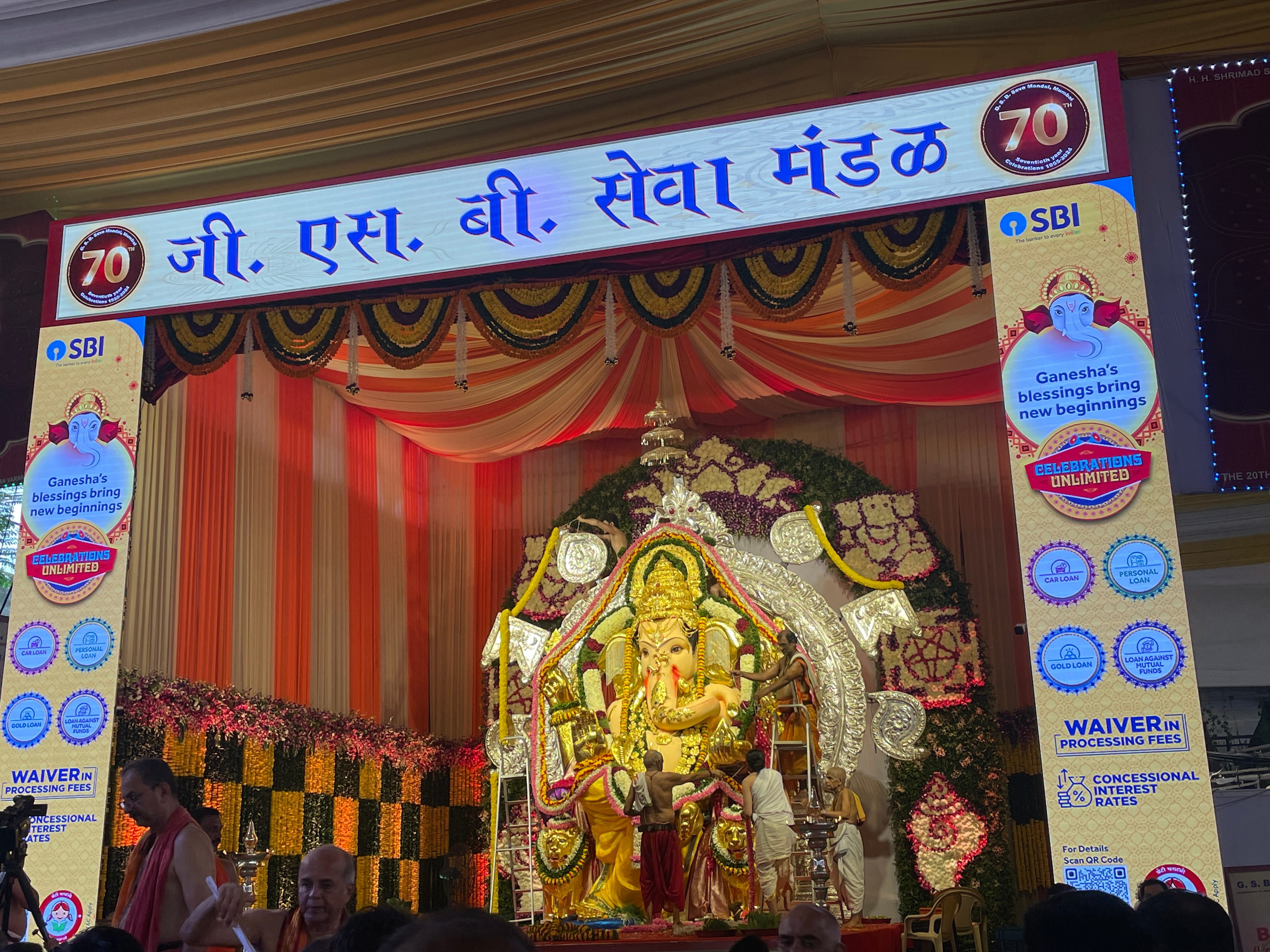
Later that afternoon, we also visited GSB Seva Mandal, which offered a very different experience of Ganpati darshan. The GSB Seva Mandal Ganpati is renowned for its wealth and the Visarjan takes place on the fifth day, making the timing of our visit particularly relevant. The pandal had priests conducting homa and facilities for tula daan, while the prasad, especially the lunch, was something that should not be missed. By evening we were back home, tired but happy, and the day had ended on a deeply satisfying note.
That became one of the recurring features of our journey: timing mattered everywhere. Sometimes we planned it carefully, but more often it felt as though Bappa had already decided when and where we would arrive. Mumbai during Ganeshotsav also seemed to have a character of its own. The city is normally busy, crowded, fast and constantly moving, yet during Ganeshotsav that same city seems to acquire another personality — one shaped by celebration, devotion and neighbourhood participation.
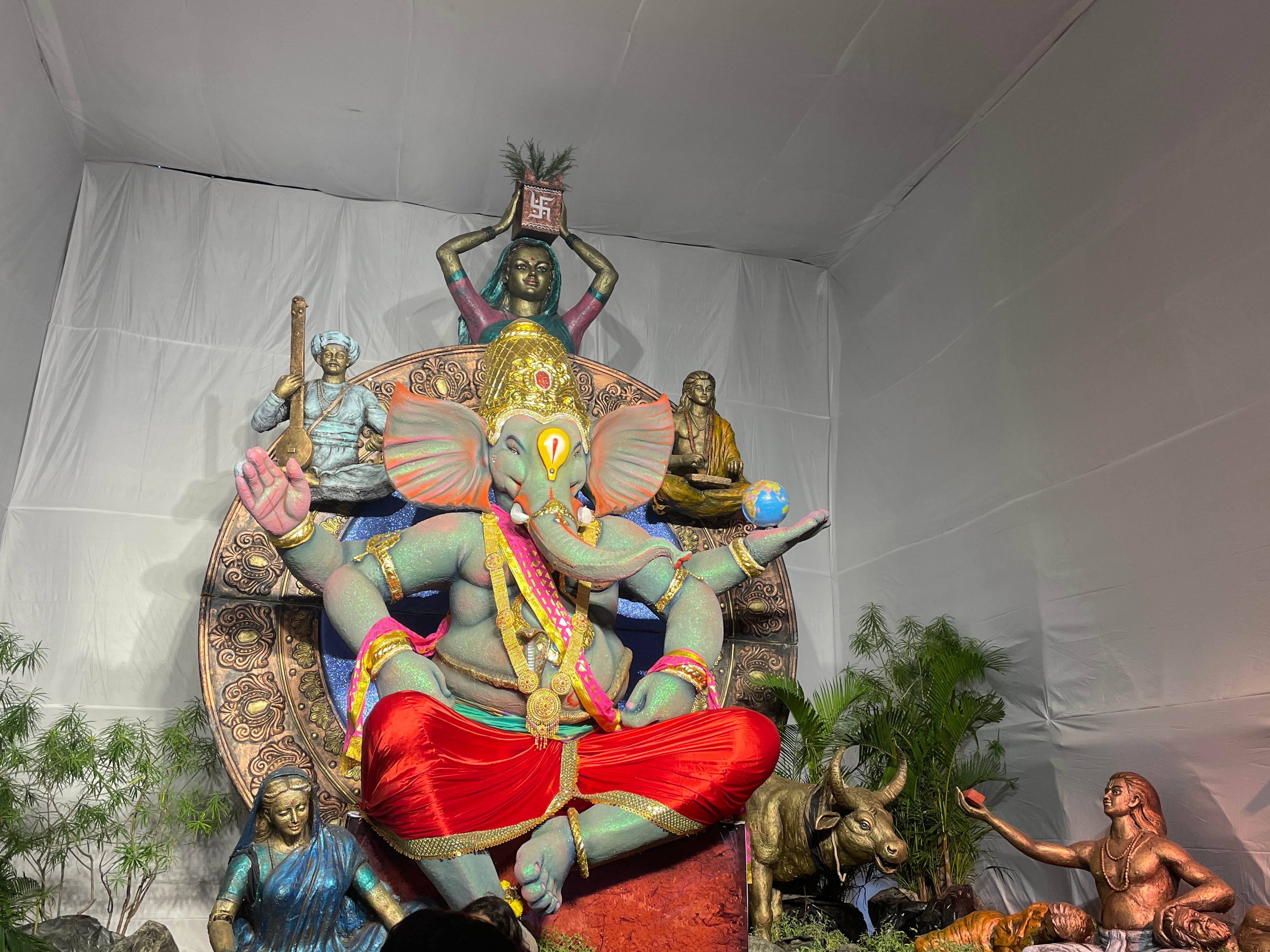
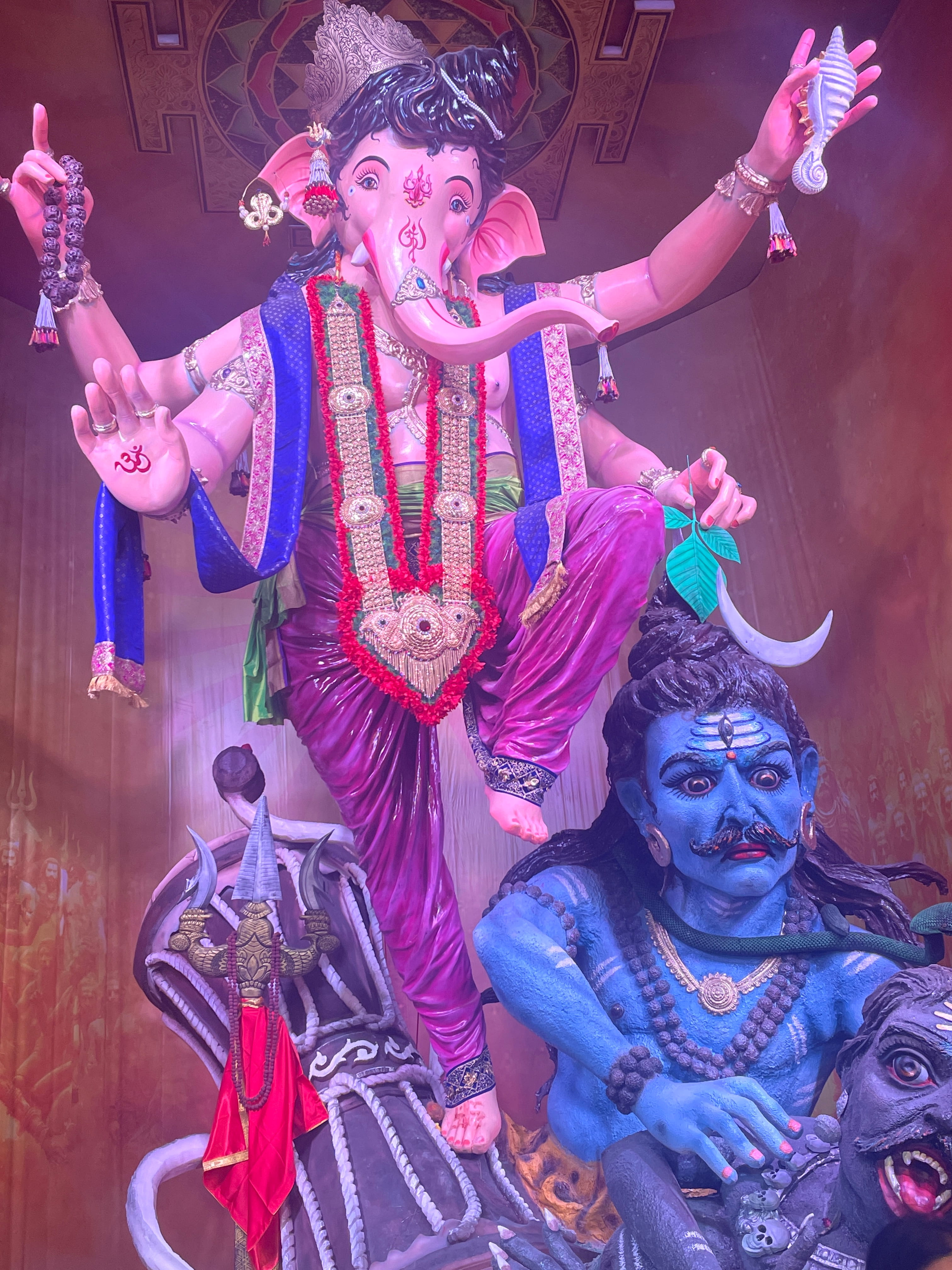
The scale is extraordinary. The murtis are enormous, the pandals are elaborate and the crowds seem endless, with entire neighbourhoods participating in the festival. People who may have very little time in their ordinary lives somehow find time for Bappa during these ten days. There is something infectious about seeing an entire city rearrange its rhythms around a festival. It is difficult not to be swept into that energy, even if you arrive as an outsider simply hoping to see a few famous Ganpatis.
From Mumbai to Pune: Discovering Pune Ganeshotsav
Originally, our plan was largely about Mumbai and its famous Ganpati darshan. The next morning therefore began with darshan at Siddhivinayak Temple, which was relatively close to where we were staying. After the darshan, however, the idea of visiting Pune began taking shape because experiencing the Ganesh celebrations there seemed like a natural continuation of the journey. We decided to travel to Pune along with my niece, who is a vlogger and was keen to document Pune’s Ganpati Utsav. What had started as a Mumbai visit was gradually becoming something much larger.
Pune Ganeshotsav: History, Tradition and the Maanache Ganpati
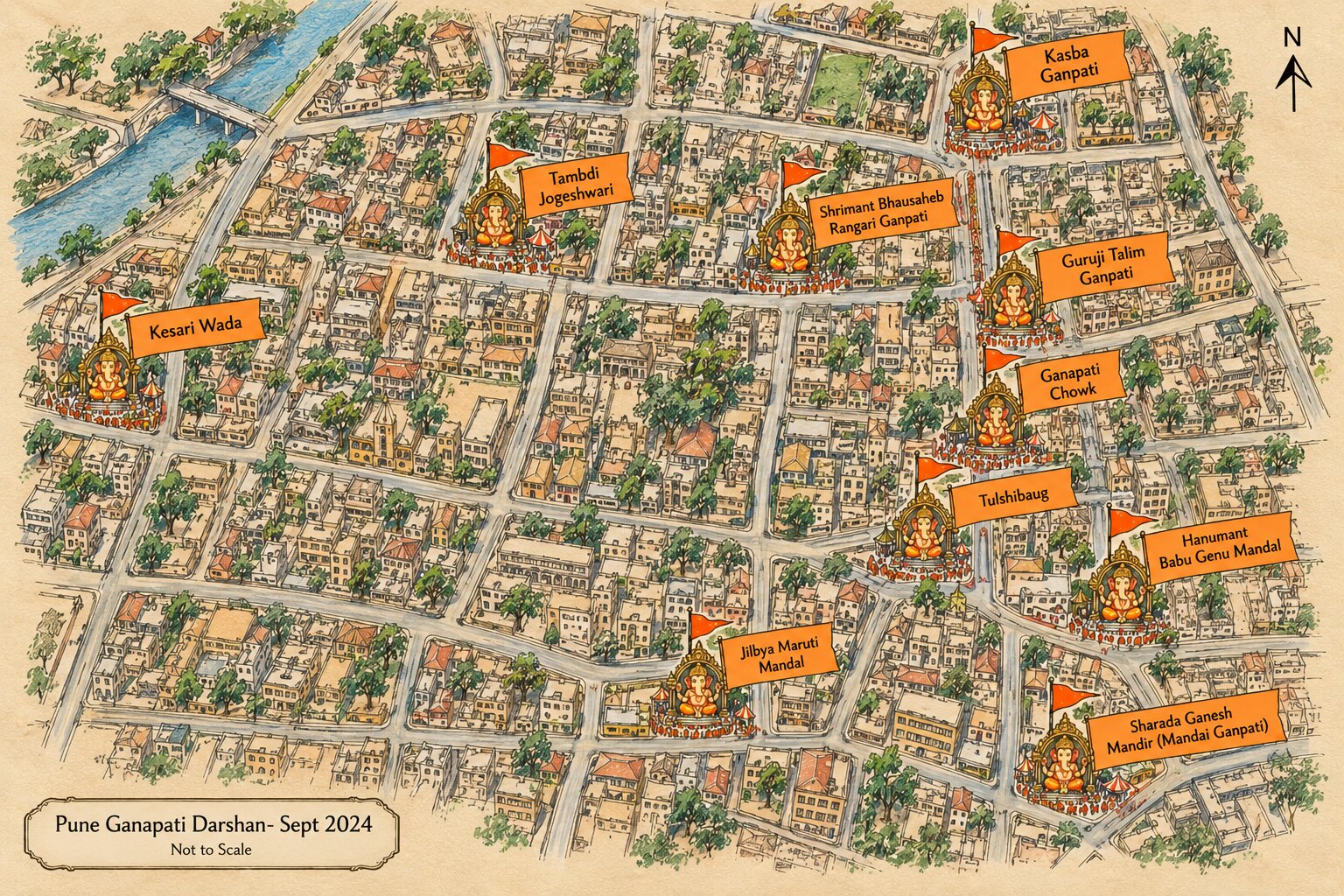
Pune has a different rhythm. If Mumbai’s Ganpati celebrations impressed me with their scale, Pune’s Ganeshotsav touched me through its history, tradition and the sense of maan, or respect, associated with the Ganpati mandals. Here, the story is not simply about how large the murti is or how elaborate the decoration can be; there is a defined order to the darshan and a history attached to the neighbourhoods, temples, mandals and families. The five Maanache Ganpati — Kasba Ganpati, Tambdi Jogeshwari, Guruji Talim, Tulshibaug and Kesari Wada — are central to this tradition.
Each of these five Ganpatis has its own history and significance. As we walked through the older parts of Pune that night, I began to understand why people speak about the city’s Ganpati celebrations with such affection. The streets, old buildings, temples and mandals created an atmosphere that was very different from Mumbai. I found myself looking around almost as much as I was looking at the Ganpatis themselves, because the city seemed to tell its own story through the festival.
Kasba Ganpati — Pune’s Gramdevta
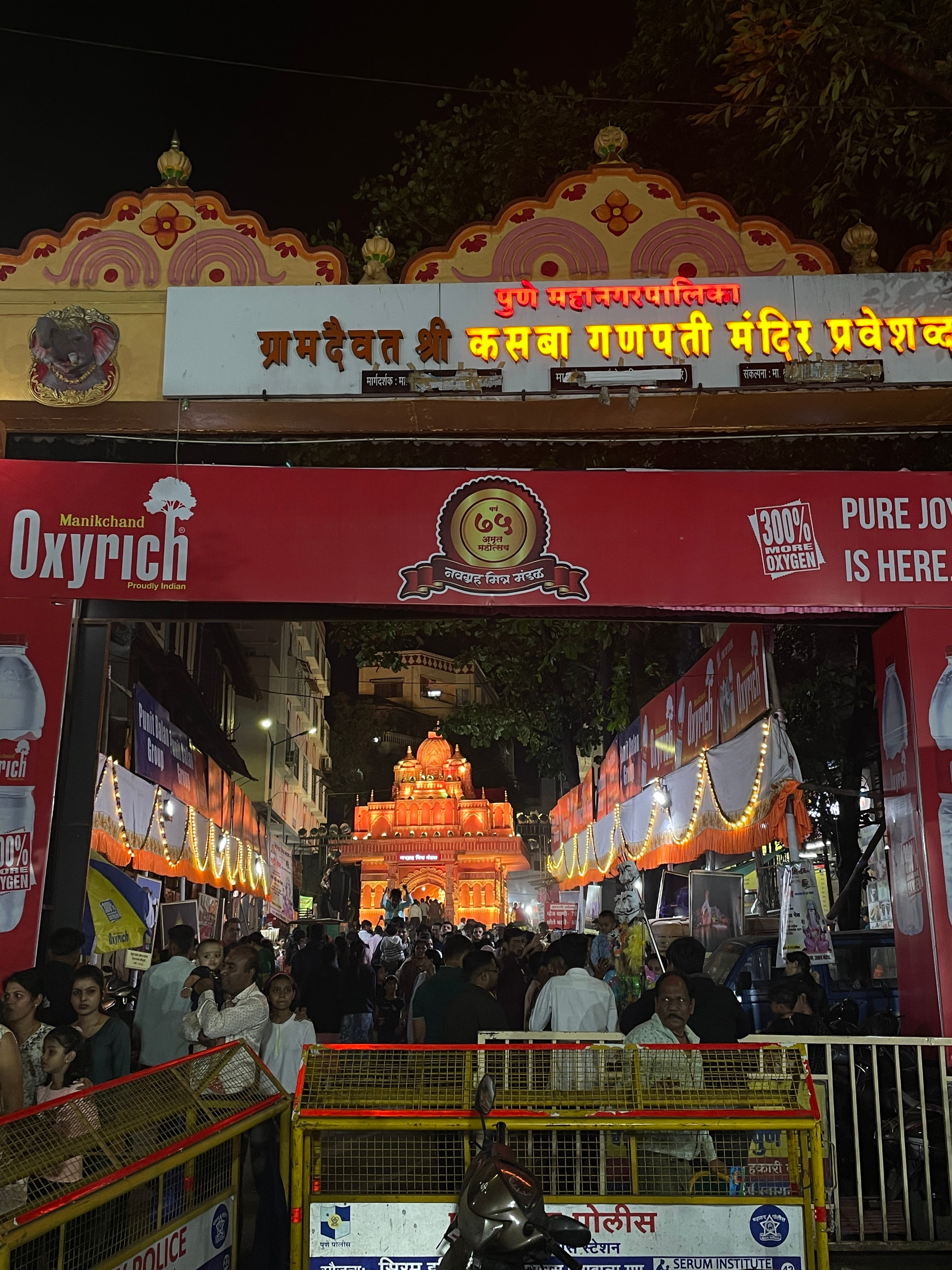
We began with Kasba Ganpati, the first of the Maanache Ganpati and traditionally regarded as Pune’s Gramdevta. There is a deep historical association here with Jijabai and the rebuilding and development of Pune, while the traditional account connects the discovery of a Ganesh idol in the area with the establishment of Kasba Ganpati as the presiding deity of the city. Standing there during Ganeshotsav, that history did not feel particularly distant. The temple, surrounding streets, devotees and festival atmosphere all came together to make this much more than another Ganpati to tick off a list.
Kasba Ganpati felt like the beginning of Pune’s Ganpati story. The atmosphere around the temple was deeply connected to the older city, rather than being simply a temporary festival installation. It made me think about how many generations of Pune residents must have walked through these same streets during Ganeshotsav. For a visitor, the historical context adds another layer to what might otherwise appear to be simply another darshan.
Tambdi Jogeshwari — Pune’s Gramdevi
From Kasba, we moved to Tambdi Jogeshwari. If Kasba Ganpati is associated with Pune’s Gramdaivat, Tambdi Jogeshwari is traditionally regarded as Pune’s Gramdevi. The temple has its own importance in the city’s religious history, and the Ganpati associated with it is the second of the Maanache Ganpati. The experience once again reminded me that Pune’s Ganeshotsav is deeply rooted in the city’s older religious and neighbourhood traditions.
In Pune, I found myself looking around as much as I looked at the Ganpati. The old streets, temples, people and historic neighbourhoods all formed part of the experience. Unlike a large standalone attraction where the visitor focuses only on the main shrine, here the entire surrounding neighbourhood seemed to become part of the darshan. That sense of place is one of the things that stayed with me after the trip.
Guruji Talim — A Story of Coming Together
The third Maanacha Ganpati is Guruji Talim. What makes its history particularly interesting is its association with both Hindu and Muslim members of the community. The mandal was started collectively by Hindu and Muslim families, specifically the households of Bhiku Pandurang Shinde, Nanasaheb Khasgiwale, Shaikh Lalbhai and Vastad Nalband. The tradition of Guruji Talim is therefore more than the story of a Ganpati mandal; it is also part of the history of people from different communities coming together to celebrate the same festival.
That history gives Guruji Talim a significance that extends beyond the idol itself. Festivals are often remembered through their grand decorations and crowds, but their deeper history lies in the people who created and sustained them. In this case, the story of the mandal reflects a shared community tradition that has continued across generations. It was one of the stops where knowing a little of the history changed the way I looked at the celebration.
Tulshibaug Ganpati — Where the Market Comes Alive
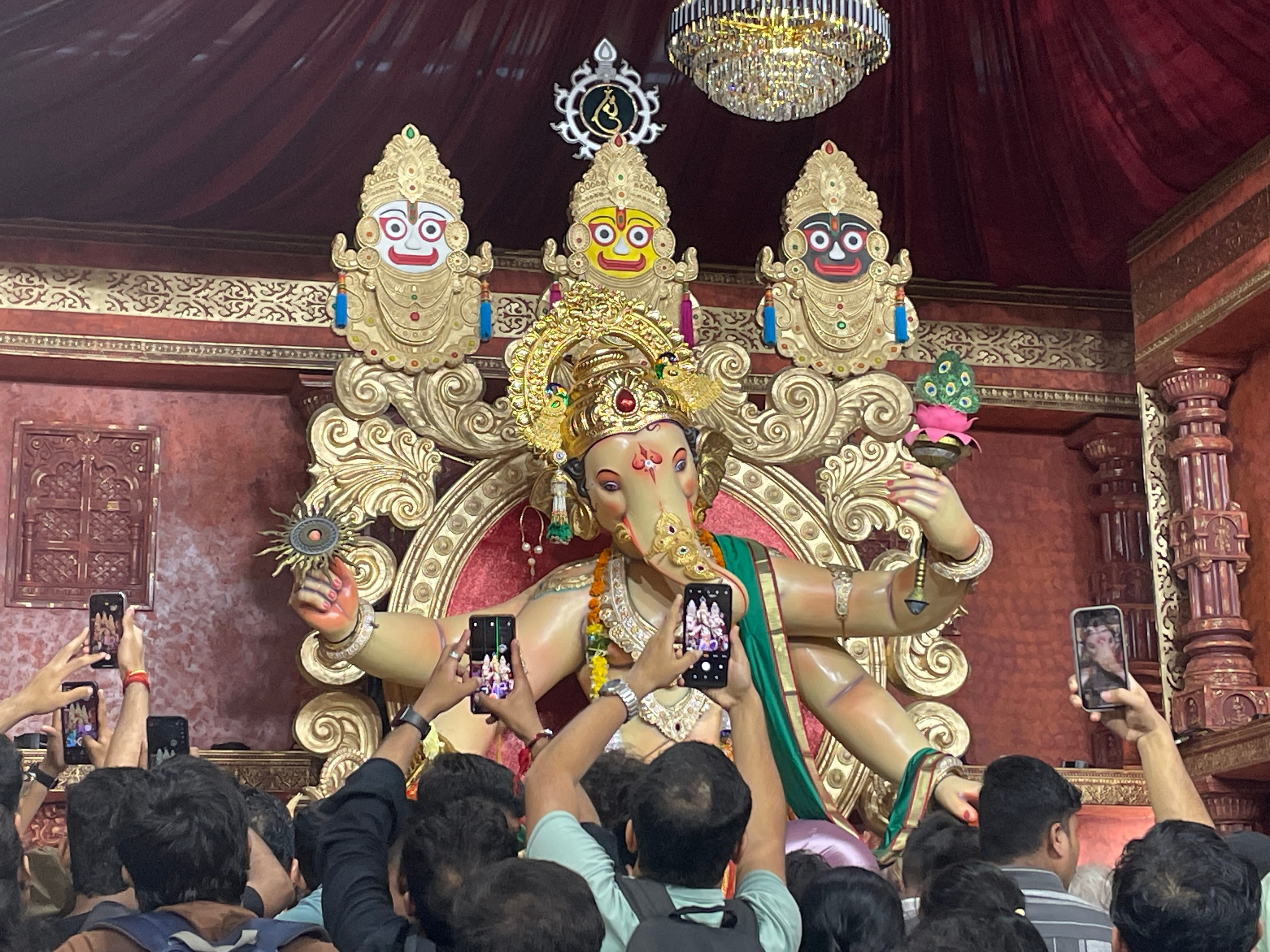
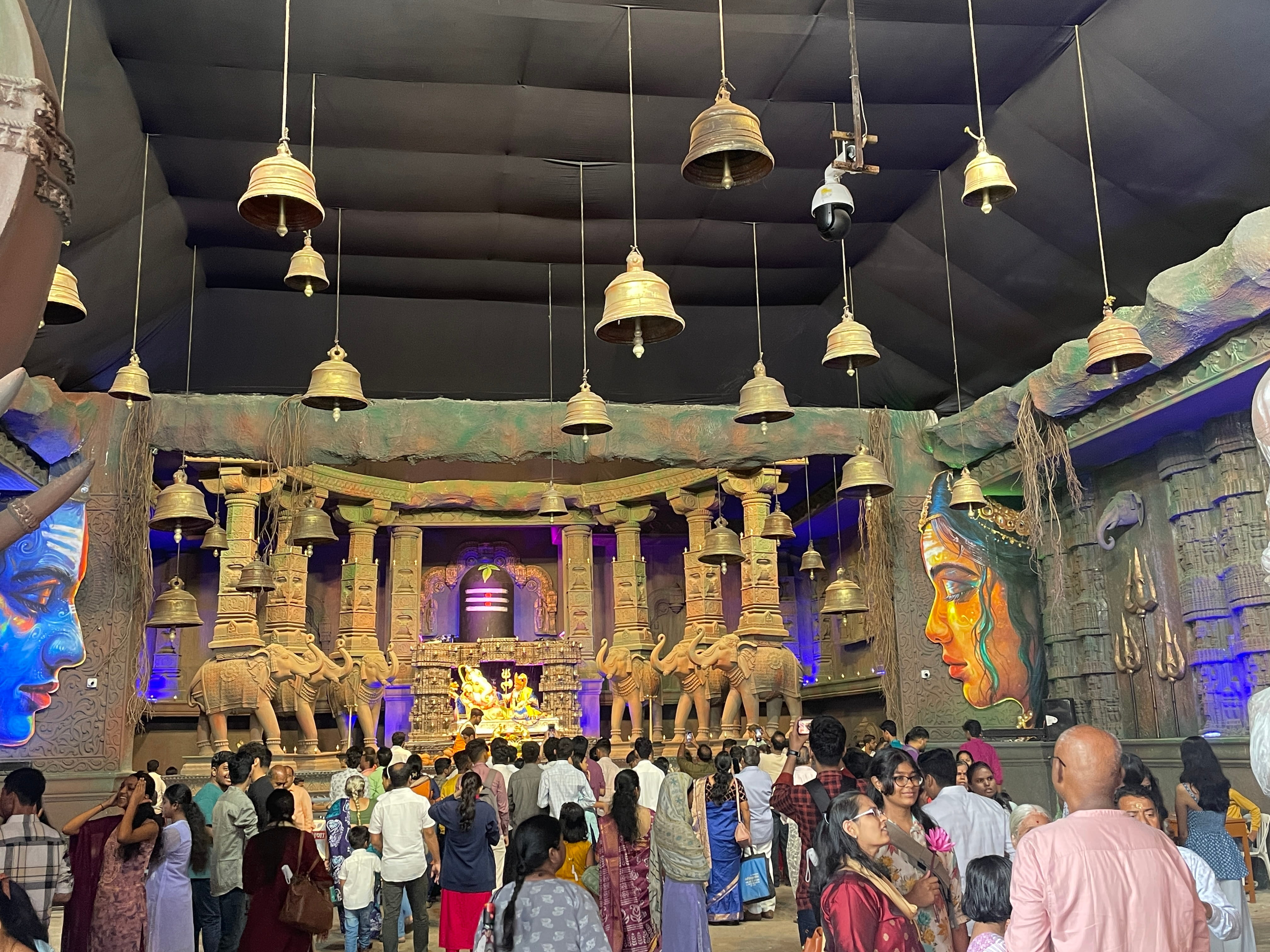
The fourth Maanacha Ganpati is Tulshibaug. Tulshibaug itself is synonymous with the traditional shopping culture of Pune, with the area long associated with traders and shopkeepers. The Ganpati celebration reflects that connection with the wider commercial community, and the decoration we saw that year had a Jagannath Puri theme. This was one of the things I loved about Pune, because the pandals were not merely decorated spaces but often became a way of telling stories.
One could spend as much time looking at the theme as looking at the murti itself. The craftsmanship, visual storytelling and effort that went into the pandals were part of the experience. In many places, the decorations became temporary public exhibitions that brought mythology, history and cultural traditions into the middle of everyday neighbourhoods. The Ganpati was at the centre, but the story surrounding the Ganpati was often just as fascinating.
Kesari Wada and Lokmanya Tilak
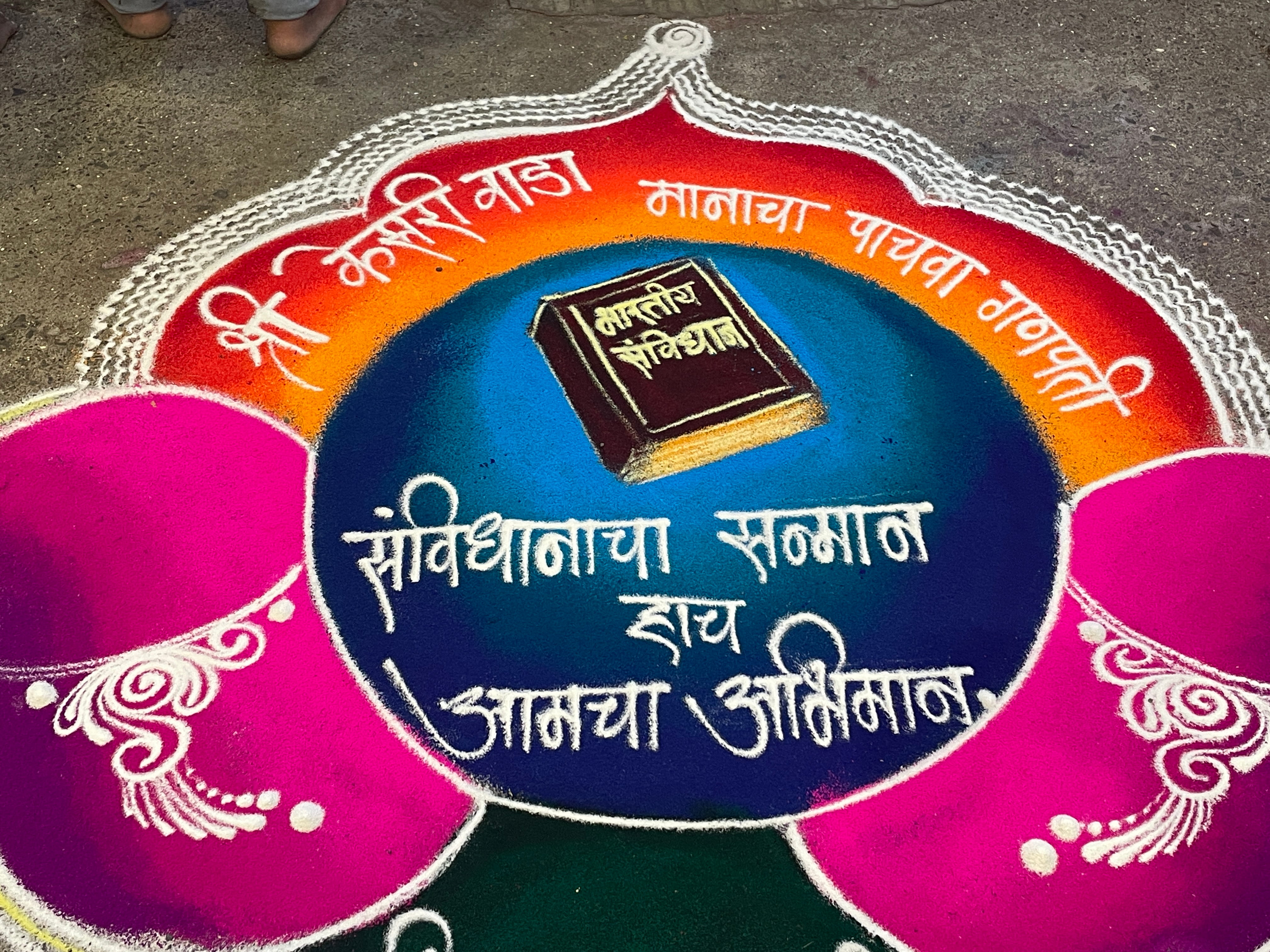
The fifth Maanacha Ganpati is at Kesari Wada. This is where the story of Pune’s Ganeshotsav connects with the larger history of India’s freedom movement. Lokmanya Bal Gangadhar Tilak is closely associated with the popularisation and organisation of Sarvajanik Ganeshotsav in the late nineteenth century, although Ganesh worship itself was, of course, much older. The public festival format became a powerful way of bringing people together at a time when political mobilisation under British rule was restricted.
Today, when we see thousands of people gathering for Ganpati, it is easy to forget how significant that transformation was. Kesari Wada therefore represents more than another darshan. It represents part of the history of how Ganeshotsav became a public celebration and how religious and community spaces acquired a wider social significance. Standing there during the festival made that connection between history and the present particularly tangible.
Beyond the Five Maanache Ganpati
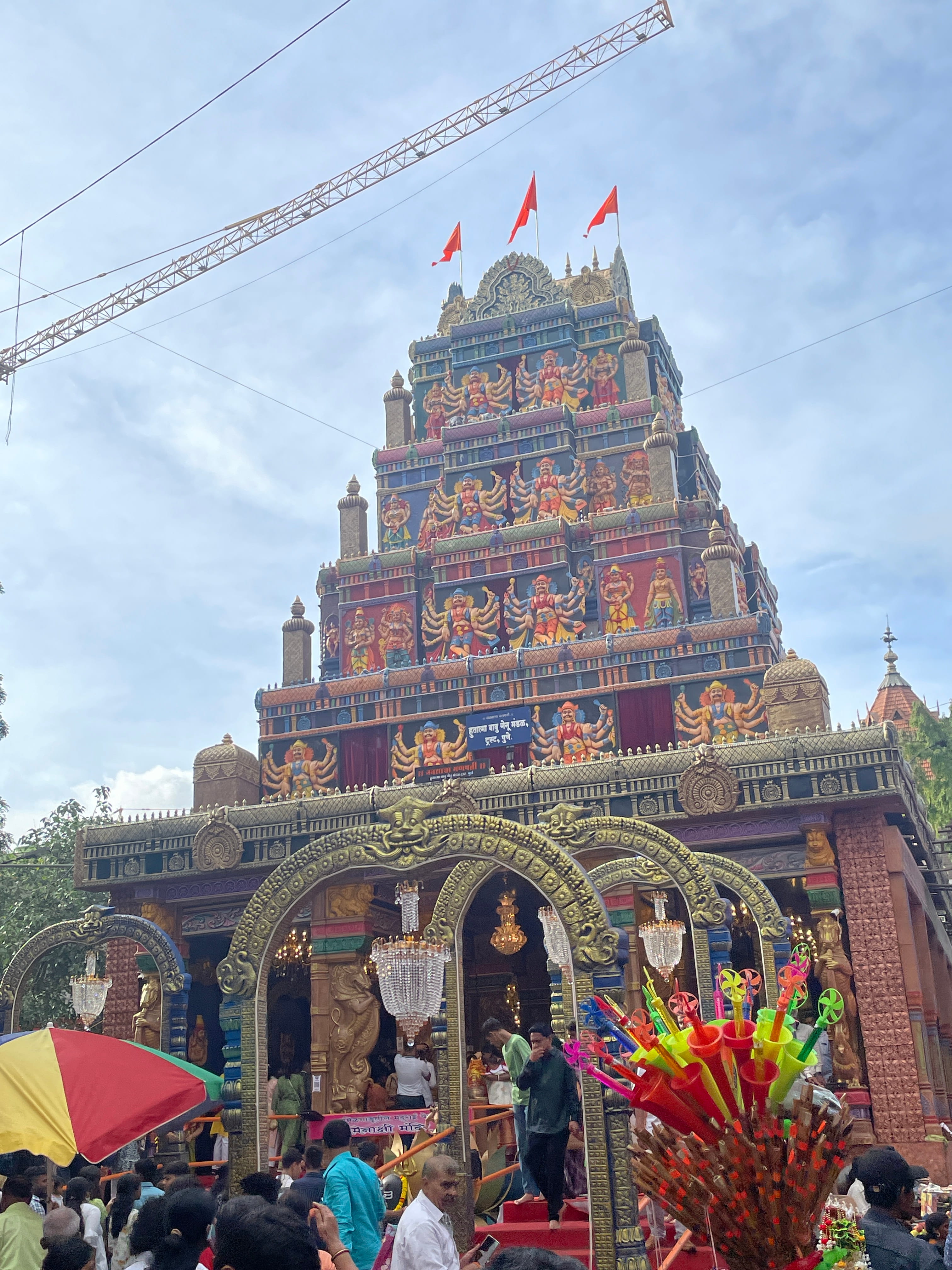
The five Maanache Ganpati were only the beginning. That night we also visited several other mandals, including Ganesh Mitra Mandal in Kasba Peth, Hanumant Babu Ghenu Mandal, Phani Ali Talim Trust, Nana Haud, Tarod Mandal, Sainath Mitra Mandal and Budhwar Chowk Sarvajanik Ganapati, along with several smaller mandals that we encountered along the way. The sheer number of mandals meant that we could have continued walking almost indefinitely. Every few streets seemed to reveal another pandal, another murti or another interpretation of the festival.
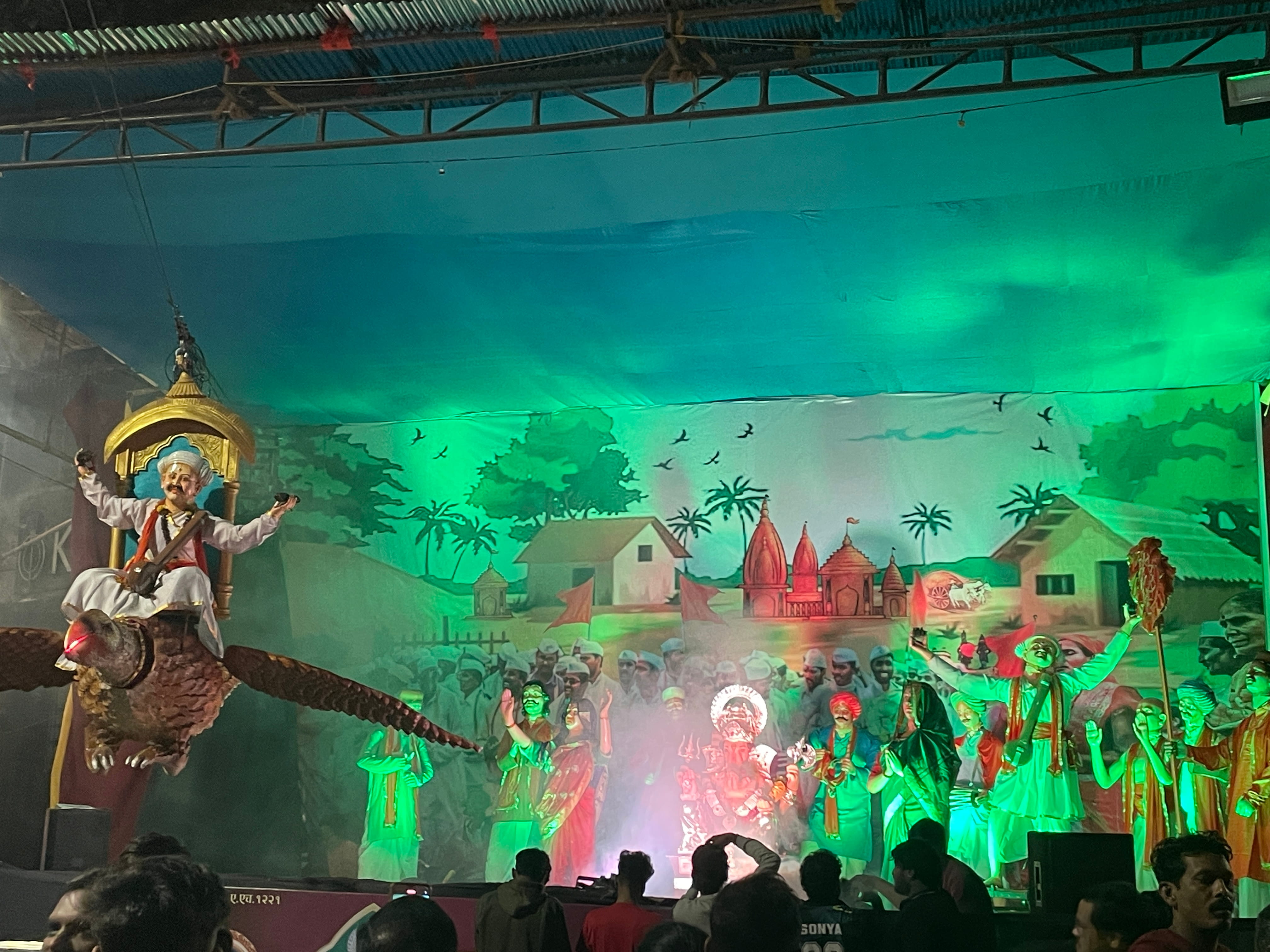
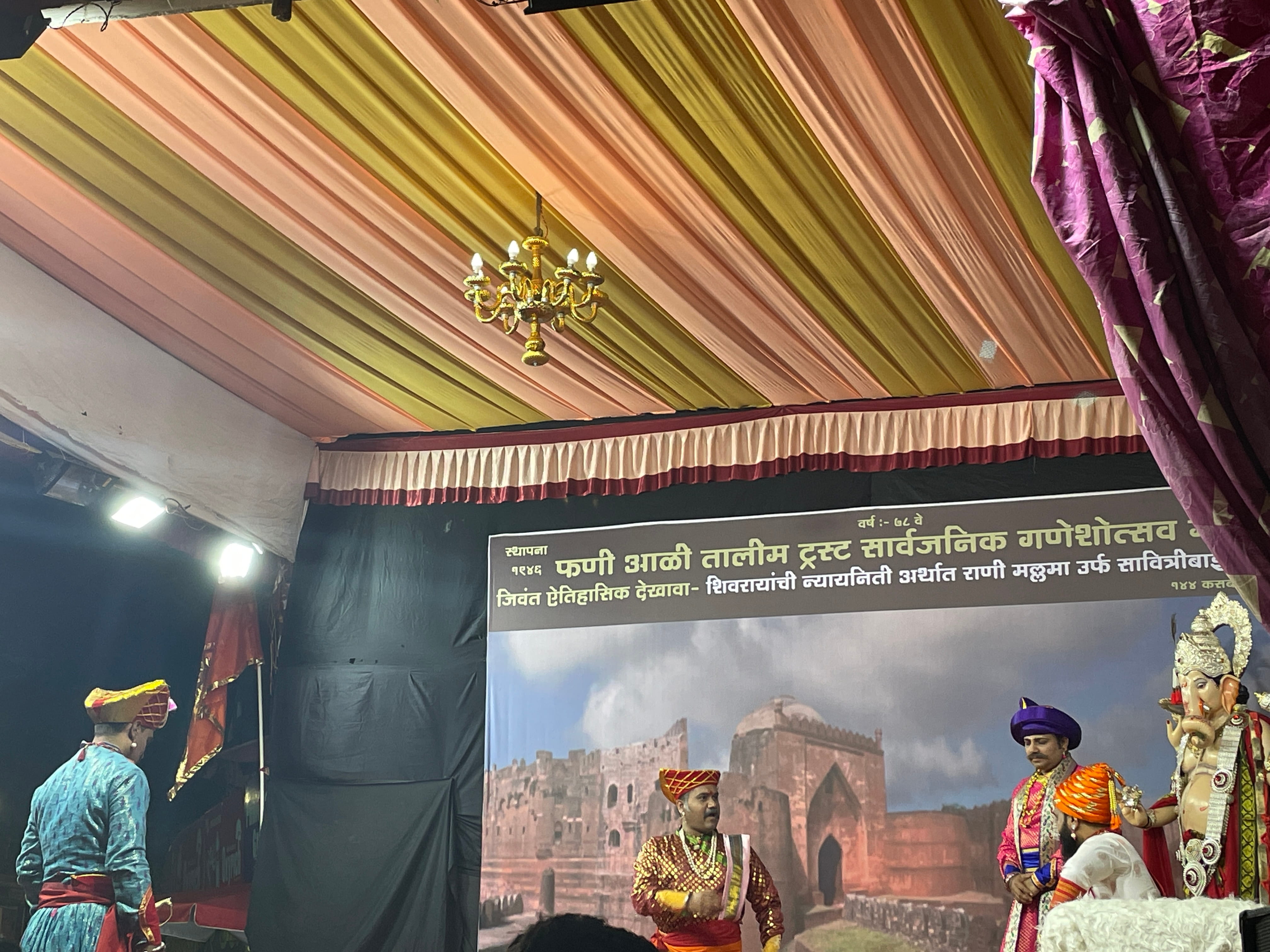
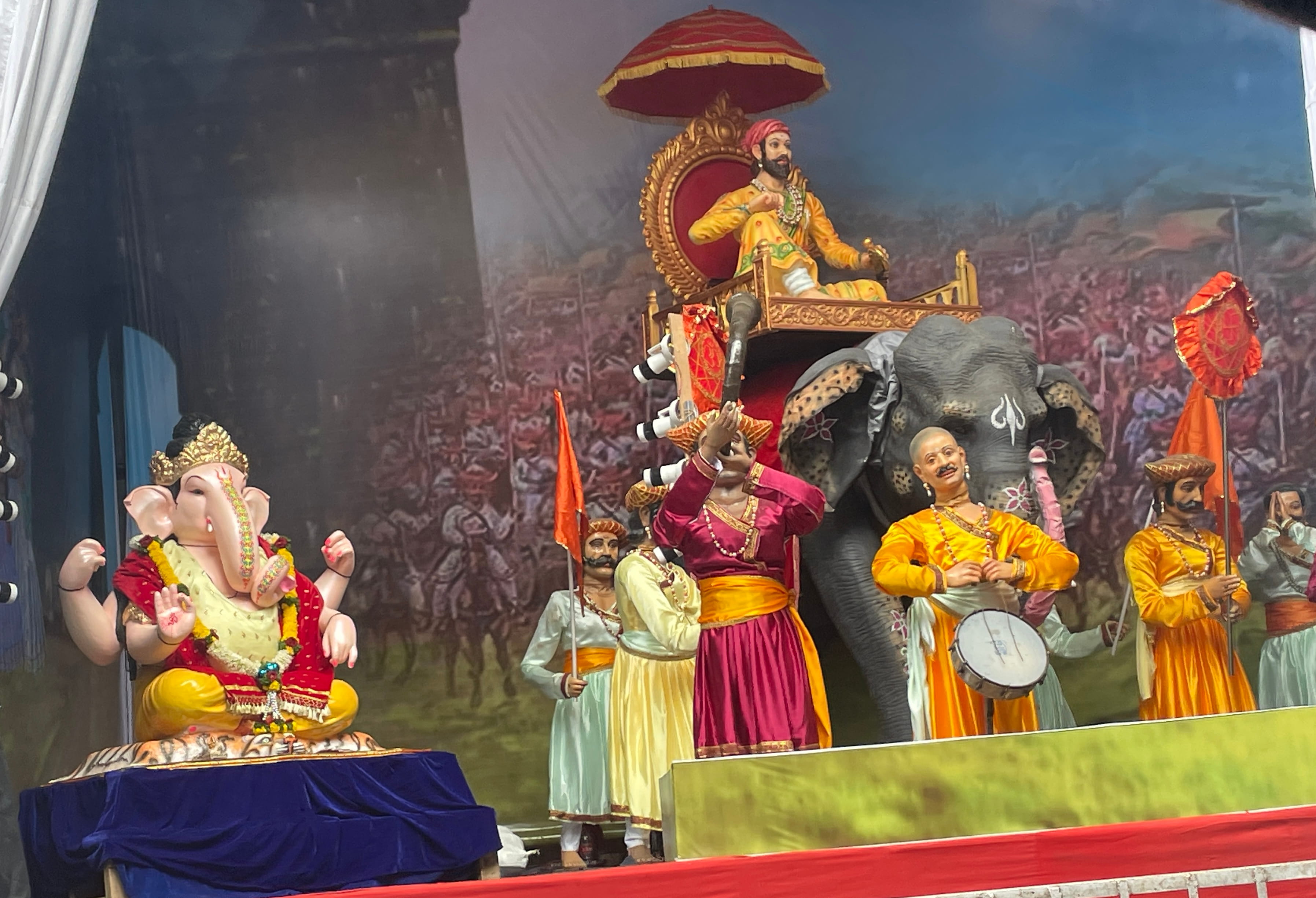
Some of the presentations were particularly memorable. At Phani Ali Talim and Nana Haud, there were live stage performances depicting episodes from the life of Chhatrapati Shivaji Maharaj. Near Mandai Metro Station, we saw a beautiful presentation depicting Sant Tukaram being carried by Garuda to Vaikuntha. These were not simply decorations placed around a Ganpati; they were stories from history, mythology and cultural memory being brought alive in the middle of the city.
Pune Became Personal: A Ganpati Journey Through Memories
For Amar, the Pune visit was also special because of his own memories of the city. It took him back almost thirty years to his college days, when a group of five friends had gone to see the Ganpatis together. He had taken a bus from Kothrud to Alka Talkies Chowk and then walked from one mandal to another, while it rained that evening. Thankfully, the rain was not heavy enough to spoil their plans, and after completing the darshan the five friends walked back together.
Nearly three decades later, we were walking through Pune’s Ganpati celebrations again. The streets had changed, the city had changed and Amar had certainly changed, but the Ganpatis were still there. For a moment, the distance between those two journeys seemed to disappear. And suddenly, the college kid he had been all those years ago did not seem quite so far away.
Oh, to be young again!
Dagdusheth Ganpati — Seeing a Familiar Ganpati Differently
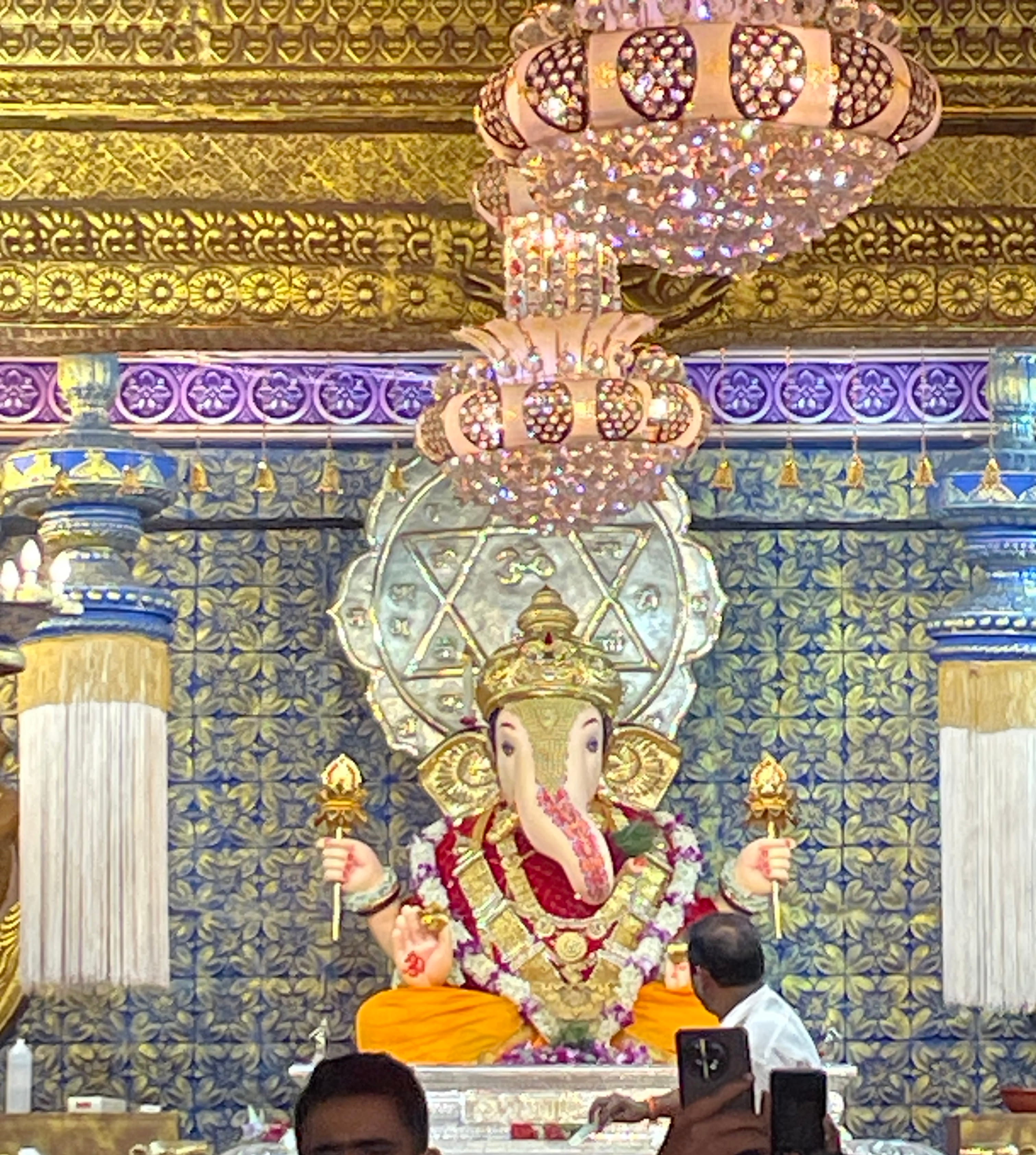
Dagdusheth was not new to me, because I had visited the temple several times before. But seeing Dagdusheth during Ganeshotsav is an entirely different experience. The celebration, lights, crowds and atmosphere transform the experience, while one detail fascinated me particularly: the main murti from the temple is taken out on a peacock chariot, or mayur rath, during the festival and installed at the specially created pandal. After the festival, the murti returns to the temple.
We visited Dagdusheth again the following morning, and the difference was striking. The previous night’s crowds had made the darshan exciting but crowded, while in the morning there was much more space to actually look, pray and notice the details. The experience reinforced a simple lesson that had already emerged from our Mumbai visit. If you want to see many Ganpatis, go early in the morning.
At night, you experience the lights, crowds and energy. In the morning, you experience the calm. The second night ended at around 1 AM after we completed the darshans and returned to our cousin’s home. The following morning, which was Day 3, we continued our Pune circuit with several more Ganpati mandals.
More Pune Ganpati Darshan
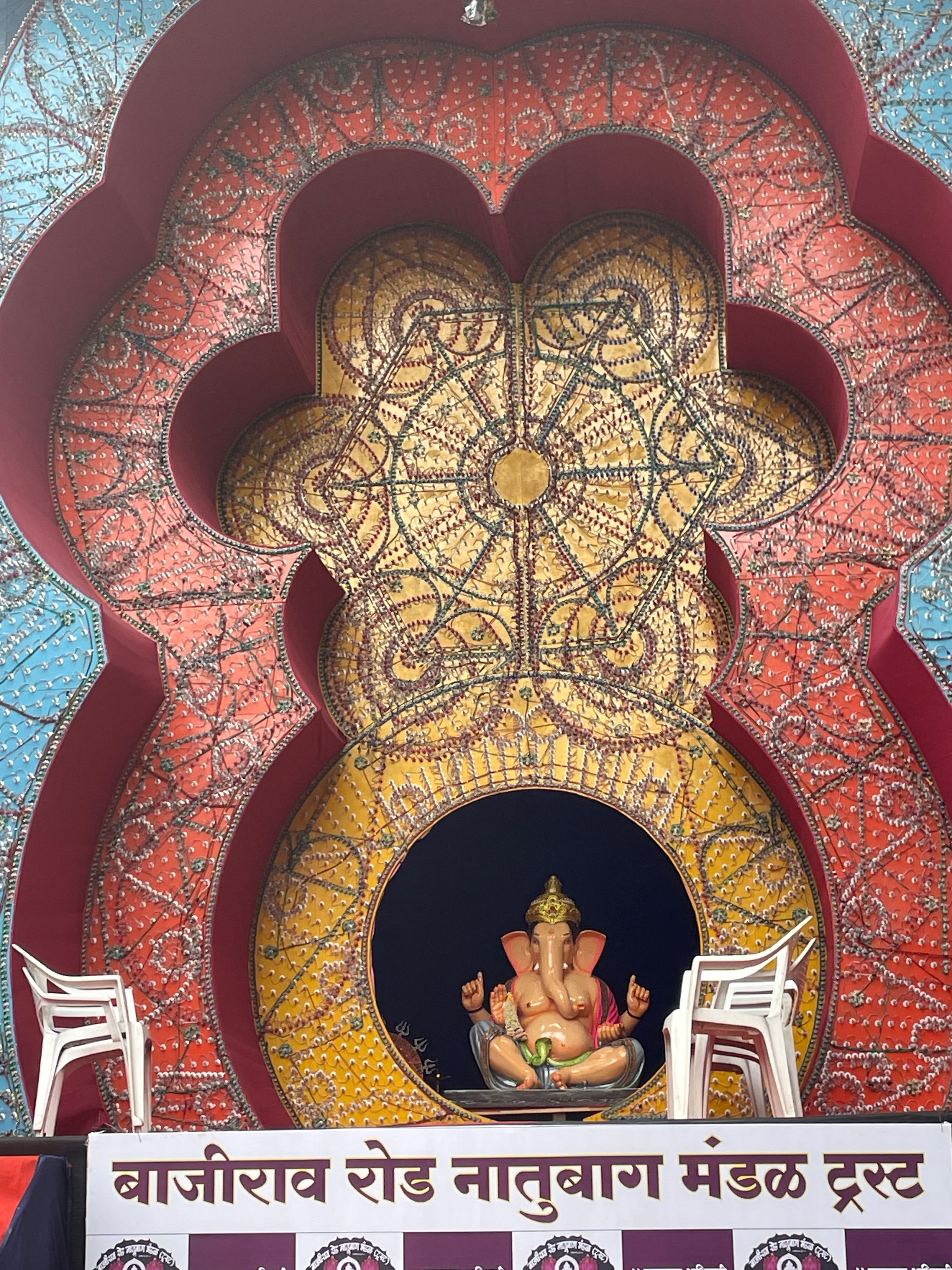
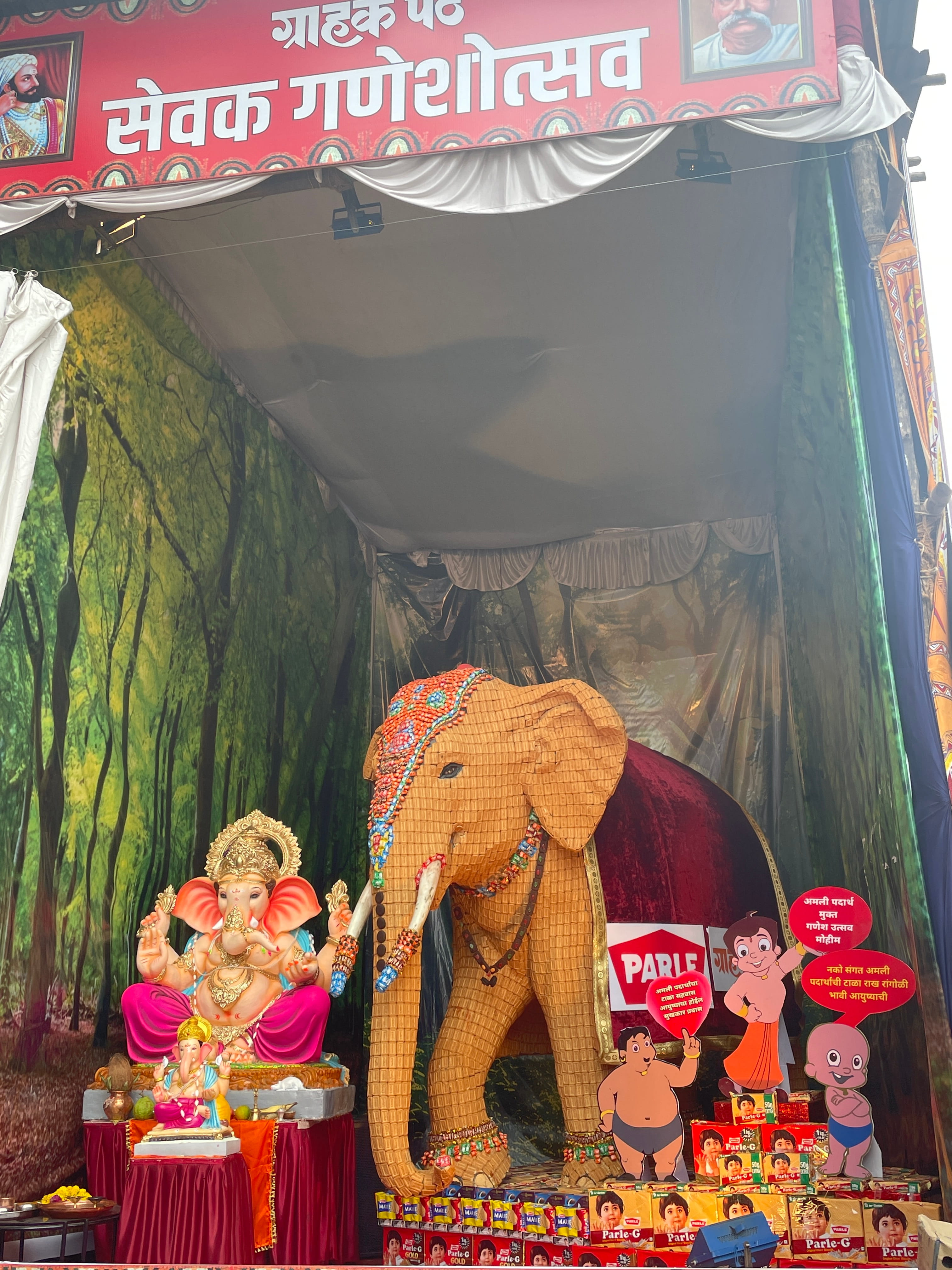
We visited Laxmi Road Ganesh Chowk Mandal, returned to Dagdusheth for a second darshan and visited Kesari Wada again. We also visited Jilbya Maruti Ganpati, Natu Bagh Ganpati on Bajirao Road, Mayuresh Mitra Mandal in Tulshibaug, Grahak Peth Ganpati, Kumthekar Road Ganpati and Mandai Ganpati. Each stop had something different to offer, even when the basic experience was the same — another murti, another crowd and another neighbourhood preparing for Ganeshotsav. By this point, the number of darshans was becoming less important than the variety of experiences we were collecting.
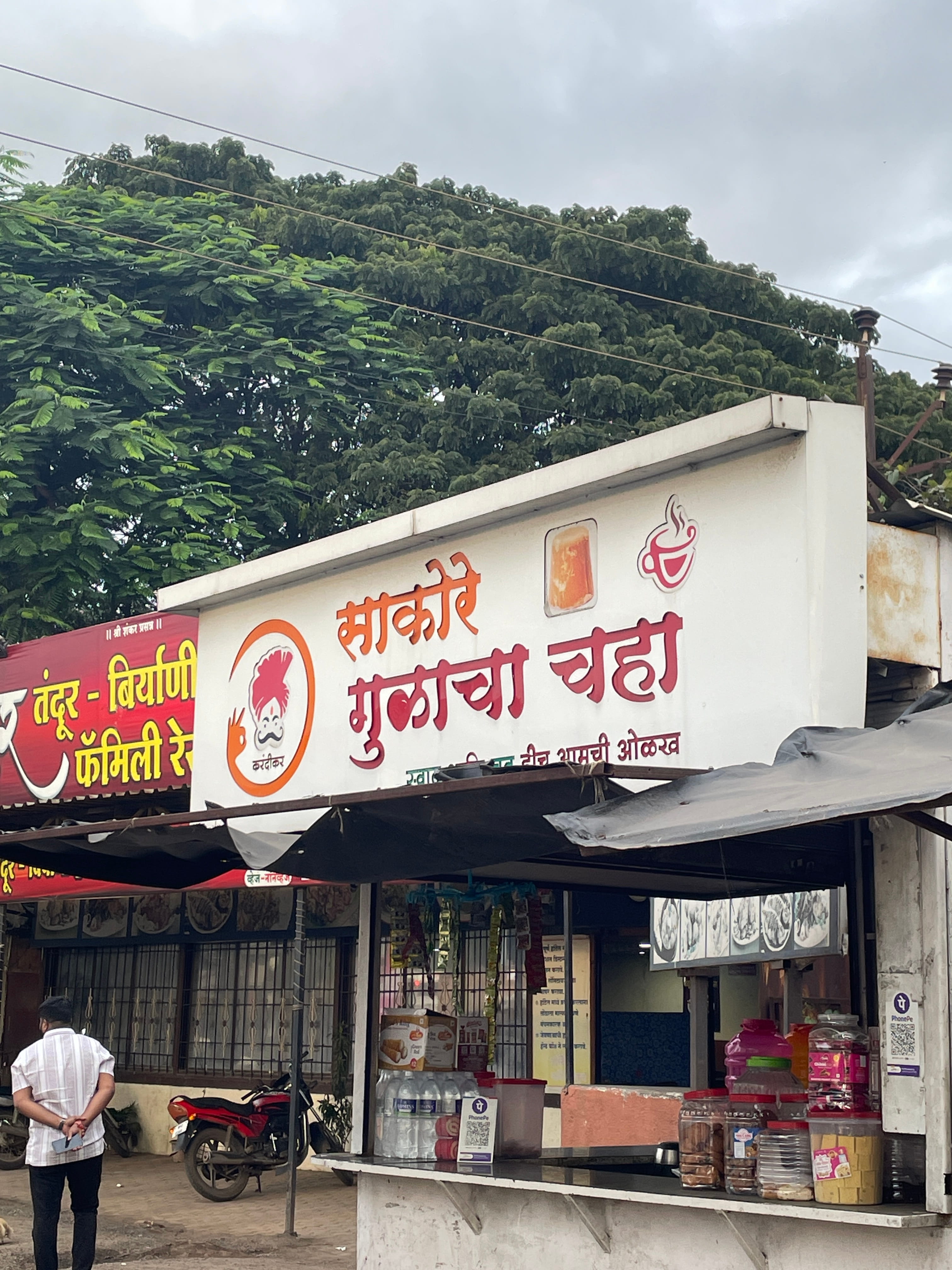
Some of these mandals were particularly memorable because of their themes. The Grahak Peth Ganpati, for instance, was made using Parle-G biscuits, while the Kumthekar Road Ganpati had a Ramayana theme. Everywhere we went, there seemed to be another interpretation, another story and another visual surprise waiting for us. After having breakfast at Wadeshwar, an iconic place in Pune, we decided to take the journey in another direction altogether.
From Ganpati Darshan to Bhimashankar Jyotirlinga
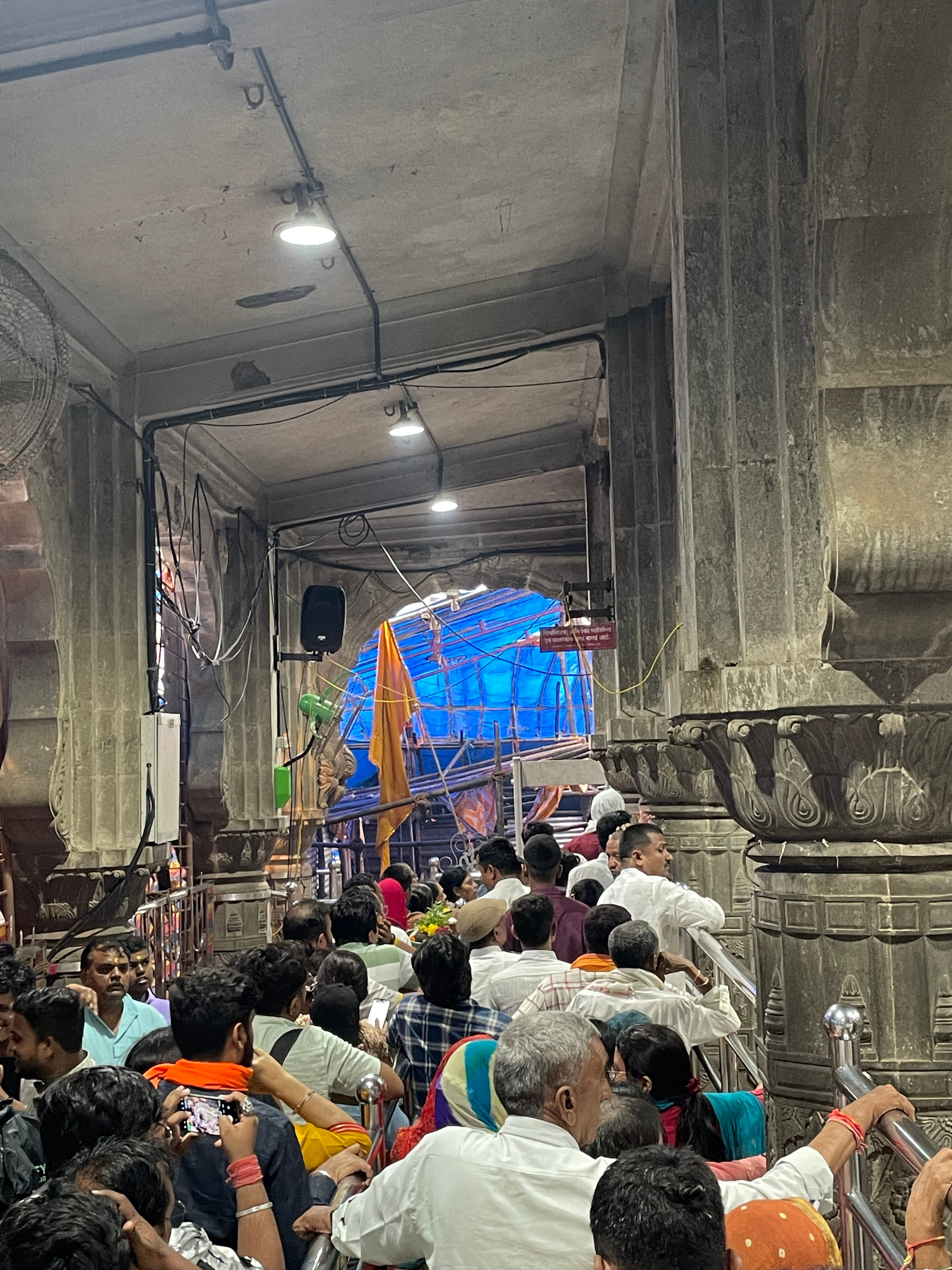
After two days filled with Ganpati darshan, moving through crowded city streets and old neighbourhoods, the journey into the Western Ghats offered a completely different landscape. The green and serene surroundings around Bhimashankar were a welcome contrast to the bustle of Mumbai and Pune. Bhimashankar is one of the twelve Jyotirlingas and one of the three Jyotirlingas in Maharashtra. We completed the darshan within about two hours and then headed back towards Pune.
We returned to Pune that evening and went to our relatives’ home for Gauri darshan, which should not be confused with Gowri Ganesha as celebrated in Karnataka. Gauri, regarded as Ganesha’s sisters, comes home during the festival on the third or fourth day and is followed by lunch the next day. Families welcome her with the same affection and devotion with which they welcome Bappa. After two days of enormous public celebrations, this intimate family ritual felt completely different.
That evening, sitting with family and seeing Ganesha and Gauri together, felt like the journey had finally come full circle. We had seen some of the biggest public celebrations in Mumbai, walked through the old neighbourhoods of Pune and travelled to a Jyotirlinga. Finally, we were sitting in a family home for Gauri-Ganpati Puja. When we looked back at the journey, we realised that we had experienced more than twenty-five Ganpati darshans and one Jyotirlinga.
Was Any of This Planned?
Was all this planned? Not really. Did it happen? Absolutely. We may think that we are planning everything, carefully deciding where to go, what to see and how much time to spend at each place, but sometimes the journey takes over. There is a beautiful Marathi thought that comes to mind: “आपण फक्त निमित्तमात्र.”
We may think that we are planning everything, but the reality is that we are only the instruments. The real doer is Bappa. Perhaps, in 2024, Bappa was simply calling, and we were finally ready to answer. What began as a long-awaited Ganpati darshan in Mumbai became a journey through Mumbai and Pune, old neighbourhoods, family memories, more than twenty-five Ganpatis, a Jyotirlinga and a quiet Gauri Puja at the end.
We completed the journey and returned to Namma Bengaluru the next morning, but the memories remain. The trip was never really about counting the number of Ganpatis we had seen or ticking places off a list. It was about following where the journey took us and being present for each darshan, each story and each unexpected connection. And when the time comes to say goodbye to Bappa, there is only one thing left to say: “पुढच्या वर्षी लवकर या.”
Share Your Ganeshotsav Memories
Every family has its own Ganeshotsav traditions, memories and stories. Some may be connected with a neighbourhood Ganpati, some with a family celebration, and others with a journey undertaken specially for darshan. Our 2024 journey taught us that some of the most memorable travel experiences are not necessarily the ones planned down to the last detail. We would love to hear your own stories of Ganesh Utsav, your favourite Ganpati darshans and the journeys that Bappa has taken you on.
Summary of Our Ganpati Darshan Journey
In 2024, Bappa finally called. Over three days, we completed more than twenty-five Ganpati darshans across Mumbai and Pune, beginning with a peaceful early-morning darshan of Lalbaugcha Raja and continuing through the five Maanache Ganpati, Dagdusheth, several neighbourhood mandals and a family Gauri Puja. We also travelled to Bhimashankar Jyotirlinga, adding a completely different spiritual experience to the journey. What began with a desire to experience Ganeshotsav in Mumbai eventually became a much larger journey through devotion, history, family memories and unexpected discoveries.
२०२४ में बाप्पा ने आखिरकार हमें बुलाया। तीन दिनों में हमने मुंबई और पुणे में पच्चीस से अधिक गणपति दर्शन किए — लालबागचा राजा के शांतिपूर्ण सुबह के दर्शन से लेकर पुणे के पाँच मानाचे गणपति, दगडूशेठ, अनेक मंडलों और परिवार के घर में हुए गौरी पूजन तक। इस यात्रा में भीमाशंकर ज्योतिर्लिंग का दर्शन भी हुआ, जिसने इस पूरे अनुभव को एक अलग आध्यात्मिक आयाम दिया। यात्रा की शुरुआत एक इच्छा से हुई थी, लेकिन आगे चलकर बाप्पा ने स्वयं जैसे रास्ते खोलते गए।
२०२४ साली बाप्पाने शेवटी हाक दिली. तीन दिवसांत आम्ही मुंबई आणि पुण्यात पंचवीसहून अधिक गणपतींचे दर्शन घेतले — पहाटेच्या शांत लालबागचा राजा दर्शनापासून पुण्याच्या पाच मानाच्या गणपतींपर्यंत, दगडूशेठ, विविध मंडळे, कौटुंबिक गौरी पूजन आणि भीमाशंकर ज्योतिर्लिंगापर्यंत. हा प्रवास पूर्णपणे आखलेला नव्हता, पण प्रत्येक टप्प्यावर काहीतरी नवीन अनुभवायला मिळत गेले. शेवटी मनात एकच विचार राहिला — आपण फक्त निमित्तमात्र, खरा कर्ता बाप्पाच.
Last updated: October 9, 2026 at 5:55 pm