We visited a rather unique temple in the Hassan district of Karnataka, the Hasanamba Mandir. Generally when we think of places to visit in Hassan, there is reference of the famous temples of Belur and Halebid, or the Jain pilgrimage centre of Shravanabelagola. These are places that are widely promoted as tourist destinations, and rightfully so, given their historical and architectural significance. But right in the heart of Hassan city is another unique temple, one that has a rather unusual tradition associated with it.
The Mandir Where the Divine Opens Its Doors Once a Year
Unlike most temples, where devotees can visit throughout the year, the sanctum of Hasanamba Temple remains closed for almost the entire year. It opens only for a brief period during Deepavali, when lakhs of devotees from different parts of Karnataka and neighbouring states come to seek the blessings of Goddess Hasanamba but what makes Hasanamba Temple particularly fascinating is the tradition associated with its annual closing. Before the temple is closed, a Nanda Deep, or sacred lamp, is lit, and flowers and food offerings (Prasad) are placed before the Devis. According to the belief associated with the temple, when the sanctum is opened again the following year, the lamp is still burning, while the flowers and the prasad remain unspoilt. The belief is that the sanctum remains untouched for the entire year, and yet these offerings retain their freshness. This is one of the most intriguing traditions associated with Hasanamba Temple.
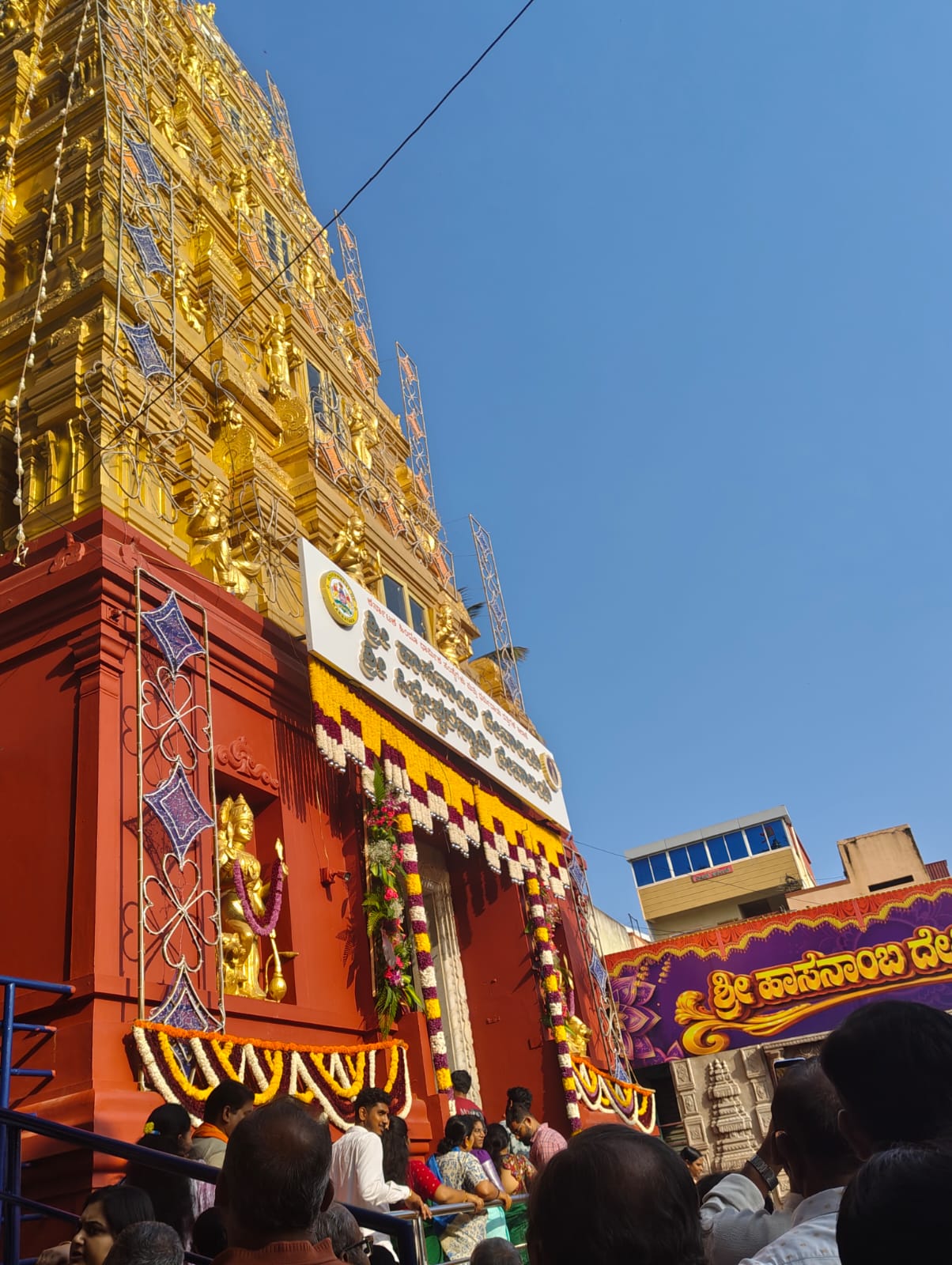
Entrance to Hasanamba Mandir
Last year, during one of our visits to Hassan, we had stopped by while exploring the region’s temples , that was when we first learnt about Hasanamba Temple and its uniqueness. The idea of a temple that opens its doors only once a year was intriguing enough for us to make a mental note to visit it during the next annual opening.
A Visit That Had Been on Our Calendar
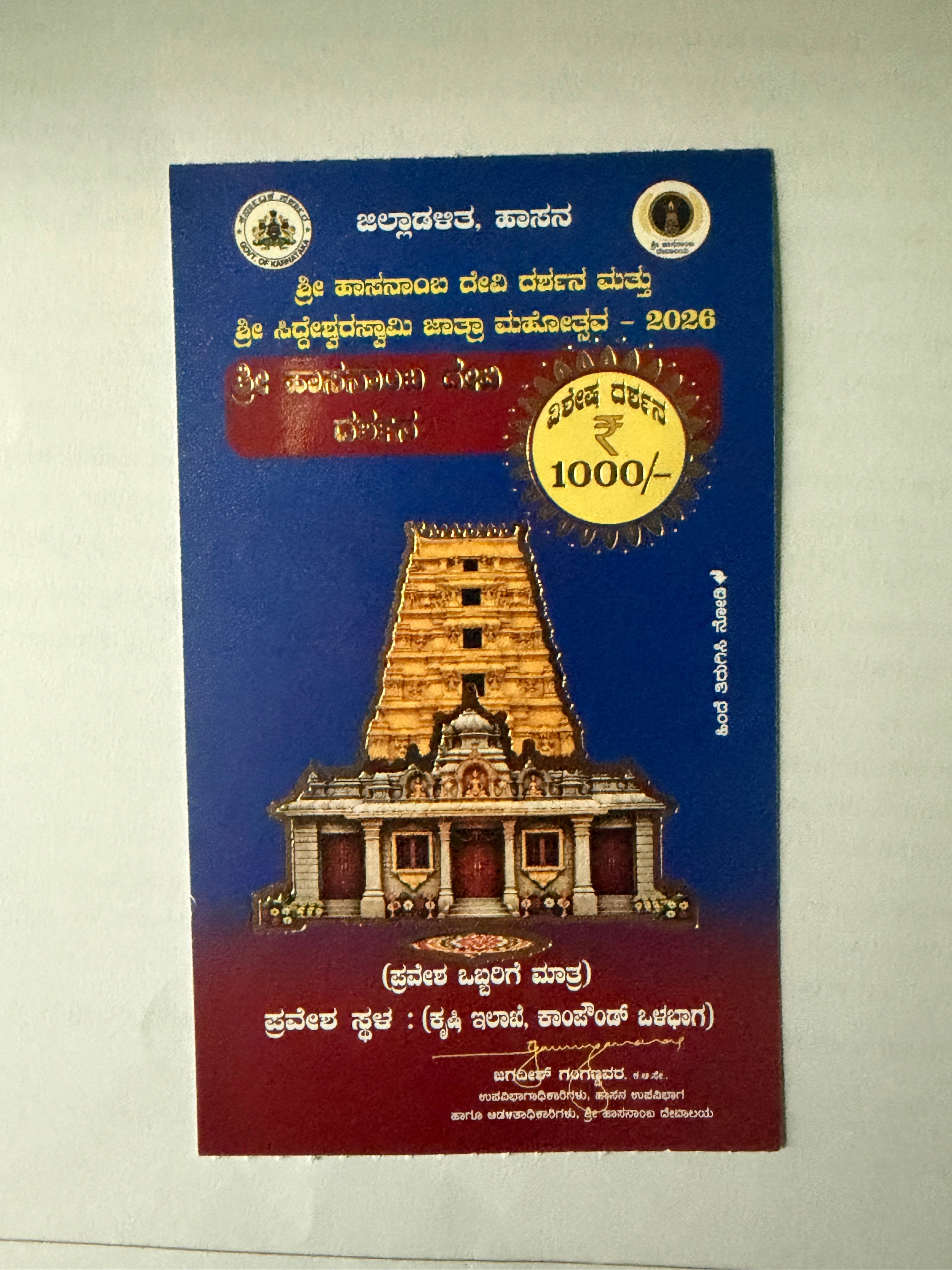
Once the dates for this year’s darshan were announced, we started exploring the various possibilities: should we take a tourist bus, hire a taxi, or drive down ourselves? After speaking to a few friends and neighbours in our community, we realised that the key to having a peaceful darshan was to reach Hassan early in the morning. We decided that driving would be the most convenient option. It would give us the flexibility to start early, complete the darshan and return home without having to depend on any one or worry about getting caught in the crowds. Another important aspect was the VIP darshan pass to have a peaceful darshan.
If you are planning to visit Hasanamba Temple and would like to complete the darshan in a relatively shorter time, I would recommend purchasing a VIP darshan pass, subject to availability. We booked our VIP passes a couple of days before the visit.
An Early Morning Drive From Bengaluru
On 5 th Nov -we started from home at around 4:30 AM and drove straight to Hassan without making any stops. The early-morning drive took us approximately two and a half hours, and we reached the temple area by around 7:30 AM. The administration had made arrangements for designated parking areas at various locations around the temple. Since we had reached early, we were fortunate to find a parking spot not too far away. We parked our vehicle and walked towards the temple.
The crowds were already building up, but the arrangements were reasonably smooth. We joined the queue for darshan, and within approximately 40 minutes, we were able to have a peaceful darshan of the Devis . Rather than a conventional idol, the Goddess is worshipped in a sacred pindi form. This immediately reminded me of Vaishno Devi, where the Divine Mother is also worshipped in the form of sacred pindis. The temple attracts a large number of devotees during its annual opening, and the waiting time can stretch to several hours, particularly later in the day. One of the biggest advantages of starting early was to beat the crowd and have a peaceful darshan.
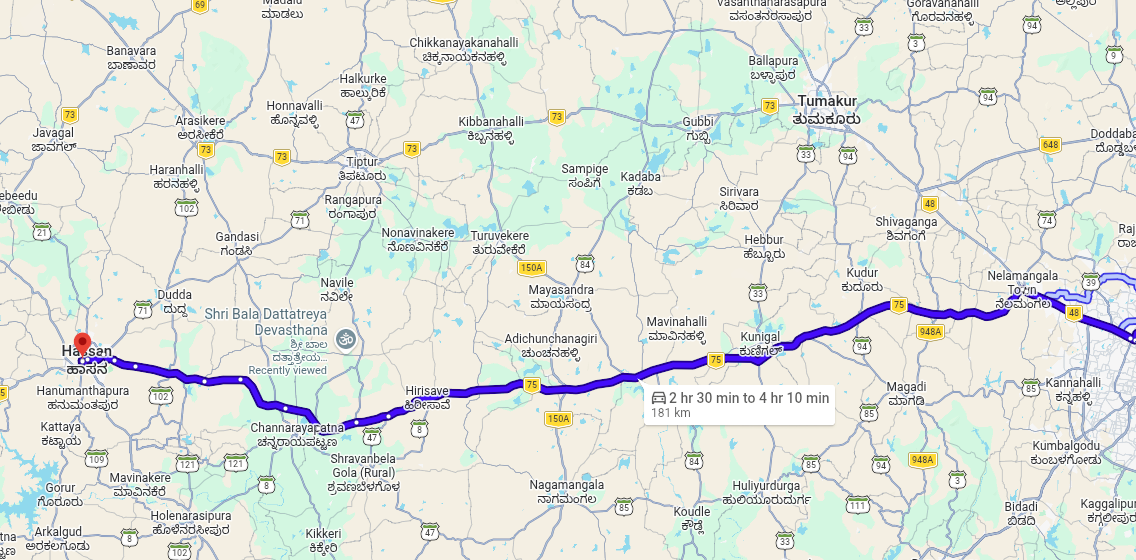
Route Map- Bengaluru to Hasan
A Beautiful Darshan of the Devi
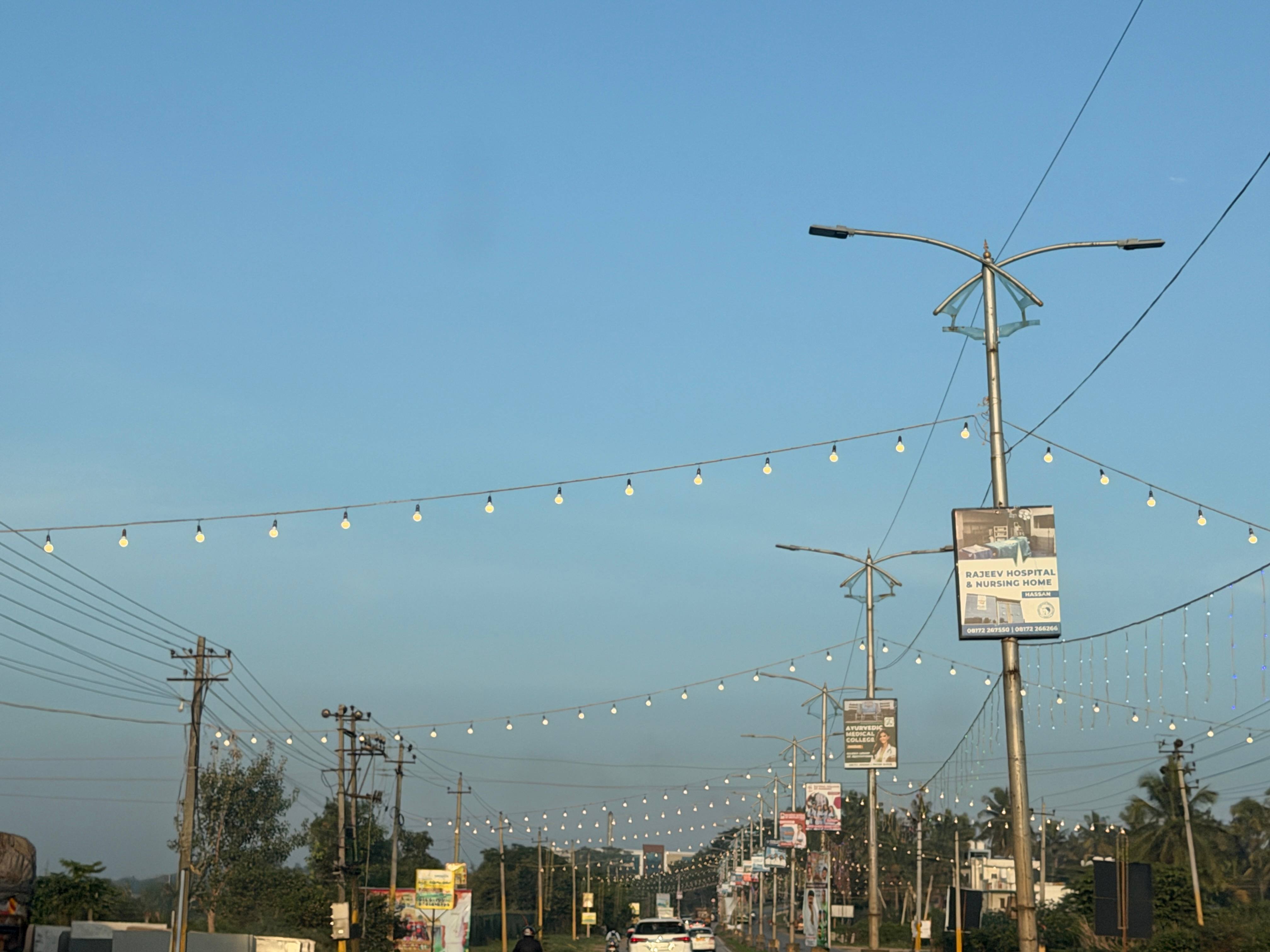
The entire temple was beautifully decorated with flowers and lights. The sanctum had a festive appearance, and the decorations almost made it look as though we were attending a grand procession or a wedding. There was something very special about the atmosphere, with devotees coming in from different parts of the state, all waiting for that one opportunity to have darshan of the Goddess. For us , the darshan itself was beautiful. It was a divine experience. The diya, the flowers and the offerings placed before the Devi were particularly striking. Knowing the traditions associated with the temple made the experience even more meaningful.
Another thing that caught my attention was the Siddheswara Swamy and Darbar Ganpati within the complex. After the darshan, we spent some time taking in the surroundings before making our way out of the temple.
Prasad and a Quick Breakfast on the Way Back
Once we came out of the temple, we had the prasad that was being offered by ISKCON Govindas. It was Kara Pongal, which made for a pleasant conclusion to our temple visit. Having stayed in Bengaluru for quite some time, we have become familiar with the different types of prasad that are offered at various temples. Kara Pongal is one of those preparations that I particularly enjoy, and it was nice to have it after the darshan.
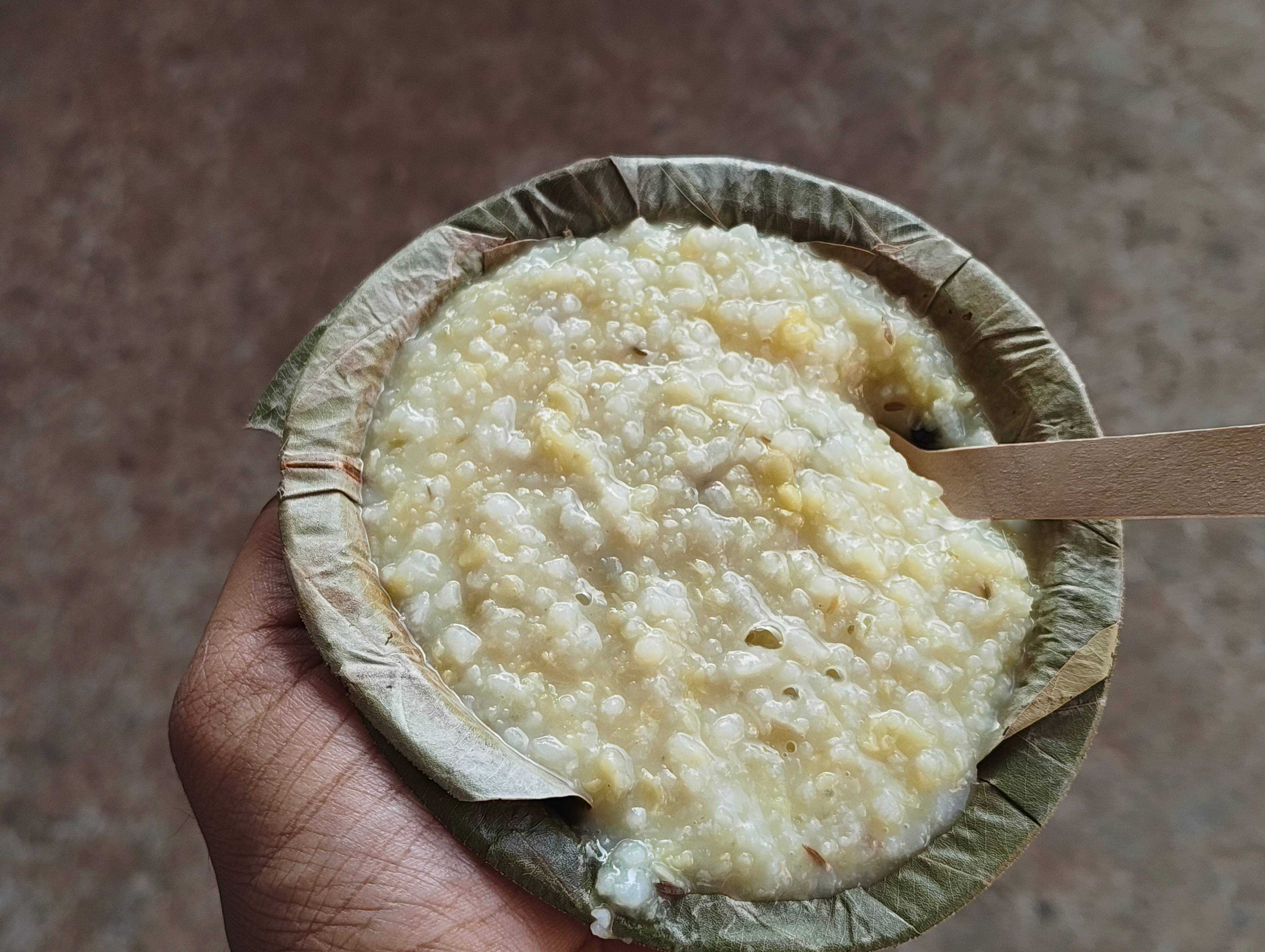
We then decided to head back to Bengaluru. There are quite a few restaurants along the route, so finding a place to stop for breakfast is not difficult. We stopped at Annaprasadam, where we had a filling breakfast. It was a good place to take a break – refuel ourselves before continuing our journey back home. We reached home before 1 PM.
Note: For anyone in Bengaluru who is considering a visit to Hasanamba Temple, I would certainly recommend planning an early-morning trip.
A Miracle, or Is There a Science Behind It?
On our way back I was wondering what makes Hasanamba Temple so unique – is it the tradition associated with it -i.e.a lamp (Nanda deep) that is believed to remain lit for 365 days or Prasad and flowers that do not get spoilt even when the sanctum remains closed for almost an entire year? For a devotee , these are expressions of faith and the power of the Daivi Shakti but for someone who approaches these traditions from a scientific perspective, they may raise questions about the conditions inside the sanctum, the nature of the offerings and the way the lamp is maintained.
This makes me wonder- is it a miracle or is there a science behind it?
Some mysteries are best experienced before they are deciphered.
If you find the tradition intriguing , why not make it a point to visit Hasanamba temple ? Plan your trip, experience the darshan and see for yourself what makes this temple so special. Jai Hasanamba!!
कर्नाटक के हसन जिले में स्थित हसनाम्बा मंदिर अन्य मंदिरों से बिल्कुल भिन्न है — इसका गर्भगृह लगभग पूरे साल बंद रहता है और केवल दीपावली के अवसर पर कुछ दिनों के लिए खुलता है। हसन बेलूर, हलेबिडु और श्रवणबेलगोला के लिए प्रसिद्ध है, परंतु यह मंदिर अपनी वार्षिक घटा की परंपरा के लिए विशेष है — मंदिर बंद करने से पहले एक नंदा दीप जलाया जाता है और देवी के समक्ष फूल व प्रसाद रखे जाते हैं। विश्वास है कि अगले वर्ष जब गर्भगृह खुलता है, तो दीप अभी भी जलता है और प्रसाद व फूल ताज़ा रहते हैं। हमने 5 नवंबर को सुबह 4:30 बजे बेंगलुरु से ड्राइव करके, VIP दर्शन पास के साथ यह यात्रा की। सुबह 7:30 बजे पहुँचकर लगभग 40 मिनट में हमने देवी के शांत दर्शन किए — देवी को पिंडी रूप में पूजा जाता है, जैसे वैष्णो देवी में। क्या यह चमत्कार है या इसके पीछे कोई विज्ञान है? कुछ रहस्य अनुभव करने से ही बेहतर समझे जाते हैं। जय हसनाम्बा!!
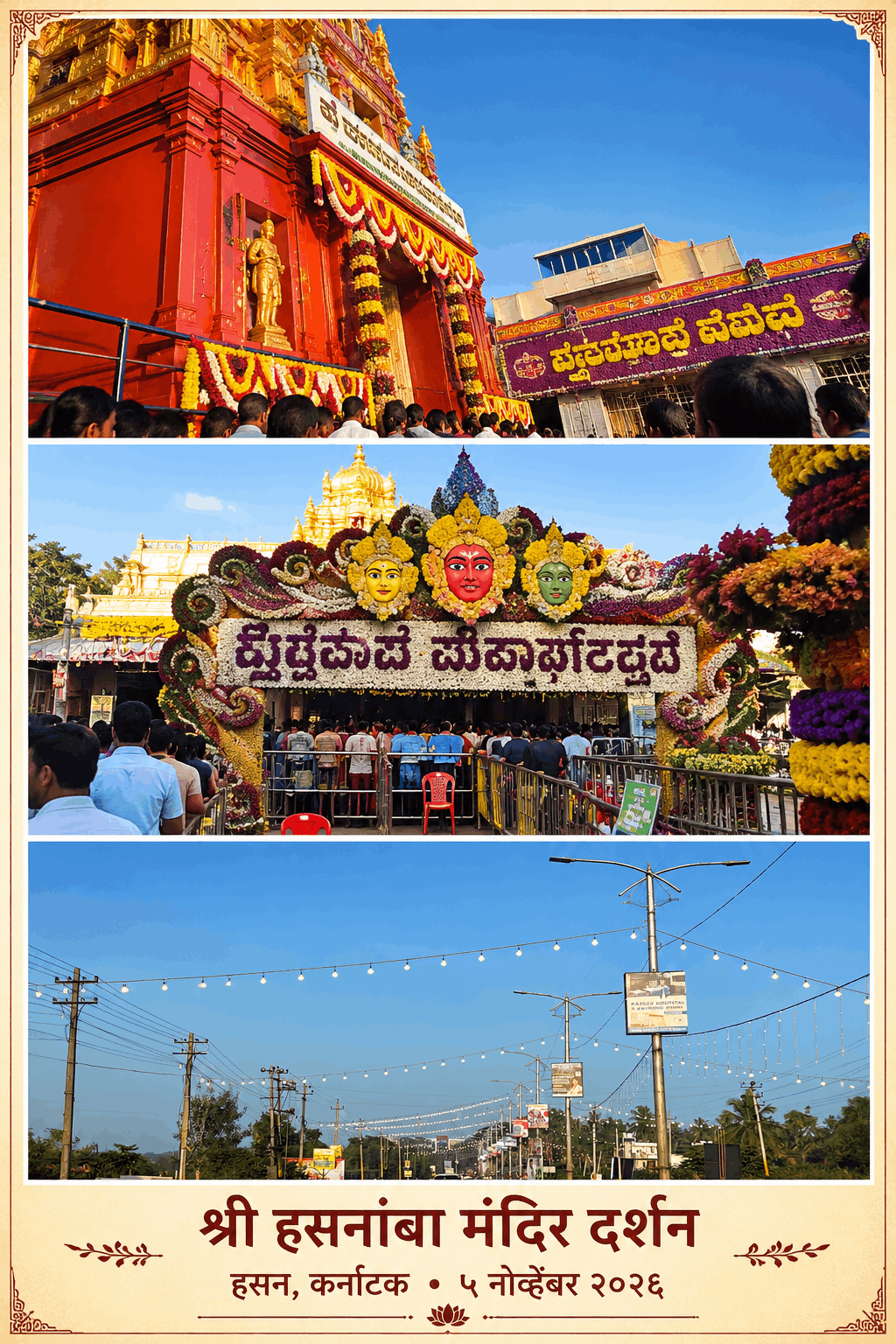
Nov 2026- Hasanamba Mandir Darshan. Images and collage: Amar Vyas
Last updated: November 12, 2026 at 3:25 pm