Sometimes all it takes is a thought, a map and a couple of days to start a road trip
– Mrunal Pandit.
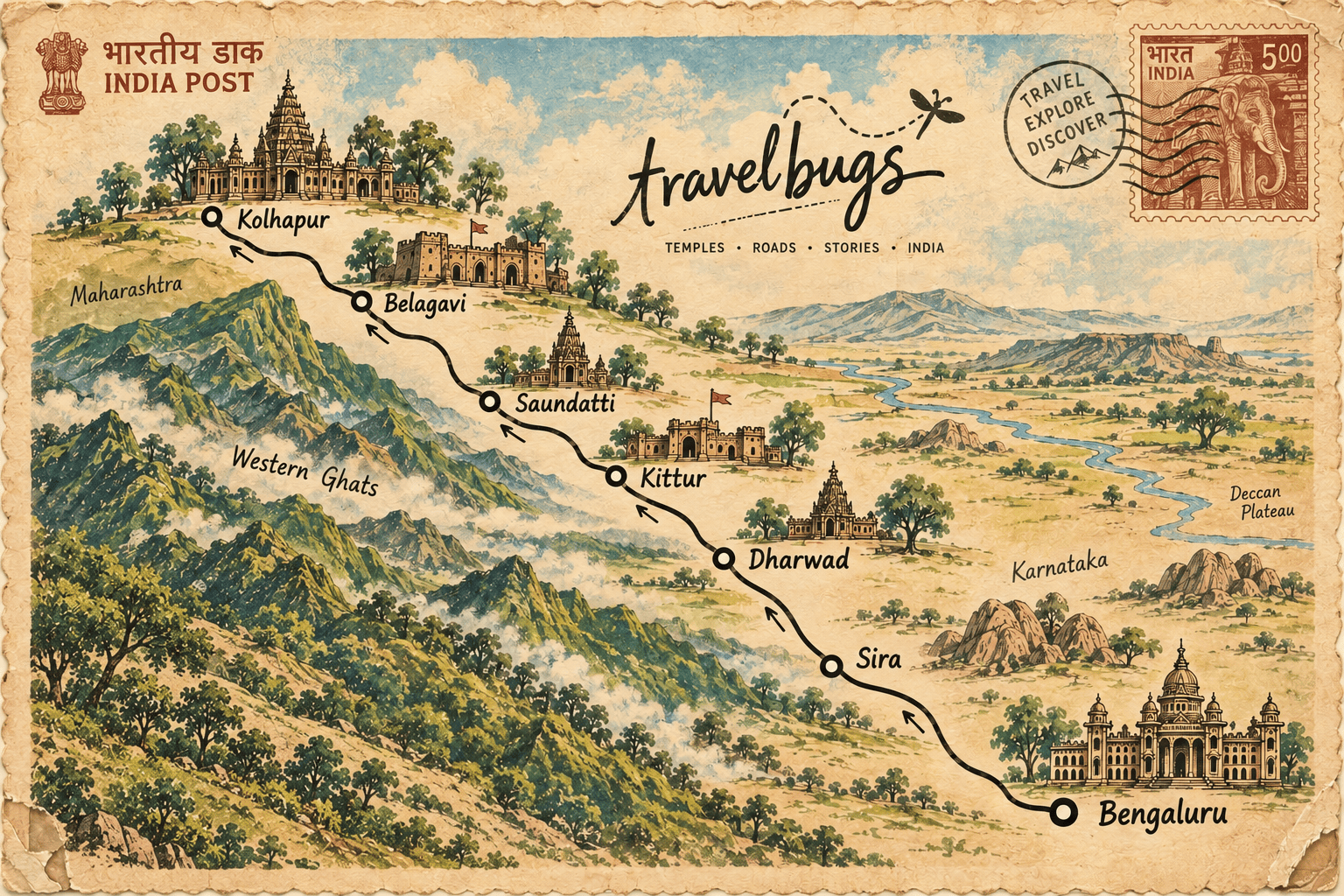
My spouse and I are avid travel bugs, and interestingly, some of our best trips have been the ones planned at the very last moment. About a week ago, we happened to see an ISKCON trip covering Pandharpur, Kolhapur and Tuljapur. Having already visited the other two places, Kolhapur was still sitting on our bucket list, and that got us thinking: why not plan a road trip there instead?
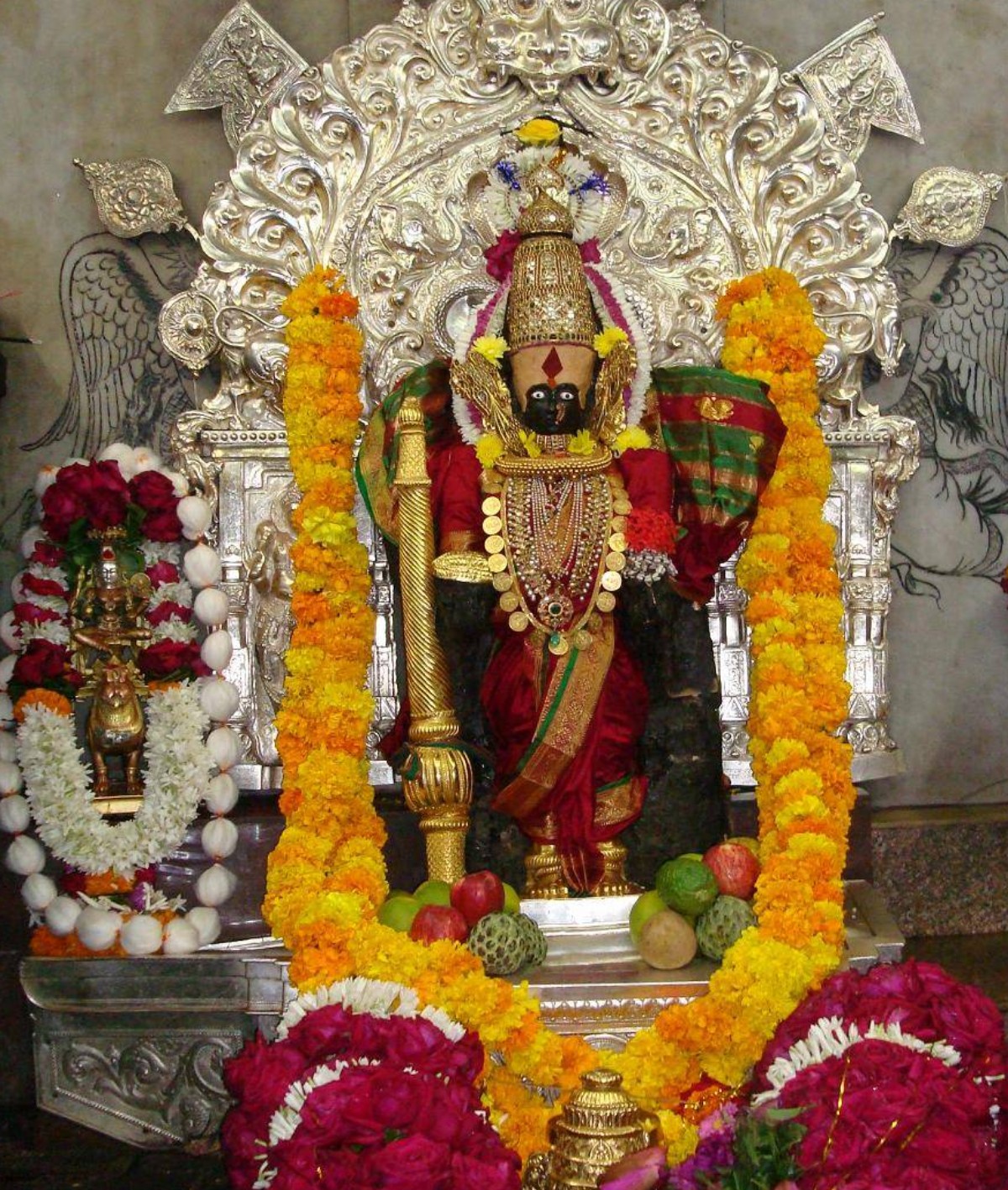 Mahalakshmi Devi at Kolhapur
We looked at the map, identified a few places we had not visited earlier, and what followed was a four-day road trip through Karnataka and Maharashtra, taking us to forts steeped in history, temples, river ghats and, of course, some very good food and shopping. What began as a fairly simple plan to visit Kolhapur gradually expanded into a trail through multi location tour – Kittur, Saundatti, Appachiwadi, Narsobachi Wadi, Kurundwad, Shirol, Khidrapur, Jyotiba and Panhala.
Road Trip in Monsoons
We deliberately chose to travel during the monsoon. The season added its own character to the journey, with lush green landscapes, full rivers and a generally pleasant drive. It also brought its share of challenges—road diversions, construction work, stretches of poor roads and the usual uncertainty of travelling when the weather decides to make its own itinerary.
More importantly, this trip reminded us that travelling is not always about how many places you can tick off a list. Sometimes it is about spending time at a river ghat, discovering a small pilgrimage centre you had never heard of, standing inside a historic fort and imagining the events that unfolded there, or simply stopping for a good meal before getting back on the highway.
Day 1: Bengaluru to Belgavi
We started from Bengaluru at around 6 a.m. Our first stop, about three hours into the drive, was Sira, where we stopped for breakfast. It was a convenient break, giving us a chance to stretch our legs, move around a bit and then get back on the road. From Sira, we continued towards Dharwad. By lunchtime, we reached the Big Mishra food court(s) on the highway, which is another useful stop if you are travelling on this route. You can sit down for a proper meal or simply pick up something to eat and continue your journey. We had lunch and then resumed our drive towards Kittur.
Note: There are several stretches between Bengaluru and Kittur, and further towards Belgavi, where construction work and diversions are currently in progress. During the monsoon, these can slow you down further, so it is worth keeping some additional time in hand rather than planning your journey purely based on the distance.
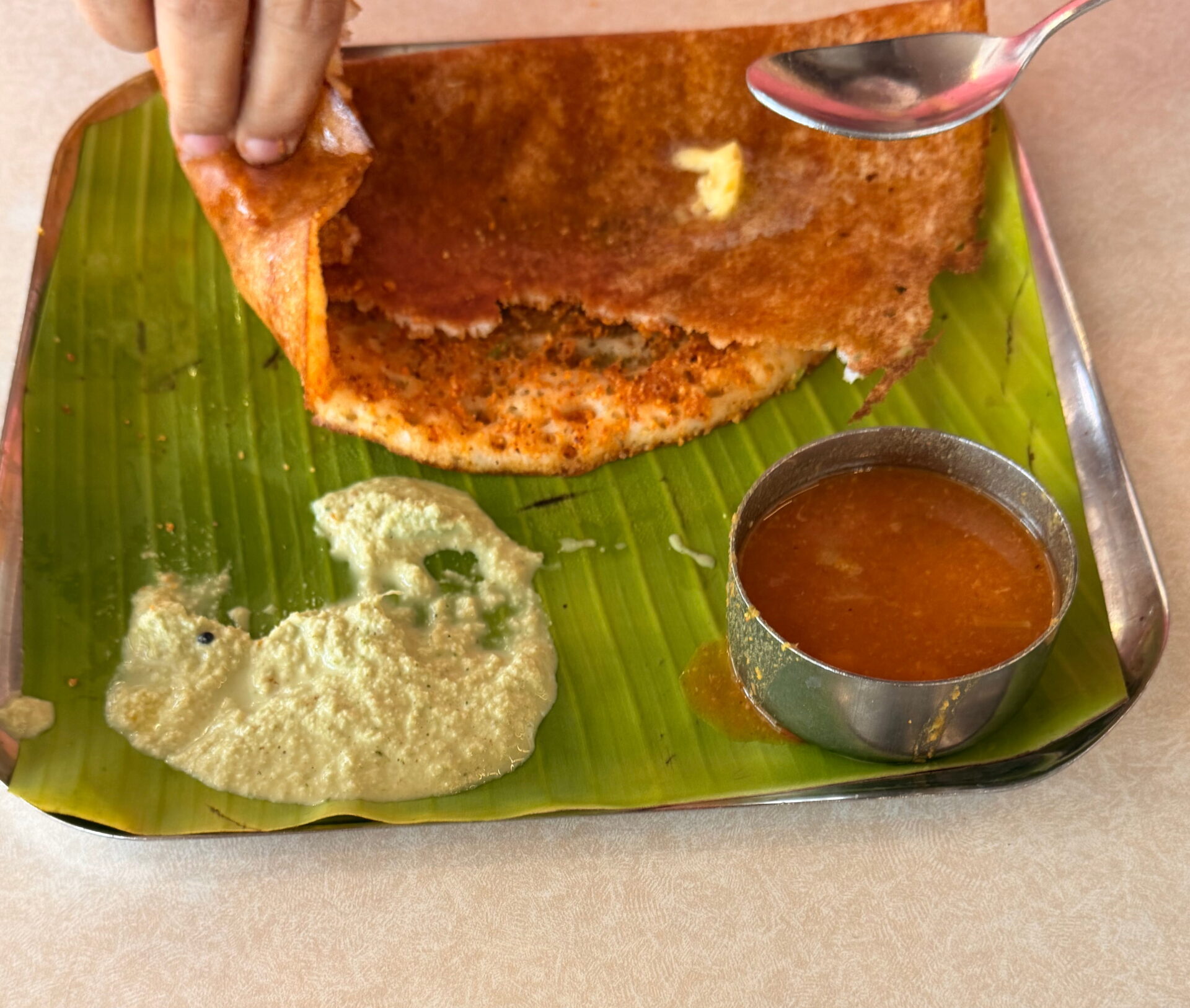 | 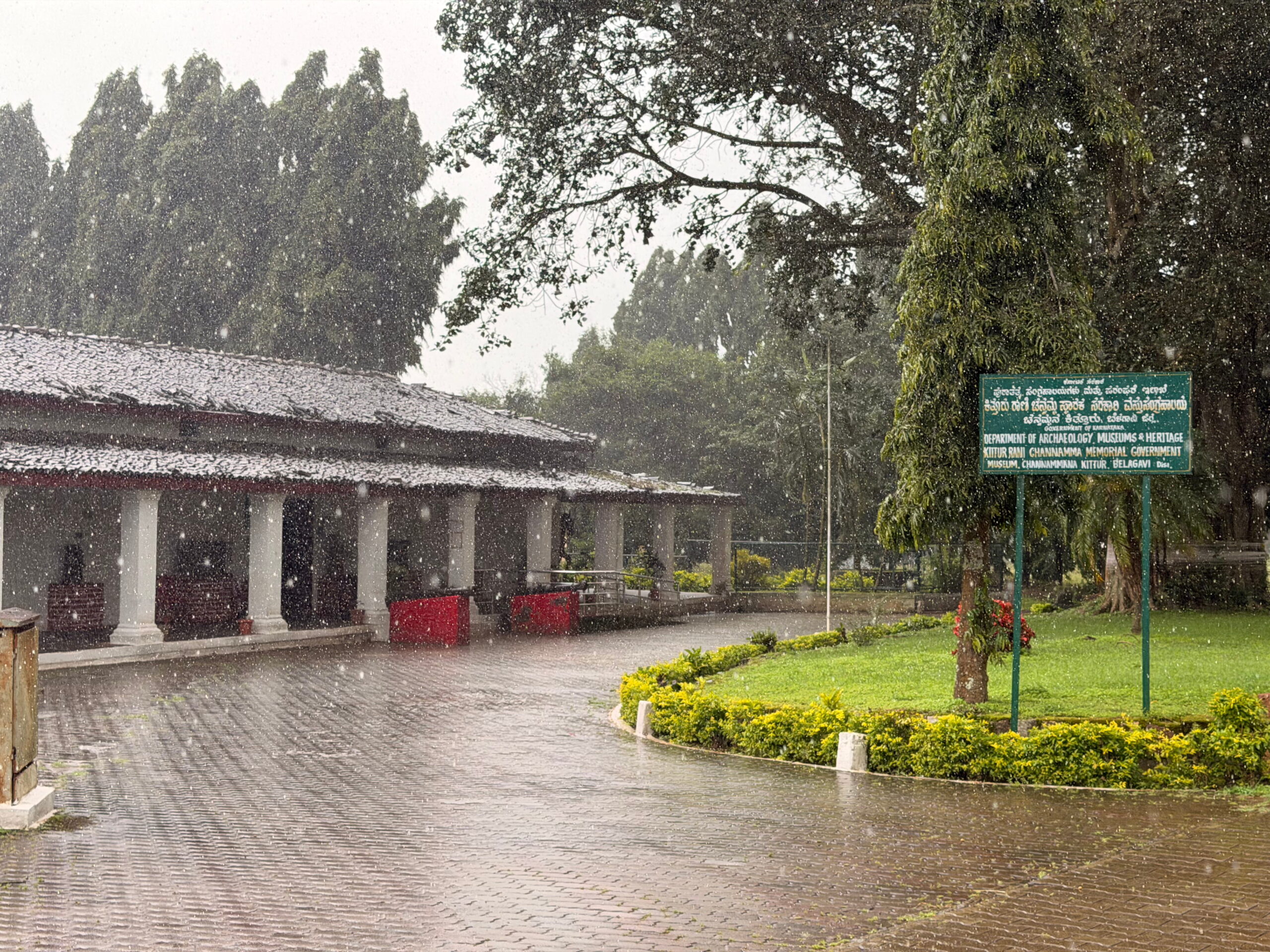 |
Left: Breakfast near Sira on Day 1. Right : Kittur Fort Museum on a rainy August afternoon
Post lunch, we reached Kittur, our first proper historical stop of the trip. The fort is associated with Rani Chennamma. For history buffs, Rani Chennamma is a fascinating figure. She fought the British in 1824 and defeated them in the first engagement, but was eventually captured after the subsequent conflict. She remains an important and much-revered figure in our nation’s history. Read more about Rani Chennamma. The fort is currently in a somewhat dilapidated condition, but considerable restoration work is underway to bring the historic structure back to its original form.
From Kittur, our next destination was the Renuka Yellamma Temple at Saundatti. The temple is visited by devotees from Karnataka, Maharashtra and Telangana, making it an important pilgrimage centre in the region. We reached there by evening, had a good darshan and then continued towards Belgavi.
Note: The mandir is closed between 4 to 6 PM. Hence plan your darshan accordingly.
And no journey through Belgavi is complete without the customary purchase of the famous kunda. We stopped at Camp Purohit -the original, picked up our share of kunda and then headed to our hotel. One of the pleasures of travelling is seeking out food at the places that made it famous. Whether it is Chitale Bandhu’s bakarwadi in Pune, Mishra Pedha, or Duliram’s Pedha (called Penda in Gujarati) in Vadodara, there is something special about tasting a food at the place where its reputation was built. Our experience with Camp Purohit Kunda was a particularly good illustration.
By comparison, the kunda that arrived in our hotel room in Belagavi as part of the welcome kit was, shall we say, not quite in the same league. With time, clones develop, recipes travel and franchises appear for example, we can buy Chitales’ bakarwadi in Bengaluru—but tasting it at the original place is an experience in itself. In contrast, the kunda we bought there was so fresh that, even four days later, after returning to Bengaluru, we were still enjoying it and it had retained its character remarkably well.
That brought Day One to an end.
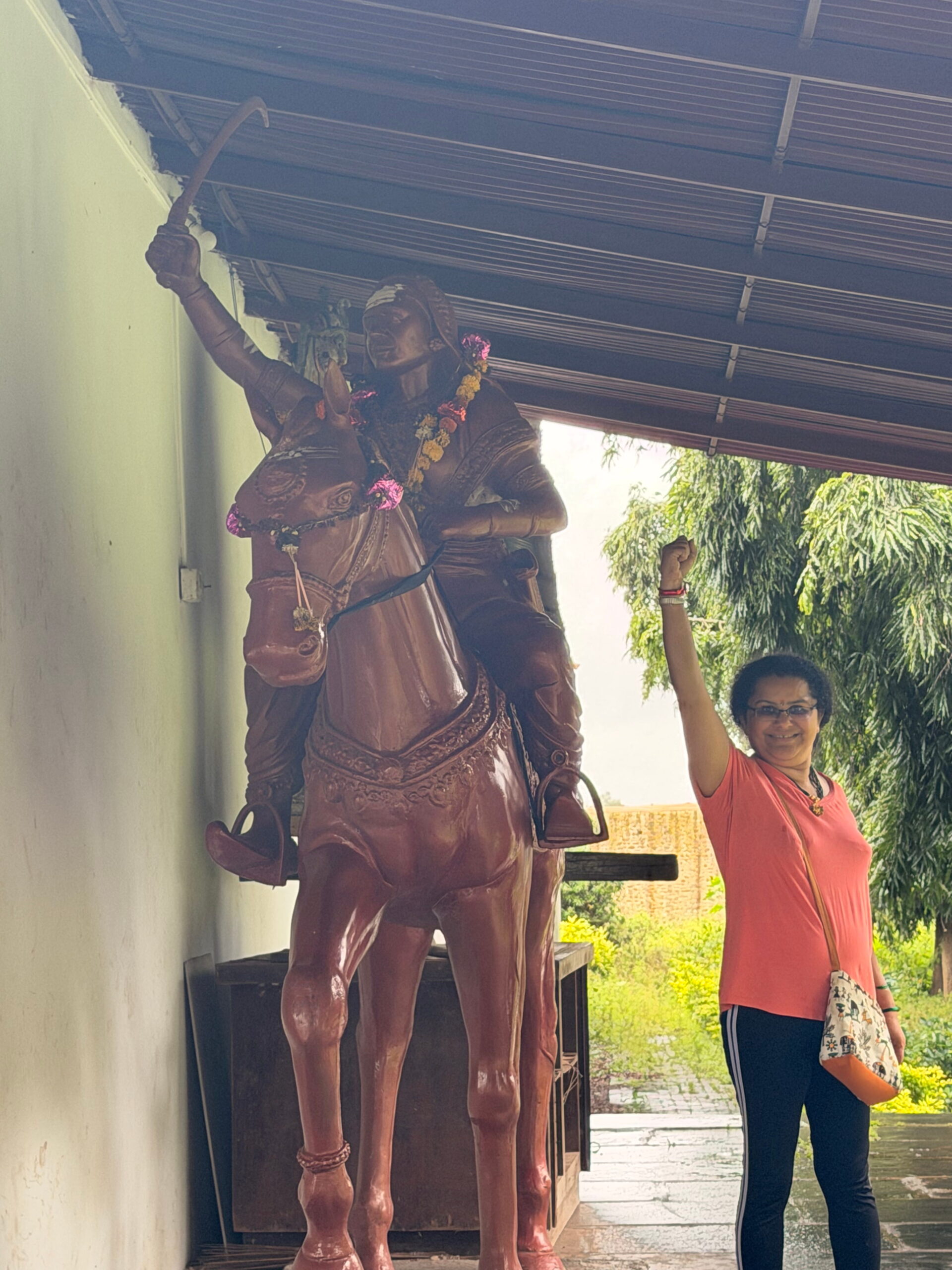 | 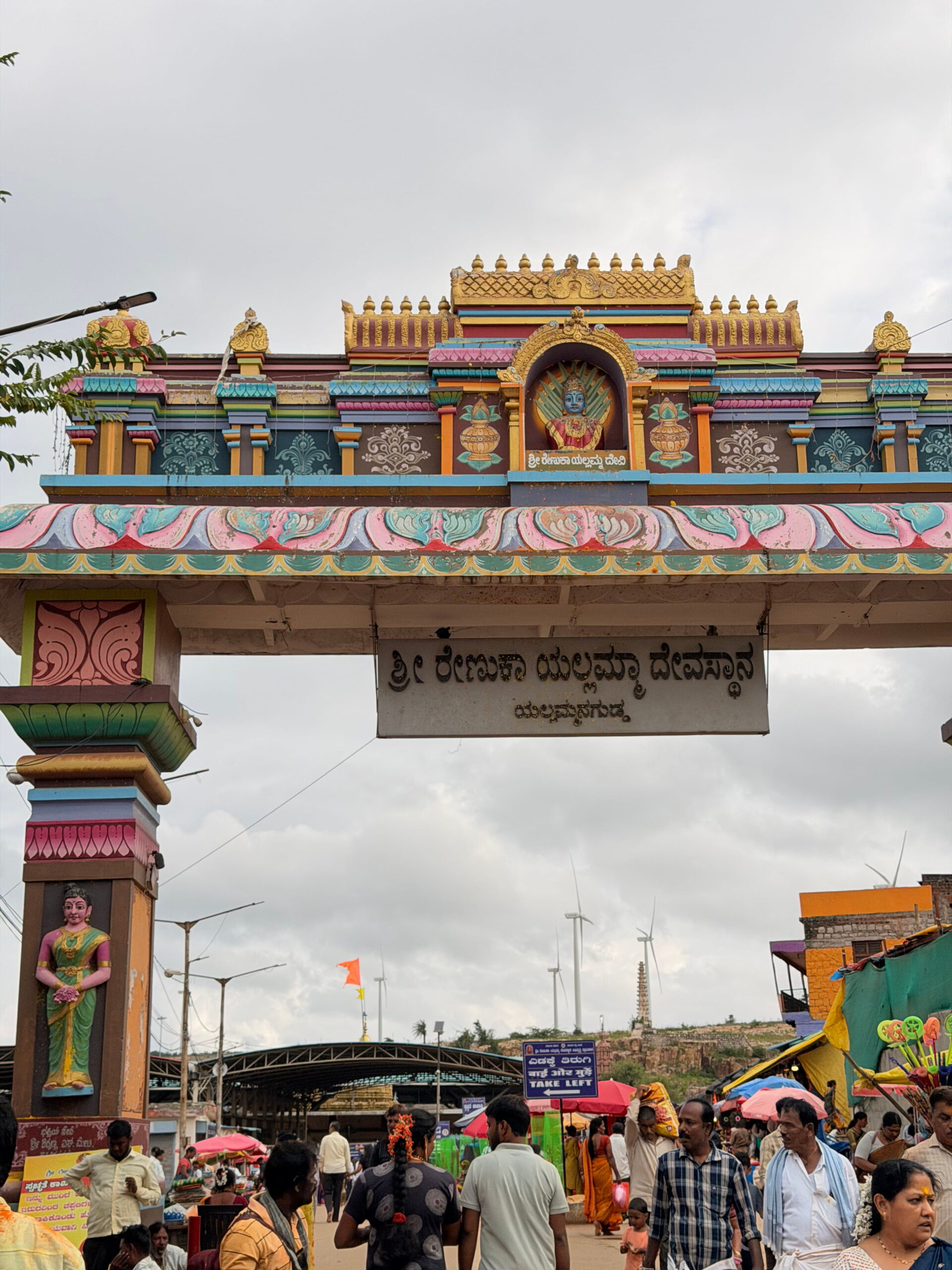 |
Left: Statue of Rani Chennamma at Kittur Fort Museum Right: Sundatti Yelamma Ranuka Mandir
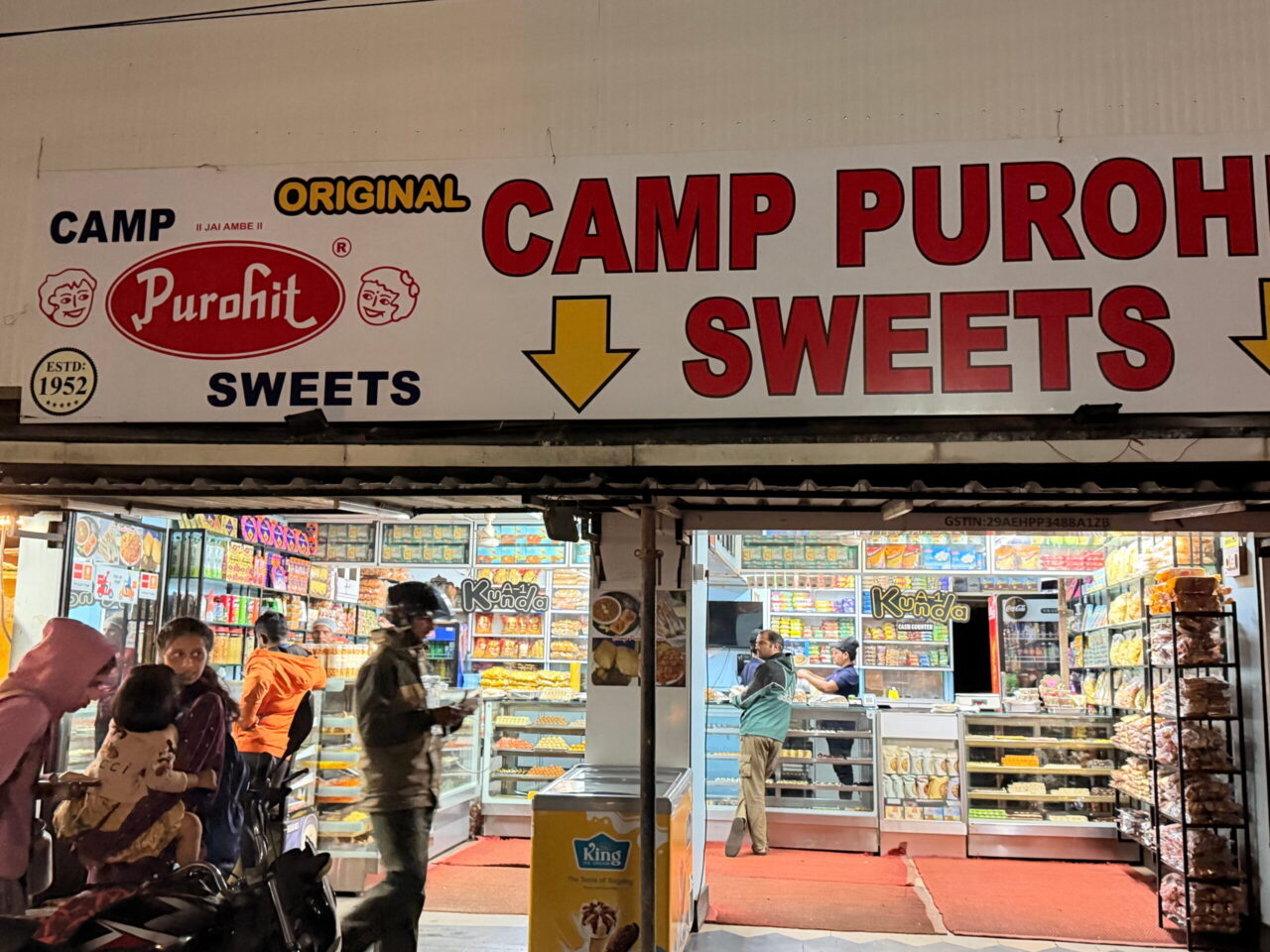
The first (original) outlet of Camp Purohit in Belgavi
Day 2: Following the Dattatreya Trail
Day Two began rather comfortably. We had a relaxed breakfast in Belgavi and then started towards Appachiwadi. Unlike Day One, which had a mixture of history and pilgrimage, Day Two gradually turned into something of a Dattatreya trail.
Appachiwadi is a place that we probably would never have discovered through a conventional tourist itinerary. It is associated with Revan Nath , also known as Halsiddhnath, and is particularly significant for followers of the Nath Sampradaya and the Dattatreya tradition. There is also an interesting explanation for the name. In Kannada, haalu means milk, and tradition holds that the saint survived primarily on milk, hence the name Halsiddhnath . We had darshan at the samadhi and then continued towards a much better-known pilgrimage centre, Narsobachi Wadi.
Learn more about the Navanaths and the Nath Sampraday here
Narsobachi Wadi is associated with Nrsinha Saraswati, traditionally regarded as the second avatar of Lord Dattatreya. It is a major pilgrimage centre for devotees from Maharashtra, Karnataka and Telangana, and the atmosphere immediately tells you that this is not just another temple on a tourist circuit.
We had a peaceful darshan and then walked down to the ghat on the banks of the Krishna River. Since it was the monsoon, the river was completely filled with water, and there was something particularly soothing about standing there and watching the river flow. After spending some time at the ghat, we returned for prasad at the Annachhatra, another feature we have noticed at several Datta kshetras where devotees are served a meal after darshan.
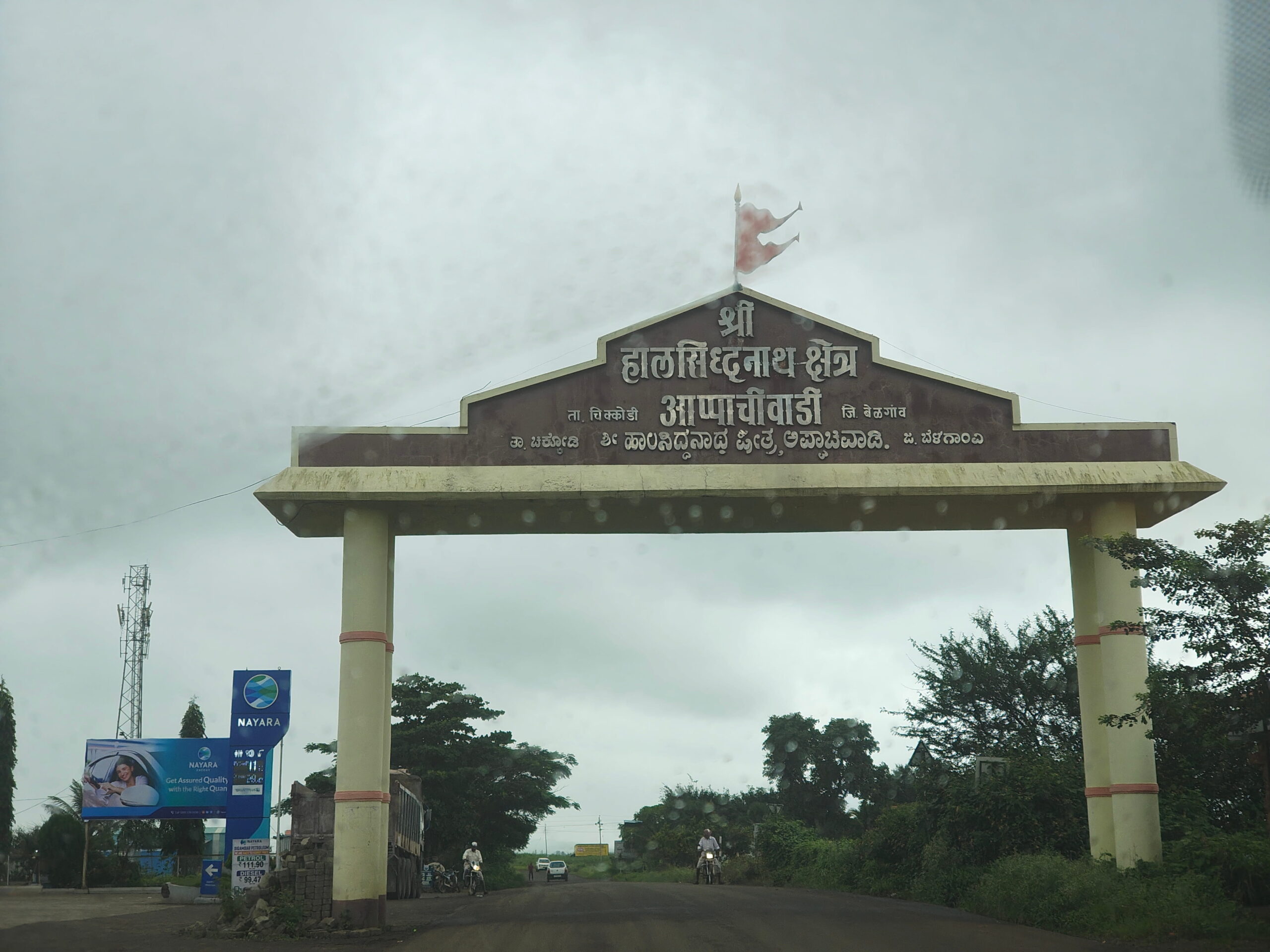 | 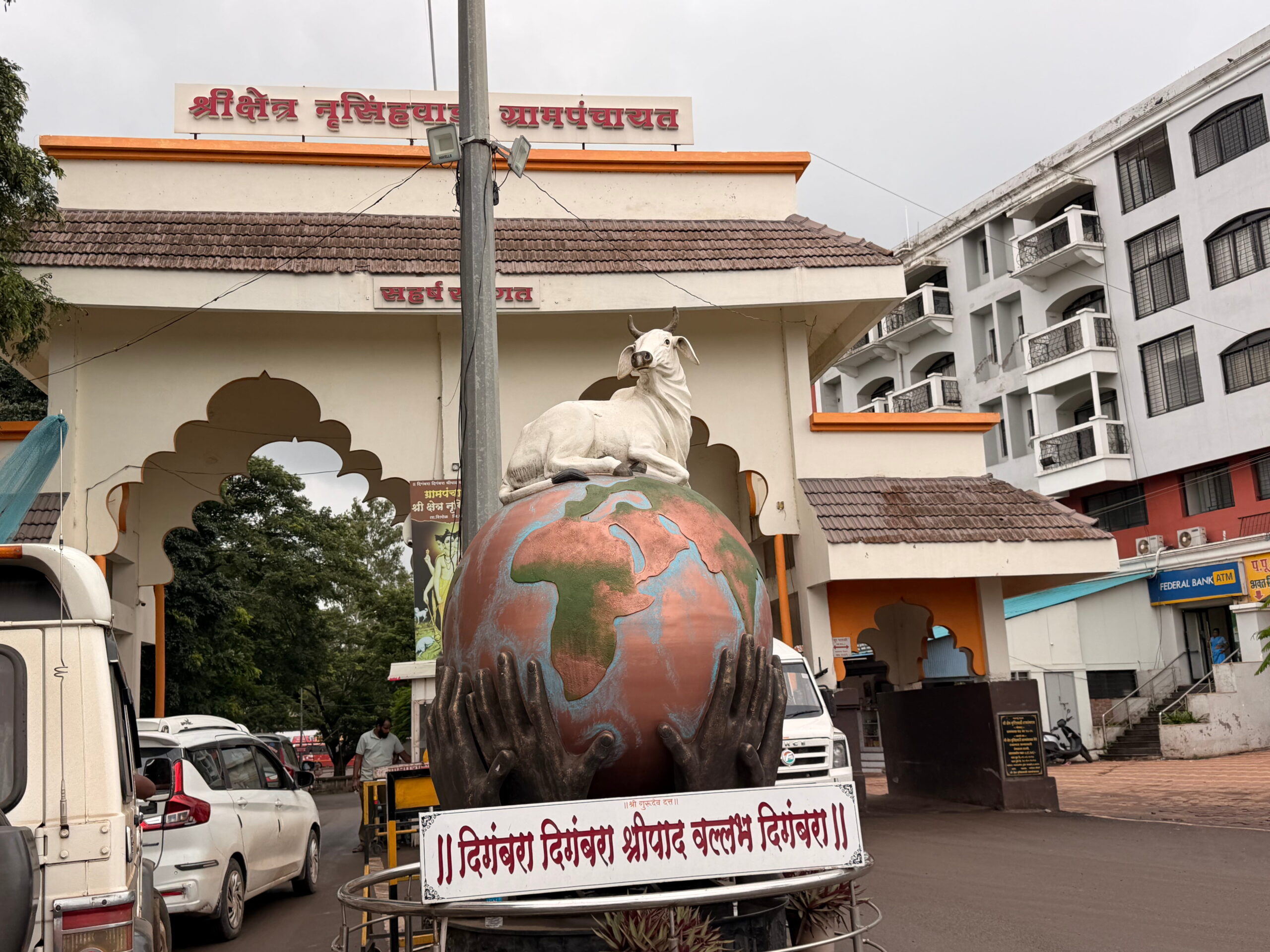 |
Left: Entrance to village of Appachi Wadi off Highway. Right: Entrance to Narsobachi Wadi (Narsingpur)
Amareshwar Mahadev Temple
Post that, we headed to the Amareshwar Mahadev Temple. And no, don’t confuse it with my spouse , although the name may sound familiar. This Amareshwar is Lord Shiva, and the temple is also associated with the worship of the Ashta or Chausashti Yoginis, depending on the local tradition.
From there, we moved on to Kurundwad Ghat, another beautiful spot on the opposite side of the Krishna from Narsobachi Wadi. From the ghat, you can actually see the Wadi across the river, giving you a completely different perspective of the pilgrimage centre we had visited earlier in the day.
Kurundwad and Santaji Ghorpade
Kurundwad also has an important historical connection with Santaji Ghorpade, one of the most celebrated Maratha military commanders of the late 17th century. Dhanaji and Santaji fought during the period of Chhatrapati Rajaram Maharaj and became particularly feared by the Mughal forces for their highly mobile warfare, guerilla attacks and ability to strike deep into enemy territory.
For anyone interested in the military history of the Maratha Empire, Dhanaji and Santaji’s story is worth exploring beyond the few lines that can reasonably fit into a travel blog. Read more about Santaji Ghorpade.
The samadhi of Santaji stands by the Krishna River, close to the sacred confluence of the Krishna and Panchganga, lending the place an unusual sense of history and serenity. It was a reminder that in this part of Maharashtra, history is often encountered not in grand monuments alone, but in the quiet presence of a samadhi beside a river.
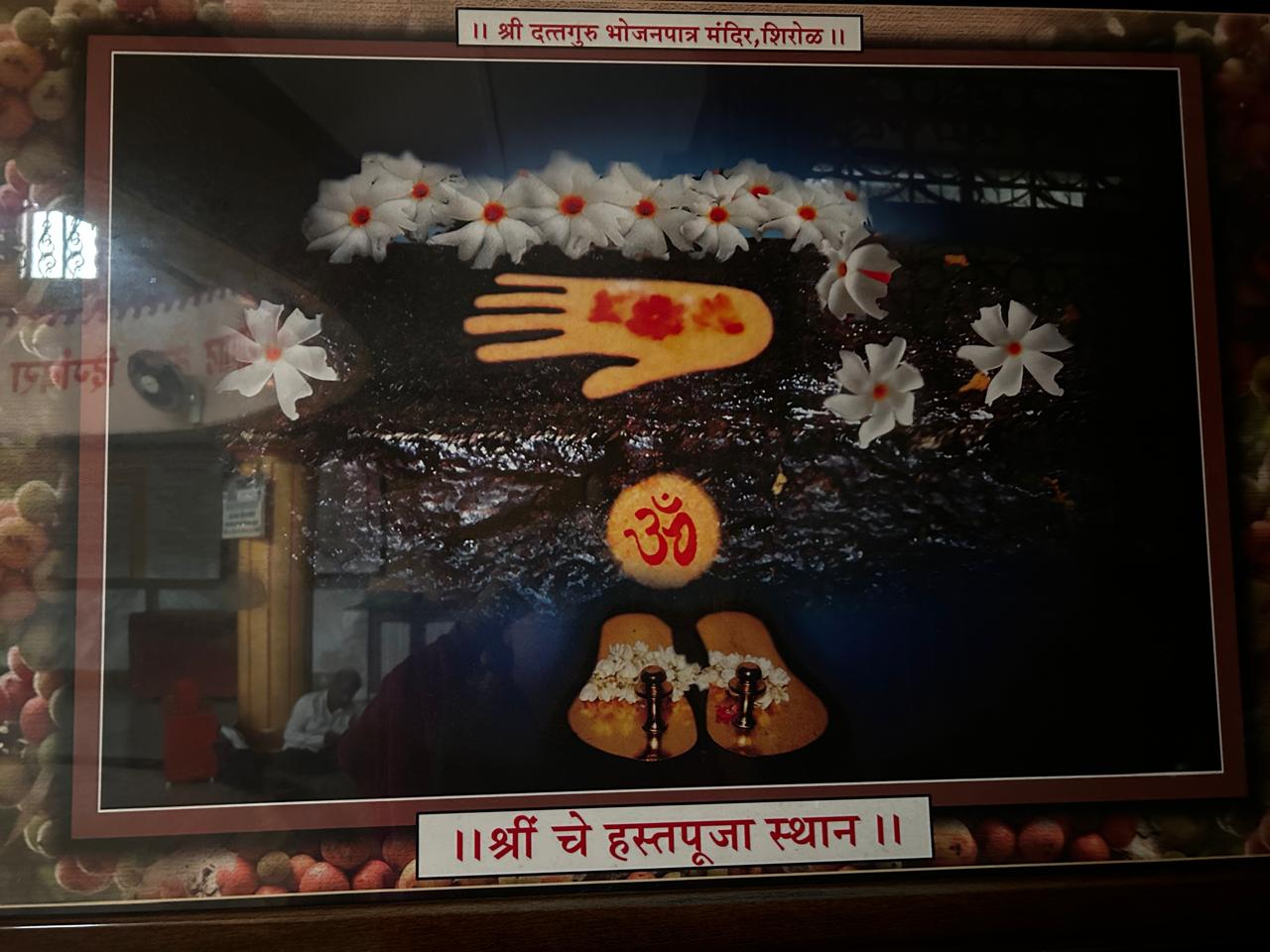
Shirol and Narasimha Saraswati
From Kurundwad, we headed towards Shirol, another place associated with Narasimha Saraswati and the Datta tradition. Once again, this was not a place we had originally planned to visit. We learnt about it along the way and decided that, since we were already in the region, we might as well explore it. This was becoming the characteristic feature of Day Two: one temple leading us to another, and every conversation at one destination revealing yet another place nearby.
Tip: Always ask the locals if there are any local temples nearby-which are not typically mentioned in travel guides…you may be pleasantly surprised.
Kopeshwar Mahadev at Khidrapur
Our final stop before Kolhapur was Khidrapur. Since it was a Monday during the month of Shravan, we stopped at the Kopeshwar Mahadev Temple, an important Shiva temple known for its elaborate stone carvings and distinctive architecture.
The temple is generally associated with the Deccan temple-building tradition and is particularly noted for its intricate carvings. However, parts of the complex are presently in a somewhat dilapidated condition and restoration work is underway. For someone visiting from Karnataka who has already seen the extraordinary Hoysala temples of Halebidu, Belur and Somnathpur, we would probably say you can give this one a pass if time is limited. Those temples have set the bar rather high for us.
Day Two had turned out to be a fairly hectic day of travelling, temples, river ghats, history and unexpected additions to the itinerary.
| 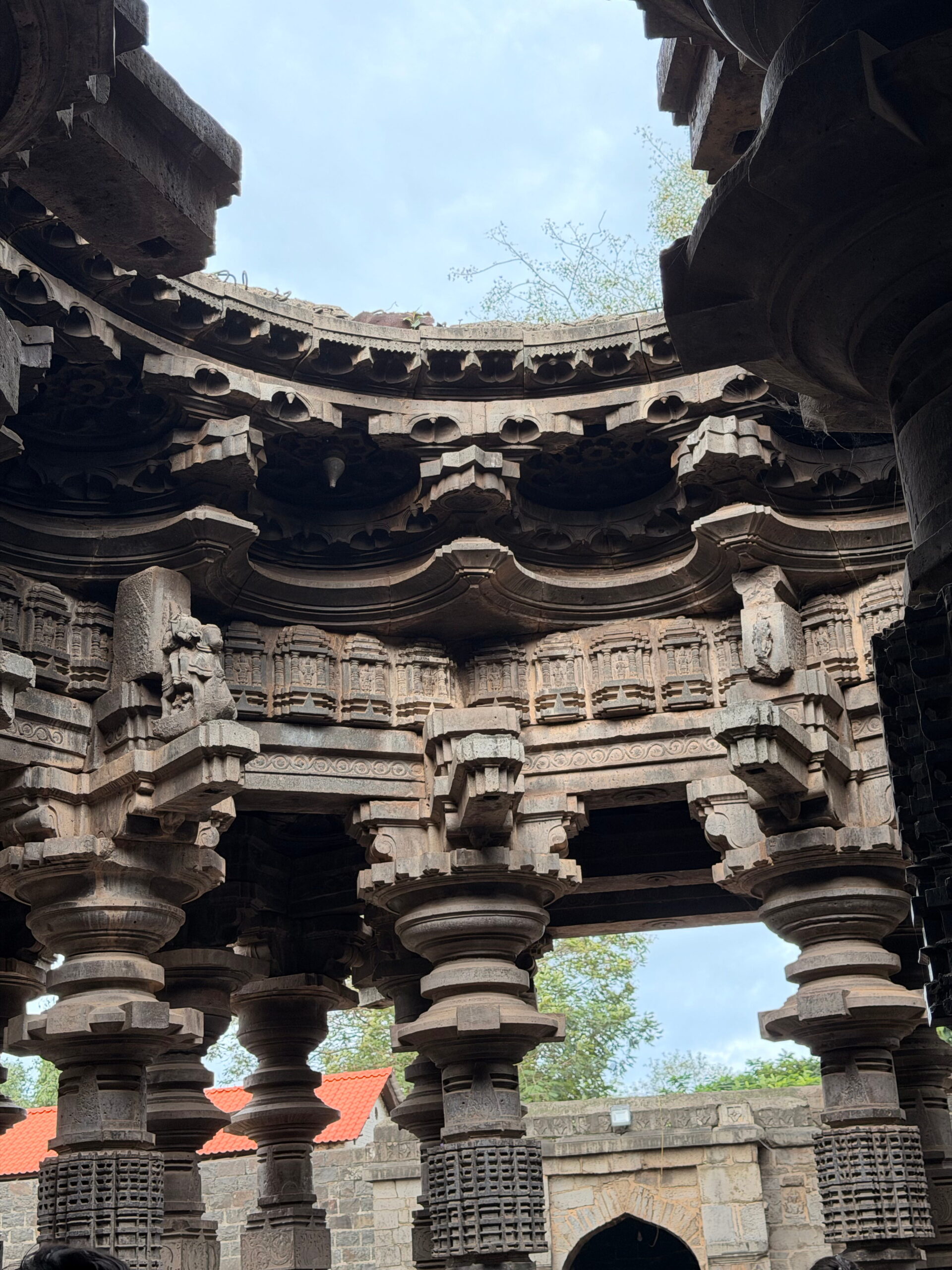 |
Left: Narsingpur (Narsobachi Wadi) Mandir near Kolhapur. Right: Kopeshwar Mahadev Mandir at Khidrapur
Day 3: Ambabai, Jyotiba and Panhala
Day Three began very early. We were keen to visit the Mahalaxmi Temple, or Kolhapurchi Ambabai as she is affectionately known in Marathi, before the crowds started building up. So, at around 4:30 a.m., we left our hotel and reached the temple well in time for darshan. An early morning darshan at Kolhapur’s Ambabai Temple.
The early morning darshan was peaceful, and there is something particularly special about visiting an old temple at that hour, when the day is just beginning and the place has not yet acquired the bustle of the later hours. The Mahalaxmi Temple is one of the most important religious landmarks of Kolhapur and is traditionally associated with the Deccan temple-building traditions. The temple is also undergoing restoration work, so some portions are currently being worked upon.
For those interested in the history and traditions associated with the temple, the Wikipedia page on the Mahalaxmi Temple provides a useful starting point.
After darshan, we returned to the hotel, had our breakfast and were back on the road by around 8 a.m. Our next destination was Jyotiba Dongar.
Jyotiba Dongar: Completing the Darshan
There is an interesting belief associated with the two places. According to local tradition, when Kolhapur was threatened by the demons Ratnasur and ???, Mahalaxmi sought the help of Brahma, Vishnu and Mahesh. From their combined divine energy emerged Jyotiba, who joined the Devi in fighting the demons and protecting the region.
Because of this connection, devotees traditionally consider the darshan of Mahalaxmi and Jyotiba as part of the same pilgrimage. In other words, if you have come to Kolhapur for Ambabai, the darshan is considered complete only after visiting Jyotiba as well. We therefore completed the second half of the circuit and then headed towards Panhala.
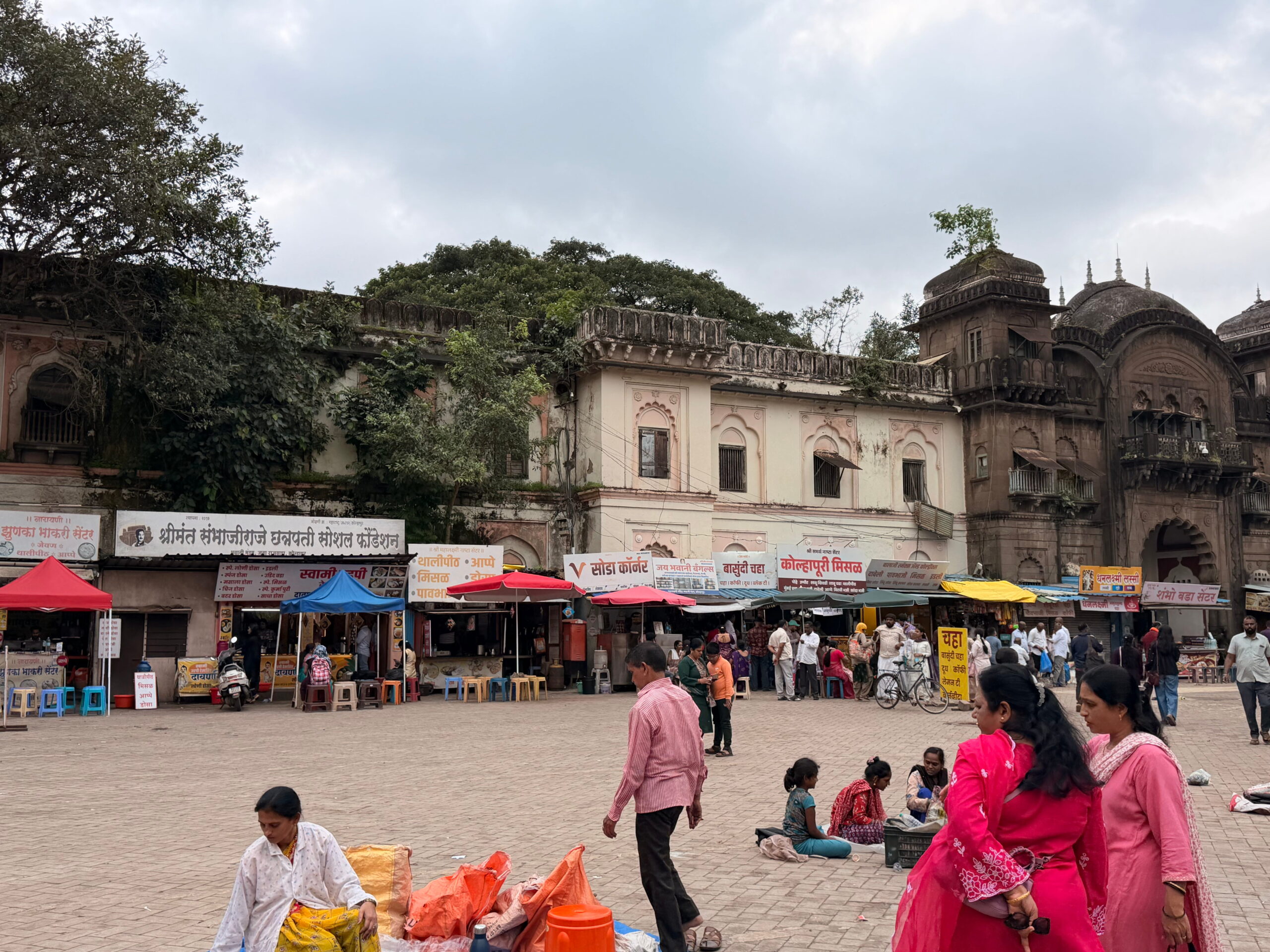 | 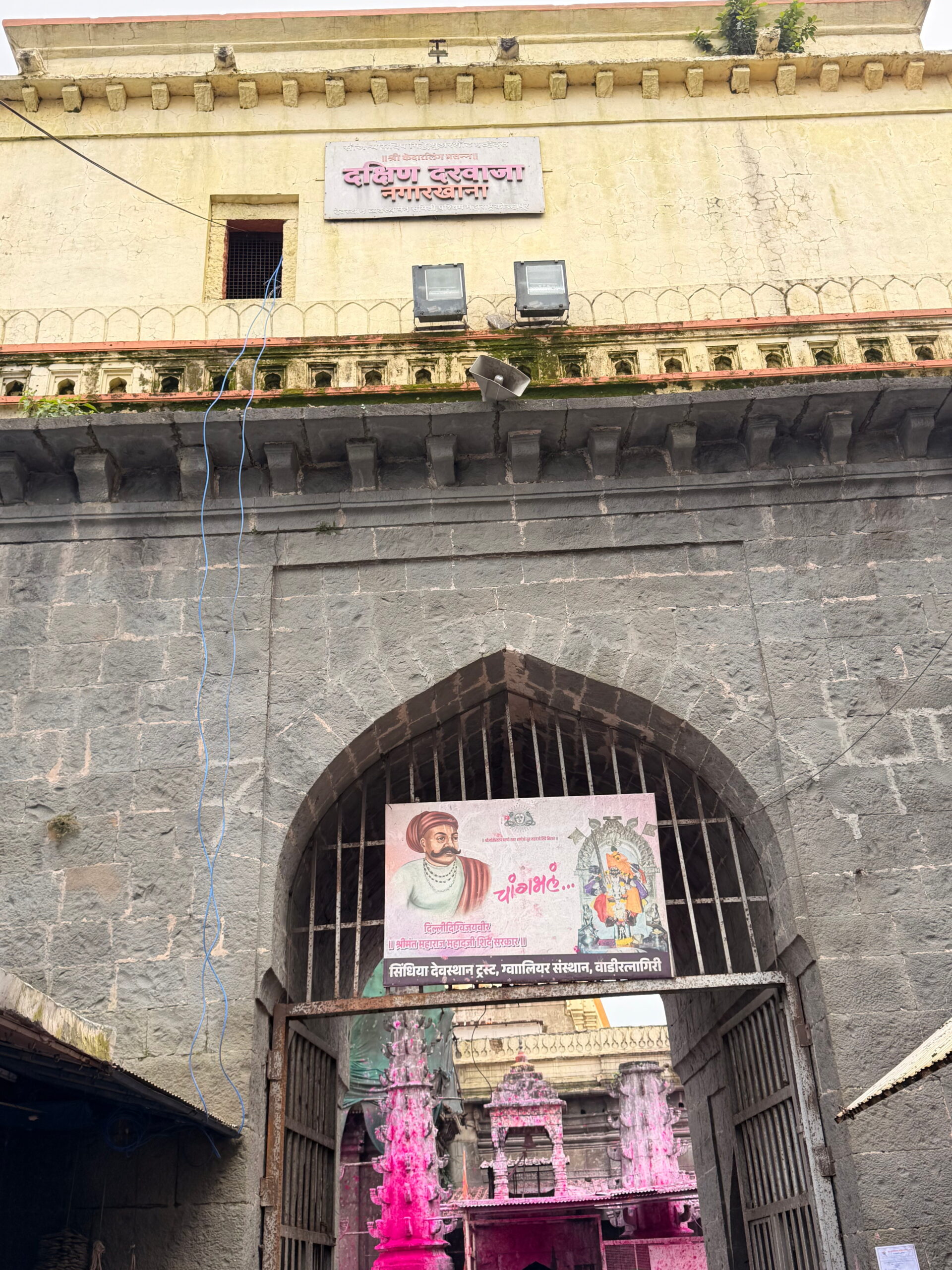 |
Left: Mahalakshmi Mandir at Kolhapur. Right: Entrance to Jyotiba dongar
Read about the history of Karveer and how it was renamed Kolhapur
Panhala: A Fort Steeped in Maratha History
For a Maharashtrian – Shivaji and his various forts have always been very intriguing..treked Sinhagad in 2011 .. Panhala is not just another fort to add to a list of places visited. It occupies an important place in the history of Chhatrapati Shivaji Maharaj and the Maratha struggle for Hindvi Swarajya. Once you know the history associated with the fort, the surrounding landscape starts looking quite different.
The Legend of Bajiprabhu Deshpande
One of the most dramatic episodes associated with Panhala was Shivaji Maharaj’s escape from the fort during the siege of 1660. With the fort was surrounded by the Adilshahi forces, a daring plan was devised. Shivaji , accompanied by a small group of soldiers, slipped out of the fort at night and began making thier way towards Vishalgad, roughly 20 kilometres away. There was also a clever decoy. Shiva Kashid, who bore a resemblance to Shivaji Maharaj, dressed himself as the Maharaj and rode away in another direction. The pursuing forces initially followed the decoy, giving the real Maharaj and his men valuable time to make their escape.
Eventually, however, the deception was discovered and the pursuit began. At a narrow mountain pass known as Ghodkhind, Bajiprabhu Deshpande and a handfull of Maratha soldiers took up position and held back the army of thousands of soldiers , buying enough time for Shivaji Maharaj to reach Vishalgad. The signal that Maharaj had reached Vishalgad safely was the firing of cannons from the fort. BajiPrabhu fought with full valour with swords in both his hands though he was severely injured. Once Bajiprabhu heard the signal, he knew that his task was complete. Mortally wounded after the fierce battle, he breathed his last. Ghodkhind came to be known as Pavan Khind, and the sacrifice of Bajiprabhu Deshpande remains one of the most celebrated episodes in Maratha history.
There is considerably more to the story of Panhala, Pavan Khind and Vishalgad than we can cover here. For those interested in exploring the history further, learn more about Pawan Khind. For us, Panhala was therefore much more than walking around an old fort. Once you know the story, you inevitably look at the hills, the routes and the narrow passages and wonder how anyone managed to make that escape while the fort was under siege.
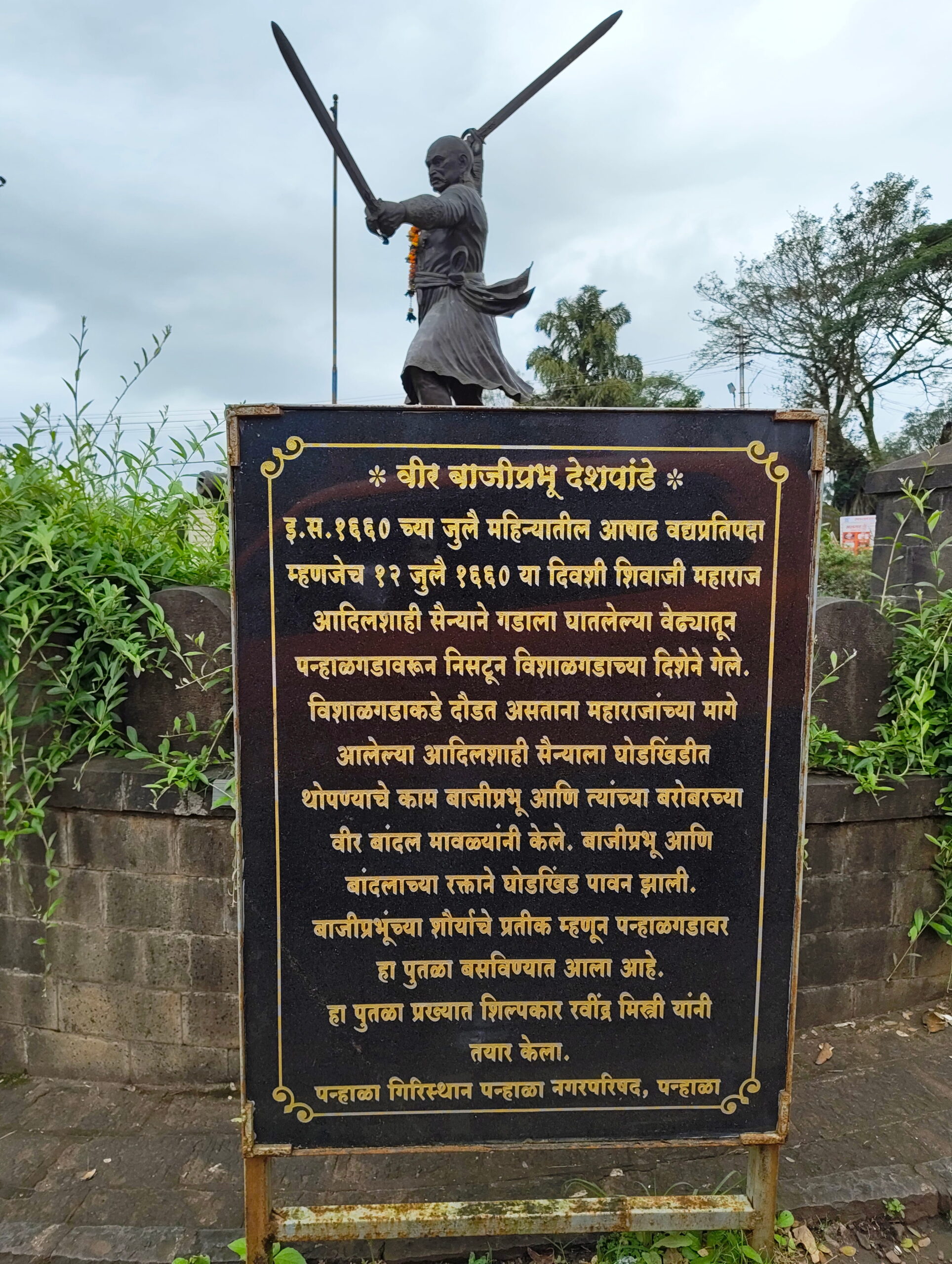 | 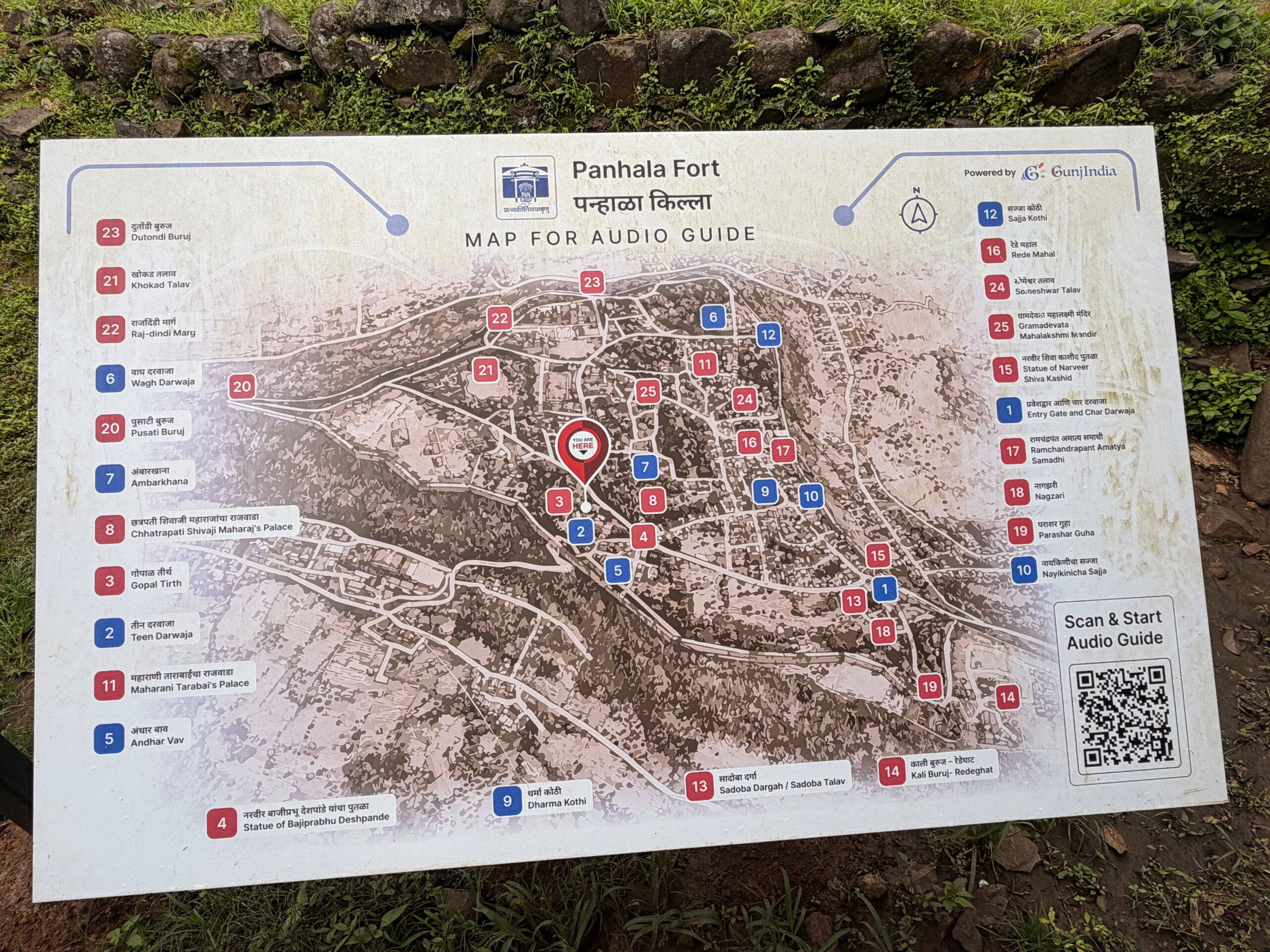 |
Left: Statue of Baji Prabhu Deshpande. Right: map of Panhala
The evening, however, was reserved for another important part of any visit to Kolhapur: shopping.
Shopping in Kolhapur
Kolhapur’s markets offer plenty of regional food, footwear and traditional jewellery.
Kolhapur is one of those places where shopping almost becomes part of the itinerary. The most obvious purchase is, of course, the famous Kolhapuri chappal. These traditional leather sandals are so closely associated with the city and the surrounding region that they have received a Geographical Indication (GI) tag.
For food lovers, particularly those who enjoy non-vegetarian Maharashtrian cuisine, Kolhapur has plenty to offer. The famous tambada rassa and pandhara rassa need little introduction, but even if you are not carrying home the actual curries, you can pick up the masalas, chutneys and spice mixes used to recreate them.
Kolhapur trip is incomplete without tasting the Kolhapuri misal and Rajabhau bhel near to the temple. Traditional Maharashtrian jewellery is another attraction. The distinctive Kolhapuri saaj and other traditional designs are popular purchases, particularly for those looking for something that has a strong regional identity. And then there is jaggery. Kolhapur is located in an important sugar-producing region, so good-quality jaggery is another item worth taking home.
By the end of the evening, our shopping bags had accumulated quite a collection of things that could all be justified as “regional souvenirs”. That is one of the advantages of travelling by car—you have considerably more room to rationalise your purchases.
In Marathi, there is a colloquial saying, “आधी विठोबा मग पोटोबा”—first we pray to the Almighty, and then we feed ourselves. Day Three for us began very much in that sequence. Indeed, we began the day with the darshan of Mahalaxmi of Kolhapur, whom the famous Kannada poet Purandara Dasa refers to as Vithalada Rani in his celebrated bhajan Bhagyada Lakshmi Baramma followed by food and shopping.
And with that, Day Three came to an end.
Day 4: Kolhapur to Chitradurga, Taking It Easy
Day Four began on a much more relaxed note. We left around 8 AM from Kolhapur for Chitradurga as our destination for the night. Big Mishra had become our familiar halt on this route, so naturally we stopped there again. This time, however, the objective was not just lunch. We picked up some of the things Dharwad is famous for—Dharwadi peda, Lal peda and Gokak kardant.
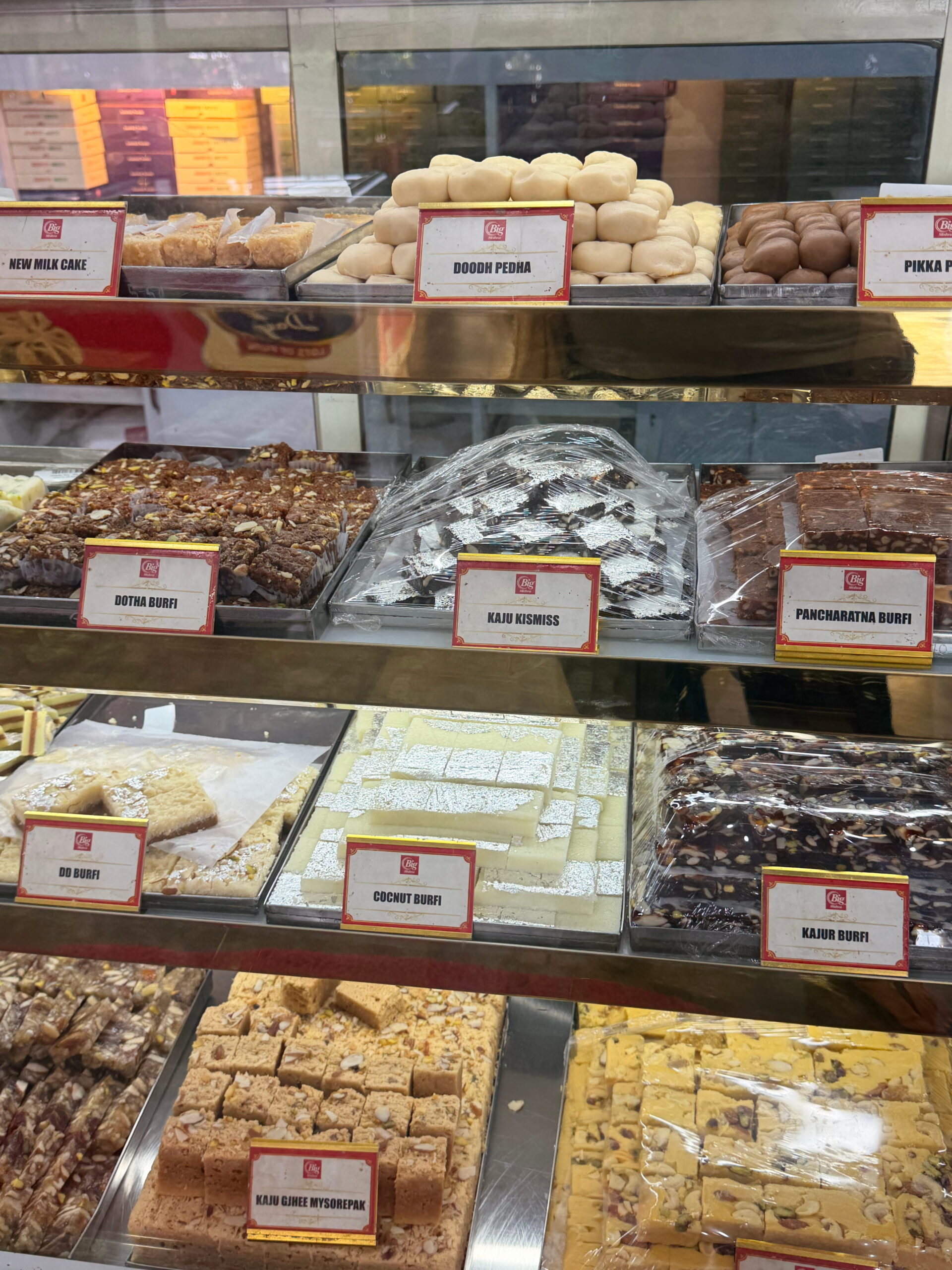 | 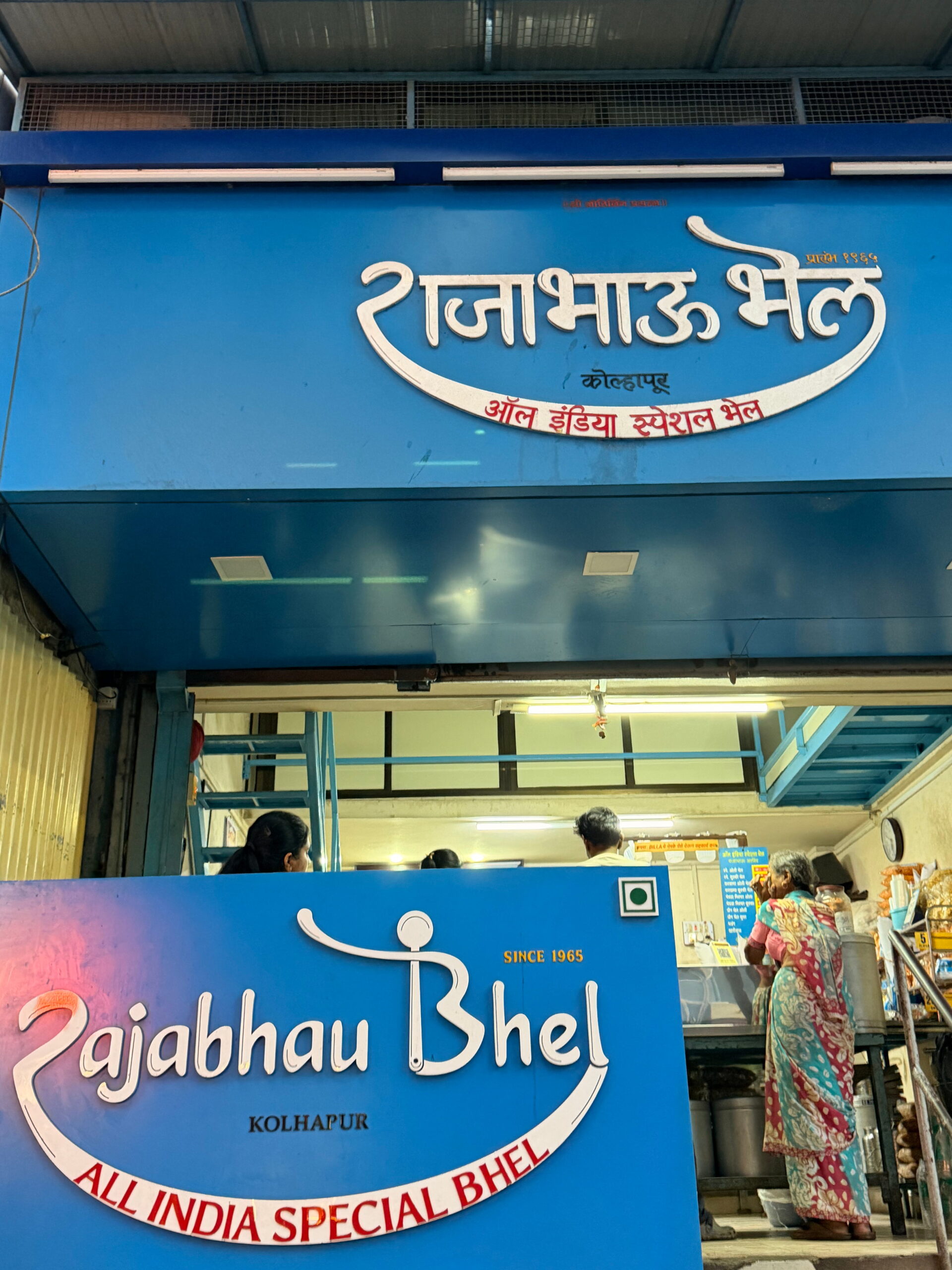 |
Left: Sweets at Big Mishra outlet near Dharwad. Right: Rajabbau Bhel Shop in Kolhapur
Reflection: Travel Is Not a Race
Sometimes, the best part of a road trip is having enough time to simply slow down.
Perhaps the biggest takeaway from this trip was something we had been gradually realising through our recent travels: we do not always need to maximise every trip. There was a time when the natural instinct was to add one more fort, one more temple, one more town or one more detour because we were already “in the area”. This trip reminded us that there is value in leaving some white space in the itinerary.
We covered quite a bit in four days—multiple temples, important pilgrimage centres, historic forts, river ghats and several places that were not even part of our original plan. But equally important were the periods when we simply sat in the car, stopped for a meal, rested at the hotel or spent a little time looking around without having to immediately move to the next destination.
Perhaps that is what we are beginning to appreciate about travel. It is not merely about getting somewhere and coming back. It is about immersing yourself in the experience, allowing yourself some time to absorb what you have seen, and accepting that rest is also part of the journey. A road trip does not become less successful because you skipped one destination; sometimes it becomes better because you did.
And that, in many ways, was the story of our unplanned Kolhapur monsoon road trip. A casual thought sparked by someone else’s itinerary turned into four days on the road, a string of unexpected discoveries, some history, plenty of darshan, good food, shopping, rain, greenery and a reminder that perhaps the best itineraries are the ones that leave a little room for life to happen along the way.
Travel Notes
Basundi tea outside Mahalaxmi Mandir: Being someone who usually drinks black coffee, I did not expect to enjoy a glass of basundi tea outside Mahalaxmi Mandir quite as much as I did. We had tried gulacha chai on our way back from Pandharpur earlier in the year, so I was willing to experiment again. The tea was undeniably sweet, but after an early-morning darshan, with the rain having just passed, it somehow tasted exactly right.
Start early for temple visits: One advantage of starting our temple visits early was that we generally avoided large crowds. Kopeshwar was the notable exception, with considerably more activity around the temple. Travelling during the monsoon and starting early also made the visits more comfortable, particularly at the larger pilgrimage centres.
Village entry and parking charges: One recurring irritation, however, was the practice of paying separately for entering villages and for parking, often with very basic facilities in return. It is becoming something of a sore point for me on road trips, although I am gradually learning to treat it as part of the experience, pay what is required and move on.
Accommodation: Our choice of accommodation also worked differently at different points. The Fairfield stay did not work particularly well for us, and I have reflected that in my review. The Belagavi property, on the other hand, proved quite convenient, especially because it was close to the highway. Both while entering and leaving the city, that location made getting on and off the route considerably easier.
Temple food and prasad: Wherever possible, we tend to prefer eating temple prasad or food served at pilgrimage centres. At Narsobachi Wadi, we had prasad at the Annachhatra, and we also made a small contribution towards annadanam, so that others could share the meal as well.
The Chitradurga overnight stay: In hindsight, we could probably have left Kolhapur earlier, driven farther on the previous day and avoided the overnight stay at Chitradurga altogether. But that would also have meant turning the final morning into another exercise in timing and distance. Instead, we had a relaxed breakfast in Kolhapur, left when we were ready and treated Chitradurga as a comfortable break in the journey. Not every road trip has to be optimised down to the last kilometre; sometimes an overnight halt simply gives you the freedom to travel at leisure.
Last updated: September 10, 2026 at 3:32 pm