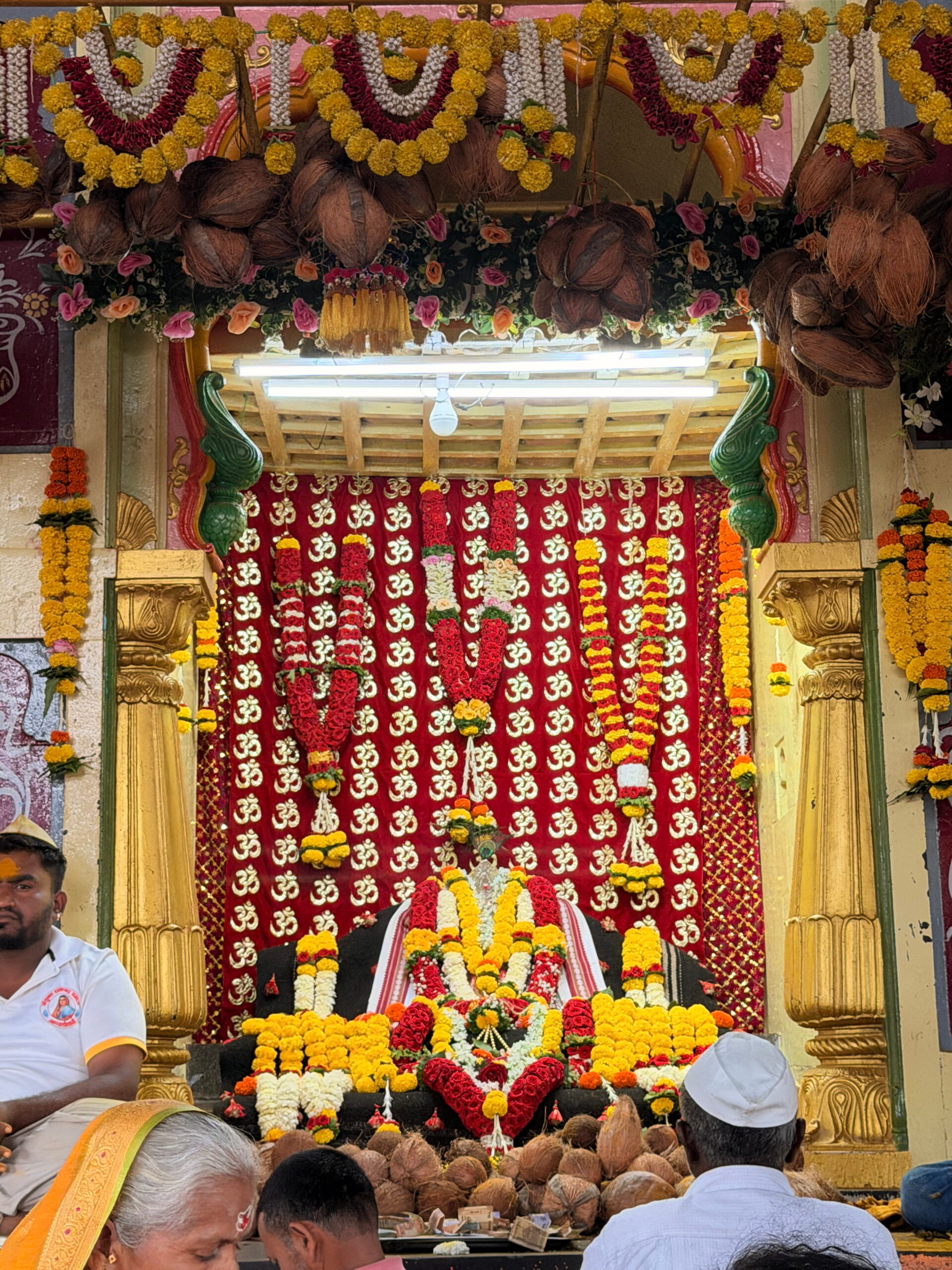
My personal connection to the Nath Sampraday began in 1998 when my uncle introduced me to the teachings of Halasiddhanath (Revan Nath). It was a moment that sparked a lifelong curiosity about the Nath tradition. Nearly three decades later, in August 2026, I had the profound experience of visiting the samadhi and mandir of Halasiddhanath. Standing there, I felt a deep sense of fulfillment, as if the spiritual journey that began with my uncle’s guidance had come full circle. This experience reaffirmed my connection to the divine wisdom of the Nath Sampraday.
Background: The Nath Sampradayand Navnaths
The Navanaths are a revered group of nine saints and yogis in the Nath Sampraday, a spiritual tradition rooted in the principles of Hatha Yoga, Advaita Vedanta, and Bhakti. These nine saints are considered the primary propagators of the Nath tradition, which emphasizes renunciation, meditation, and the realization of the self as the ultimate truth.
The Dattatreya connection is deeply intertwined with the Nath Sampraday. Dattatreya, an avatar of the Hindu trinity—Brahma, Vishnu, and Shiva—is considered the Adi Guru of the Nath tradition. He is believed to have imparted divine wisdom to the first Nath, Matsyendranath, who then passed it down through the lineage of the Navanaths. Dattatreya’s teachings on non-duality, detachment, and the pursuit of spiritual liberation form the philosophical foundation of the Nath Sampraday.
The Nine Naths
The nine primary Naths, who are central to the tradition, are:
- Matsyendranath – The first Nath, often regarded as the founder of the Nath Sampraday. He is associated with the revival of Hatha Yoga and is considered a disciple of Dattatreya.
- Gorakshanath – The most prominent Nath, known for his yogic powers, asceticism, and contributions to Hatha Yoga. He is often depicted as the guru of all Nath yogis.
- Jalandharnath – A disciple of Gorakshanath, he is associated with the Jalandhar Peeth, a significant center of the Nath tradition.
- Kanifnath (Kanipa Nath) – Known for his mystical poetry and devotion to Lord Shiva, he is a key figure in the Maharashtra Nath tradition.
- Gahininath – A Nath saint who emphasized simplicity, humility, and the path of knowledge.
- Bhartrihari Nath – A king-turned-yogi, he is known for his renunciation of worldly life and his contributions to Sanskrit literature.
- Revan Nath (Halasiddhanath) – A revered Nath saint, particularly associated with Halasiddha Peeth. His teachings emphasize detachment and divine love.
- Naganath – Known for his austerities and deep meditation, he is often linked to the Himalayan tradition of the Naths.
- Charpatinath – A Nath saint who is said to have achieved immortality through yogic practices and is associated with the Charpat Peeth.
Yogi Adityanath, the current Chief Minister of Uttar Pradesh, is a prominent modern-day figure in the Nath Sampraday. He is the Mahant of the Gorakhnath Math, a historic monastery in Gorakhpur dedicated to Gorakshanath. As a Nath yogi, he has played a significant role in reviving and promoting the teachings of the Nath tradition, particularly those of Gorakshanath. His leadership at the Gorakhnath Math has reinforced the spiritual, cultural, and social influence of the Nath Sampraday in contemporary India.
Last updated: September 29, 2026 at 3:02 pm